By Dave Warner
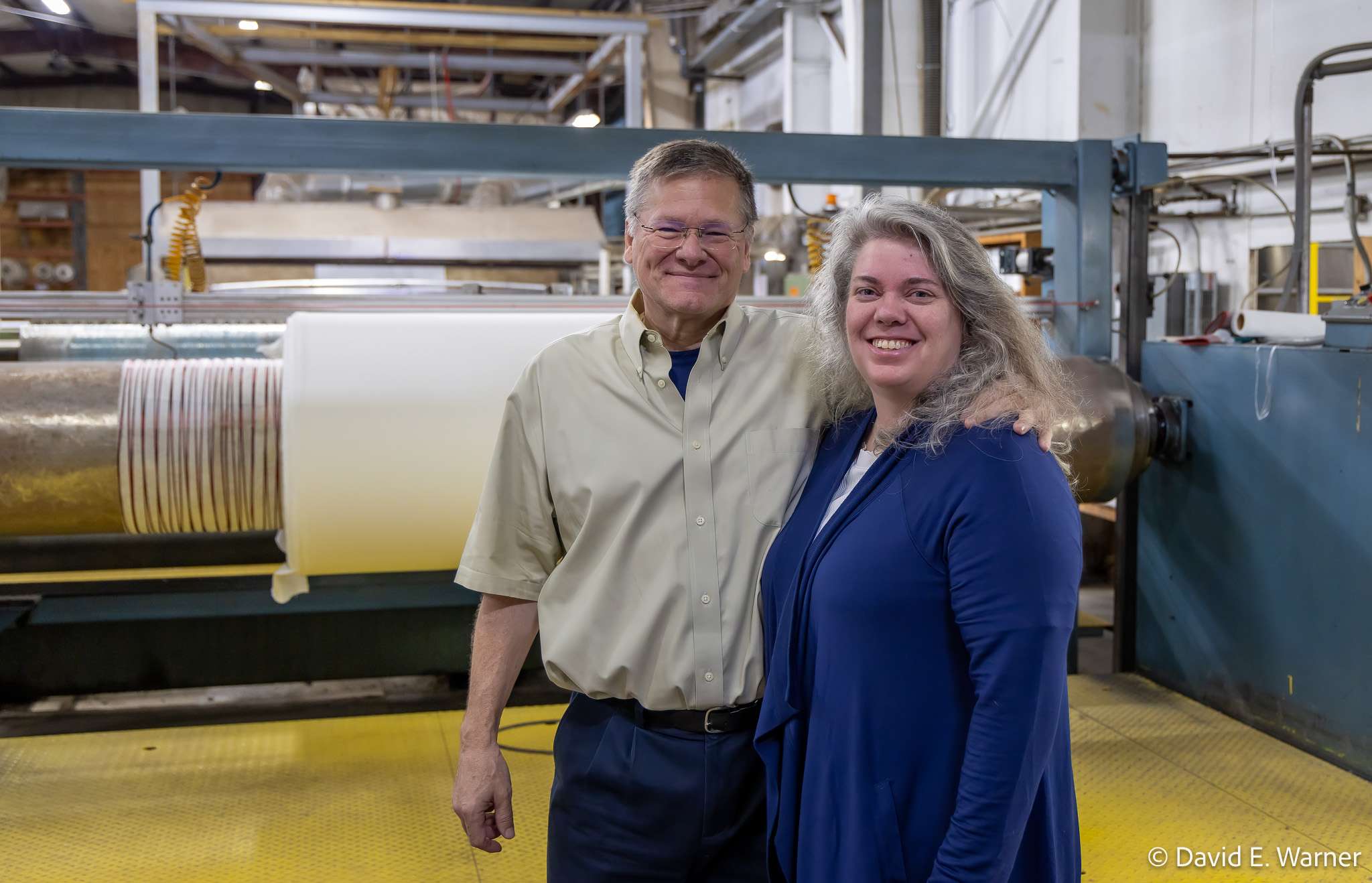
If you had told me there was a company in Dolgeville that manufactured everything from hospital curtains to flak jackets, escape systems for oil rigs, and much more, I would have no clue who they were. And that’s exactly what I thought as I listened to Skip and Brenda Gehring speak about their company, called Gehring Tricot, Corp., at a recent event in the Village.
Brenda grew up in St. Johnsville, went to school here, and met Skip through a mutual friend. “He knew my family and knew Skip’s and kind of introduced us. As they say, the rest is history.”
She then moved to Long Island, where Skip was at 21. “I was raised here but grew up down there,” she said.
“There are so many experiences that I had on Long Island that really changed my life. It opened up my eyes and broadened my horizons.”
Brenda was interested in art and studied interior architectural design. “I was a stay-at-home mom for most of the initial years of my married life.”
The company originally made lace and curtains, and its sales and headquarters were on Long Island. “Most of our customers for what we were making at the time were in New York City. That’s what the business was in 1946,” Skip stated.
“My grandfather started this with his brother early on. Then, he started Gehring textiles, going off on his own,” he said.
In 1956, his grandfather purchased Helmont Mills in St. Johnsville, and then in 1964, he purchased the building in Dolgeville as a dye house.
Skip is the third generation of management for the company, and all five of their children work there. “We’re on the fourth generation, and they all work in different areas, and none of them report directly to me,” Skip mentioned.
His father passed away in 2001, and the company now has four times as many employees as it had back then. “We’ve grown the company through purchases and just our own internal growth.”
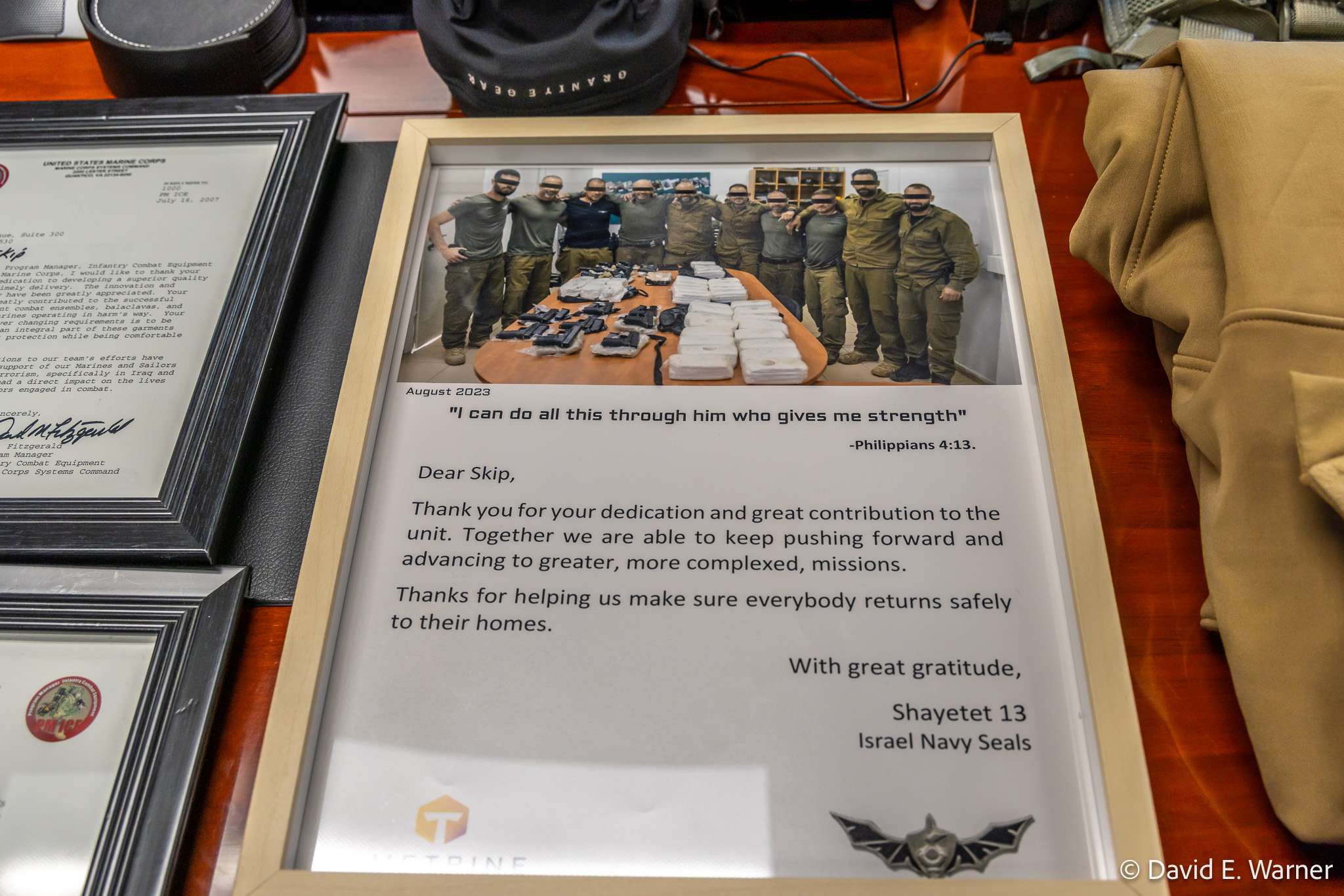
Skip spent six years in the Navy, and a year in Germany working for a company that makes the textile machines that they are using today in St. Johnsville. His father wanted him to have that experience to transition the company from laces and curtains to the highly technical things that they do today.
“When the free trade agreements hit in the mid-90s, there were thirteen other mills up here that were doing what we did, and they’re all gone. We’re the only one left. There were 1.2 million textile workers then, and it fell to 286,000.”
Their focus today is on defense contracts, medical, and other specialities, and they have 260-270 employees. “We have locations in Dolgeville and St. Johnsville, but also Fall River, Massachusetts, and Tampa, Florida. Presently, I’m in various stages of negotiation with three of our competitors who are struggling – discussing a merger with ours,” he said.
Skip said that being the oldest son in the family, his path had been pretty much established for him. When he was young, he’d come up and work in the factory in Dolgeville and live with some of the employees. “That was all part of my growth. When I got out of the Navy, I spent my first five or six years working in the factory on the floor in each of the respective businesses.”
He said the goal wasn’t to learn to be the best mechanic but to figure out how to retool it for a different path. “During the last six years, we’ve probably put over $15 million into upgrades and changing what we’re doing, and that doesn’t include the acquisitions.”
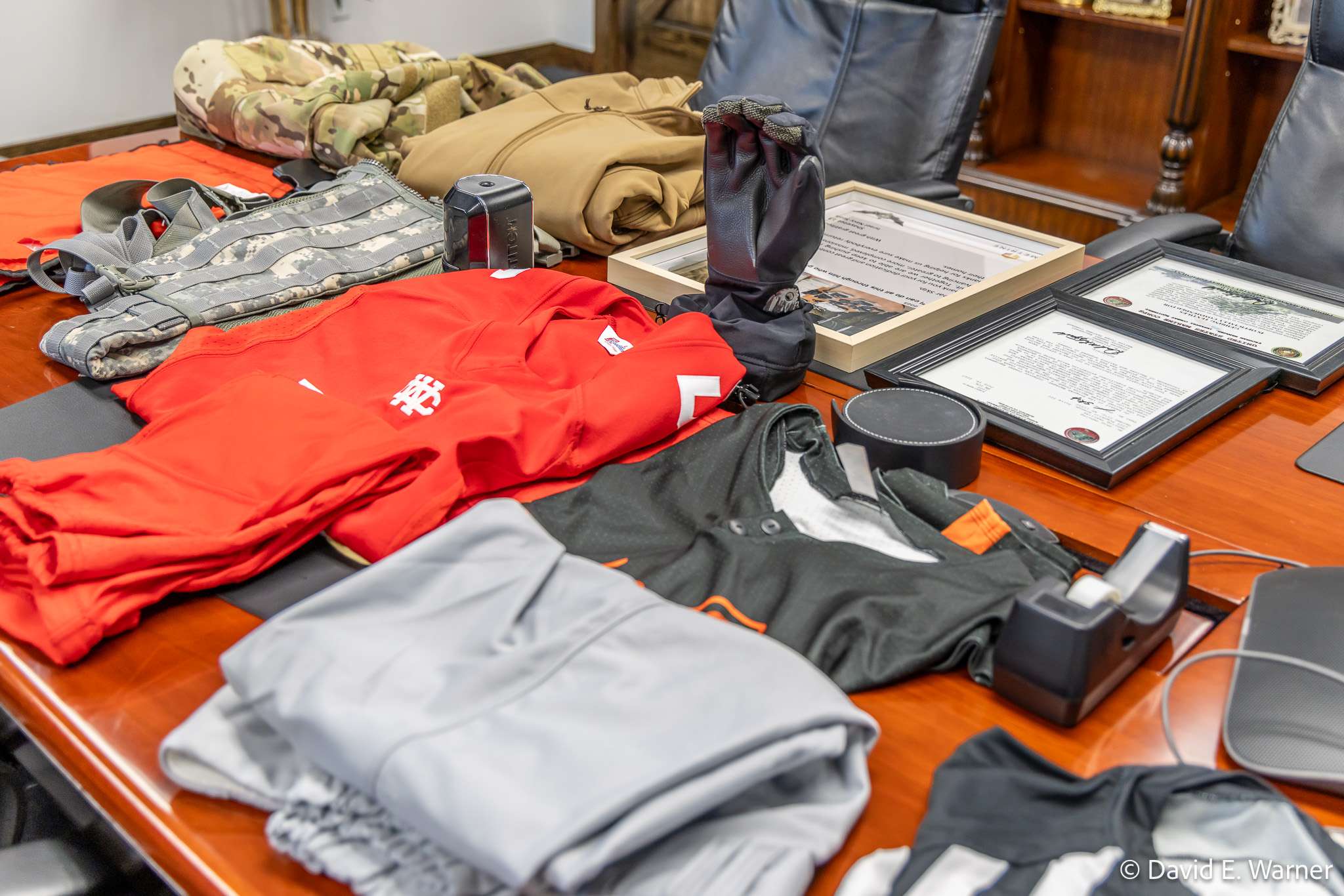
With that, everything they do now is custom for each of their customers. In many cases, military contracts are sole-sourced because of what and how they do things. “From ballistics to military firefighting apparel to battle dress uniforms, to tactical vests, and camouflage for soldiers.”
“All of the NFL uniforms are custom-made by us, and we’re the only ones in the world that can do it because we’re using recycled yarn and dying that yarn – nobody else does it,” stated Skip.
Even items like chainsaw chaps are created by the company.
Skip said that when competing with overseas companies, leadership has to be actively involved in what is happening on the floor. “All of the officers of the company, including my wife, have to be active in understanding what we’re doing. Then, you really have to understand the customers.”
He also said they compete by going one step further on the supply chain. “The company that we purchased in Florida is an end-product manufacturer.” They are now part of the Gehring Tricot chain.
During the pandemic, they were one of the few companies ordered to stay open by the Pentagon because of the nature of what they made.
Another of the more amazing products they make involves soldiers and the clothing they wear under their gear when in combat situations.
“The problem in the past was that you’d get IEds that go off and give massive cuts to our soldiers from shrapnel. Eighty percent of the limbs that got amputated were because the underarmor melted, and they couldn’t get it out. It was like candle wax around the veins, so they had to amputate the limb,” Skip said.
So, they developed a fiber and fabric that, when hit with an IEd, will turn to ash, like a cigarette. “You can hose it out and save the limb.”
They also make a fabric that goes behind bulletproof vests. This fabric absorbs trauma, helping prevent broken ribs and other damage to the body. “Most of what we do here is just that specialized.”
Skip also said that the biggest killer in the world is the mosquito, and they’re the only company in the country that is putting a proven mosquito/bug repellent that kills them on contact, into their fabric.
“That’s saving lives also, and that’s kind of what we do here,” he stated.
When asked what the ‘coolest’ product they make is, Brenda said they are always trying to ‘out-cool’ each other. Her favorite story is a jacket that was sitting on the table in front of me. “We made that fabric, and it went to the end product manufacturer. Then, it went to a soldier who wore it in the field every day for six months. He sent it back to the company and told them he wanted it to return because he wanted them to know how well it was done.”
“They sent it back to us so that we would know how well it wore,” she said. To me, the jacket looked brand new, like it had just come off the rack.
“What we’re able to do is develop some really special fabrics,” Skip said.
The company also makes uniforms for the Herkimer College cross-country team and the Mohawk Valley Diamond Dawgs.
They have also entered the sustainability area, working directly with NYSERDA on energy reduction and efficiency and wastewater recycling. “We’re working to take a load off the grid, reducing the amount of electricity being used,” Skip said.
To stay competitive, the company is now actively recruiting local talent. They hadn’t previously needed to market the company in the area. “Now, things have changed since I’ve taken over. Getting people to stay is hard because they’re always revolving.”
“We want to let people know that there are a lot of opportunities for growth with our company. We need floor manufacturing people, all the way up to electricians, maintenance, machine operators, engineers, and chemists between Dolgeville and St. Johnsville,” Skip said. “We do a lot of in-house training of people.”
Brenda said that not everyone needed a college degree to work there. “If we find someone with an aptitude towards maintenance, we’ll train them.”
“I studied engineering in college but learned it in the Navy,” Skip stated.
Last summer, they had an intern program for 14-19-year-olds, and 38 students were involved in it. Brenda couldn’t do that this year because of her daughter’s wedding, but she plans to have the program again and accommodate approximately twenty students next year.
“It was a learning experience for all of us,” Brenda said. “All of our employees were really accepting of the kids.”
To find out more about the company, you can visit its website at http://www.gehring-tricot.com/, call 315-429-8551, or email gtsales@gehringtextiles.com