


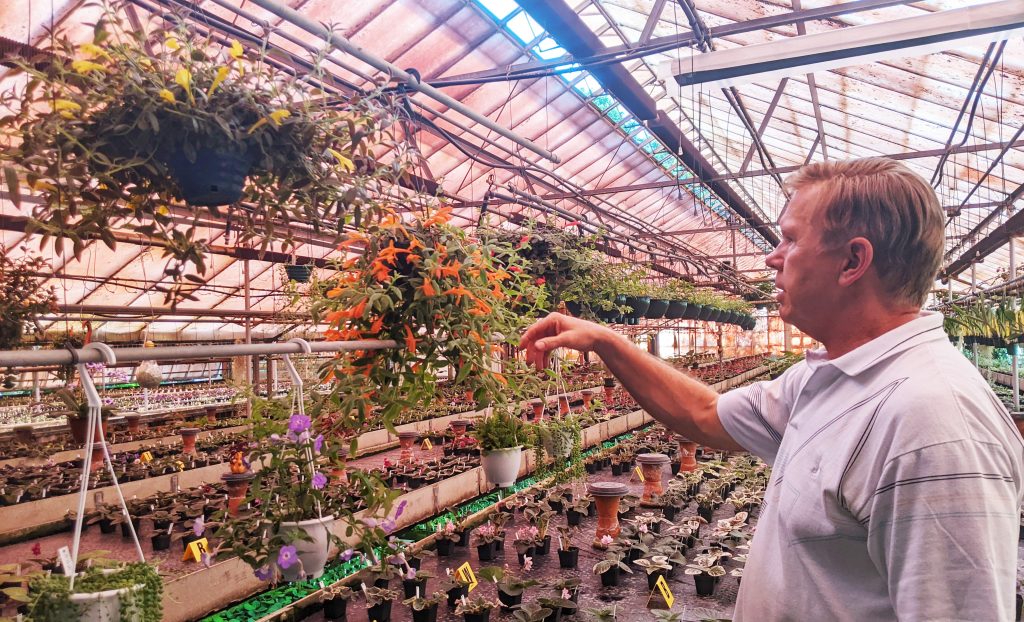
Paul in the greenhouse.
Story and photos by Carol Vogel
Though the days are getting cooler and winter is coming, Lyndon Lyon Greenhouses in Dolgeville, NY, is gearing up for its winter season. Shipping their famous plants across the United States and around the world year-round, violets are their specialty. From humble beginnings to a household name, the tradition continues, bringing locally grown beauty into homes across the globe.
World Famous Violets

Paul Sorano, the grandson of Lyndon Lyon, is the owner of the greenhouses and explained the history of how it all began. “He found out there was a race to create double pink violets. He got into the race late, but he beat everyone to the punch. And once that happened, everything just exploded. People were coming from all over the country. It was amazing!” Paul remembers, “Every room on the second floor of his house was filled with plants growing. I lived across the street, so I was very close.”
Lyndon built three-tiered benches with fluorescent lights for growing. These 3-inch tubes and 100lb light fixtures were a massive undertaking at the time. “Around 1949, he started growing inside his house, and in 1954 he had the first double pinks. He showed them in St Louis – and of course, that caused quite a stir because no one had seen anything like that before.” By the mid-1950s, he had a greenhouse with 5,000 plants, including his famous double-pink violets. One of his plants was called “Double Bountiful,” and a grower in Ohio bought the plant for $1,000.00! “He had a couple of different deals where he would get paid royalties for each plant that was sold. So that is how he built the first greenhouse in 1954.”
Things were moving along so quickly Lyndon built the second greenhouse in 1956. By 1959, he had built the third and largest greenhouse. Lyndon was well-respected by professional botanists as the world’s most important breeder of African Violets. In his lifetime, he developed around 800 varieties! Lyndon is known for creating the ideal houseplant. His African Violets Flower most of the year and require very basic care – if you forget to water them, they will typically bounce back from wilting.
“Lyndon was also a pioneer in variegates, trailing violets, minis, and semis. His hybridizations are world-renowned, and it all started here in Dolgeville, NY.”

All in the Family
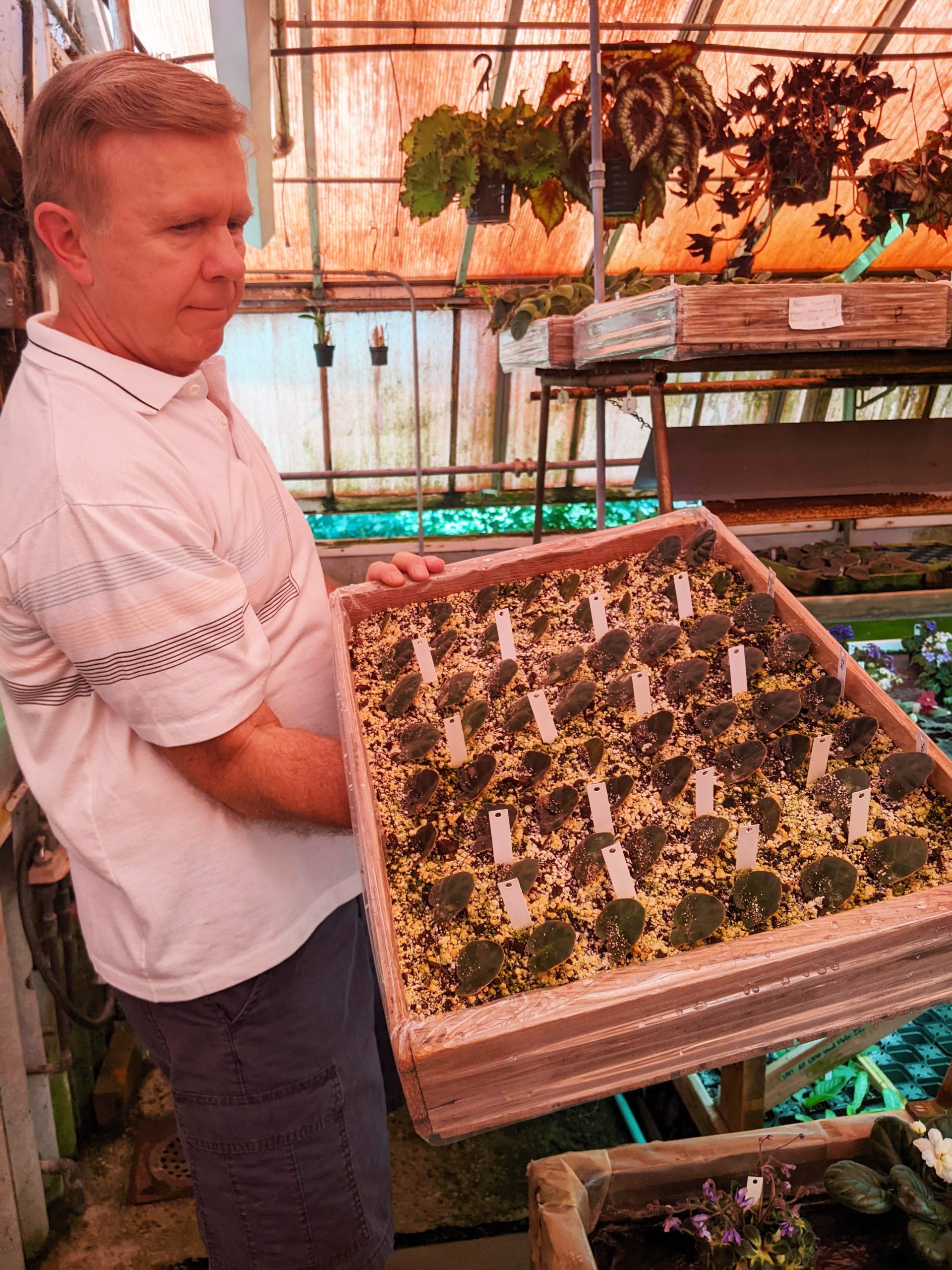
Paul shows one of the stages of leaf propagation.
In 1982 Paul took over ownership of the greenhouses, but he had been working and learning from his grandfather for many years. “When I was 12 years old, I helped him here and there and worked weekends in High School. I went to college and helped out as I could. I worked down in Schenectady for GE for a while, and then the oil embargo happened in the 70s.”
“During that tough time – like the pandemic – everyone was stuck home. People wondered what they could do as a hobby, and they got into plants in a big way.” He had heard that the business was booming, and in 1974, his grandfather coaxed him to come back. “There were days there were so many customers we were sleeving plants just as fast as we could. We were sleeving about 20,000 plants a day at times.”
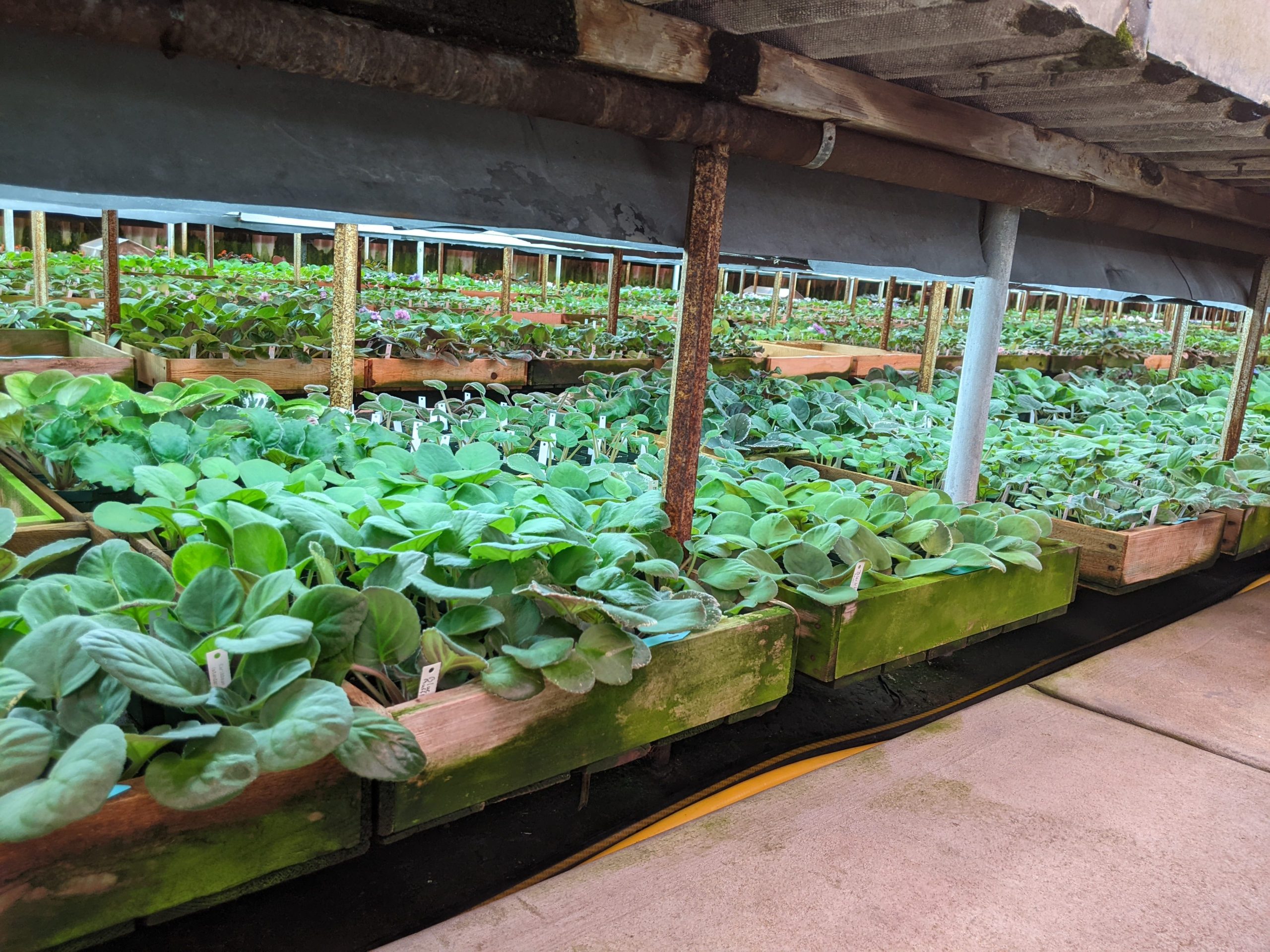
Through the years, Paul has put a lot of time, effort, and money into updating the heating system and greenhouse structures to make them more energy efficient. “We put pipes under the benches to place plants beneath, and we added fluorescent lights. Only a few benches on one greenhouse were done that way at first. When I came here, we started doing this under all the benches, so we doubled our space without having to build another greenhouse.”
A video from his second appearance can be found here: https://youtu.be/5_-jiRu6wTw.
The Greenhouses employ between 5-10 people, depending on the season. They work hard and consistently to keep plants healthy and growing through many stages of propagation. The staff is helpful and happy to give advice and instruction on caring for your plants.
Shipping Worldwide
Things are getting back to normal now. “For all countries, we have to have a Phytosanitary Certificate for shipments, which is a special form we fill out,” Paul explains. Phytosanitary certificates are official documents that certify that the plants have been officially inspected, are free from quarantine pests, and conform to the current phytosanitary regulations of the importing country. He submits the forms to his inspector in Oneida, who then comes to the greenhouses to check the packages on the day they are preparing the orders.
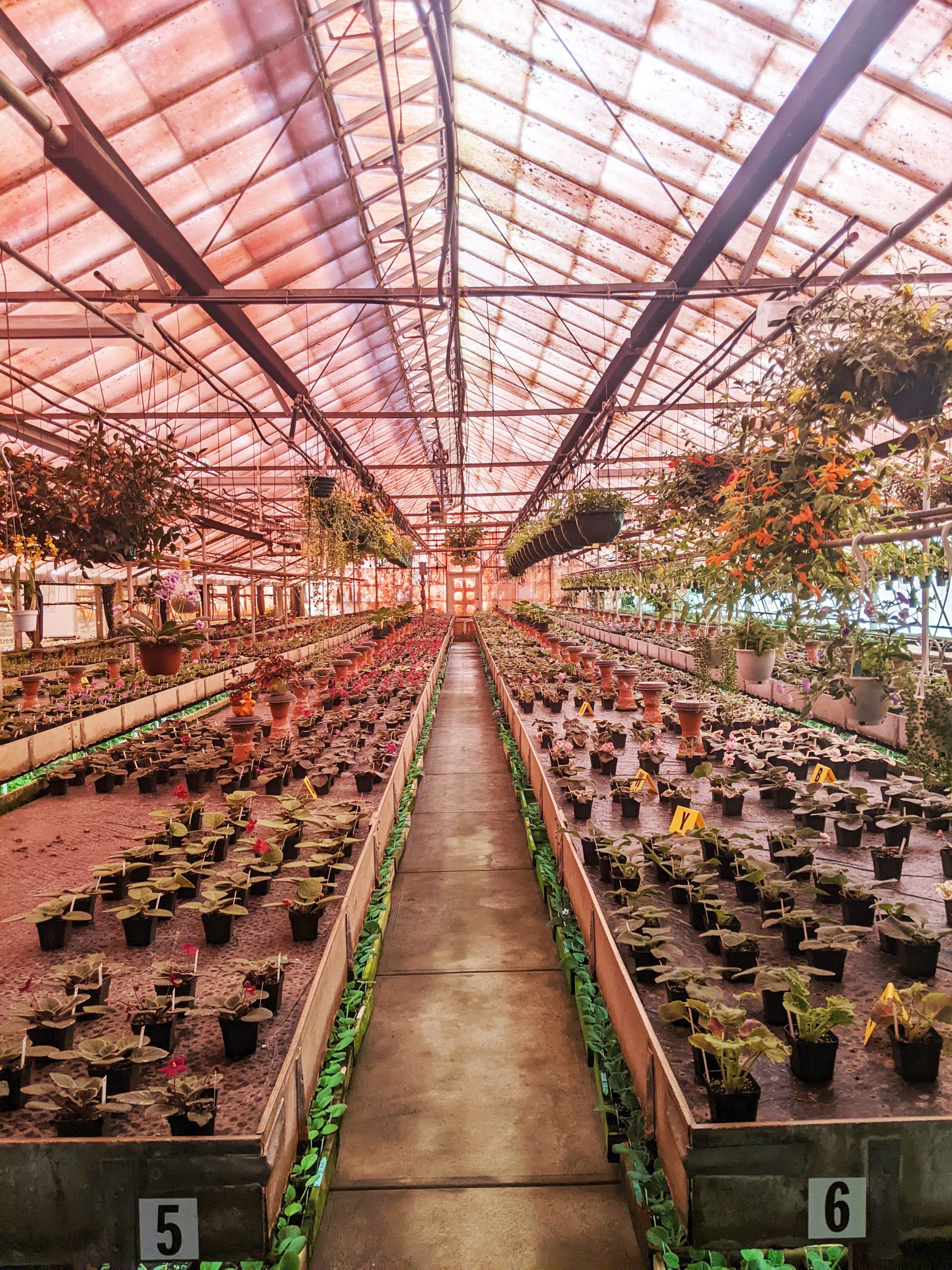
“We grow 700- 800 different varieties of violets right now. There are tens of thousands out there, and every day people are hybridizing more varieties. We also sell related plants. We call them companion plants. They are usually in the same family. African Violets are in the Gesneria family. We grow shade plants, so the conditions allow for all of these plants to be grown in the same houses.”
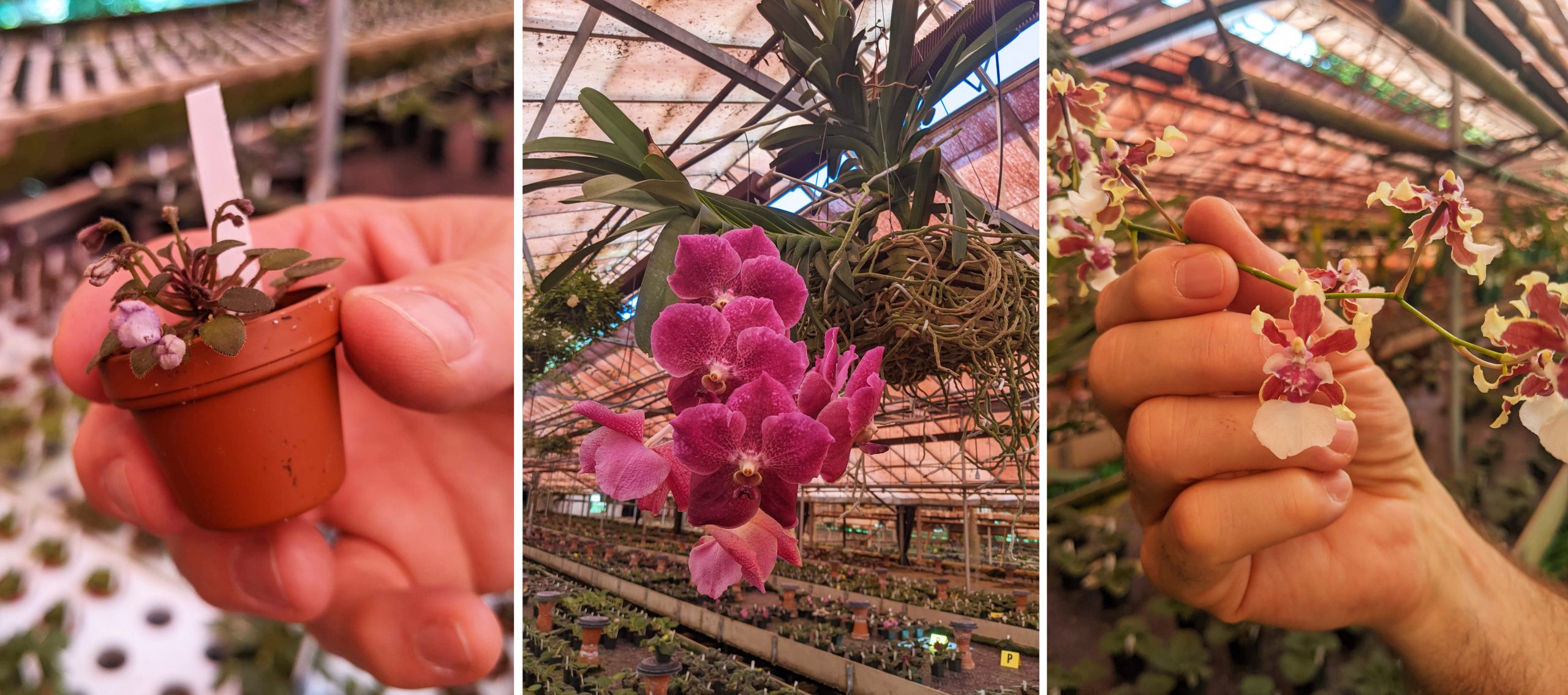
”Teenie Bopper” – one of the tiniest Violets in the world (left), A beautiful Orchid from their collection(middle), The Dancing Doll Orchid that smells like chocolate (right)
The Greenhouses are a wonderful escape from the cold and colorless winter months. “We’re open every day except Sundays year round.” Come visit the warm and colorful sights of the greenhouse. They even have a private collection of Orchids you can view as they are in bloom most of the year. One even smells like chocolate!
Orders are taken online at www.Lyndonlyon.com or in person at the greenhouses. If you prefer, you may also print out the order form from the website and mail it in. Call ahead for directions and to confirm winter hours at 315-429-8291. What could be better than a unique, local gift that can be shipped to loved ones to brighten their day or holiday?