

Little Falls Historical Society
2025 Writing Series
Dedicated to Our Organization’s Founding Members
By Dennis D. Urban
The Addison and Lucinda Phillips Family:
Addison and Lucinda Phillips, a Black family, lived most of their adult lives here beginning in mid-1863, raised their nine children here, and are buried locally. Since Little Falls had a small Black population in the second half of the 19th century, how they came to make their lives here is a little known story and was certainly unknown to their descendants until this writing.
According to multiple census records, Addison and Lucinda were born in Virginia at unknown locations, likely in Loudoun or Fairfax County. Addison was born circa 1834 per his obituary; Lucinda was born circa 1836 per her 1896 obituary. Both obituaries were published in the Little Falls, NY newspaper, which was unusual for the time. They may have been born on the same plantation or on a neighboring plantation. How they received their surnames is unknown. Many times, names were taken from the families that owned them. One or both of them worked as either field hands or house servants. Irrespective of how they worked, life was not easy. It was illegal to teach enslaved people to read and write. It is unknown if at the time of their escape they could do either. How they came to know each other and become “married” can never be determined. Black enslaved “marriages” were also illegal and not recognized by law. Nonetheless, at the time of their 1861 escape, they were considered married.
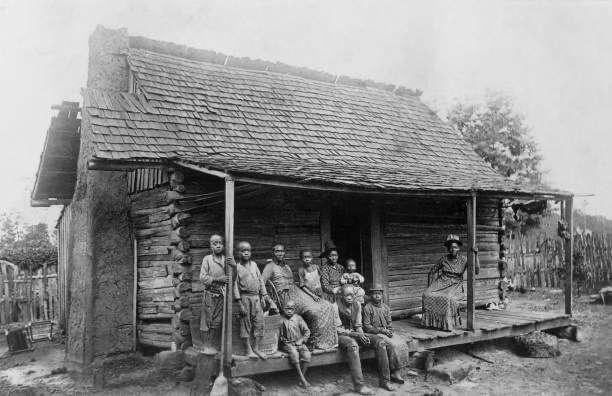
The obituary, which relates the story of the family’s escape to freedom, contains details which must have been provided by the Phillips family. Reading from the obituary and making some reasonable assumptions, the following can be deduced. Addison and another local family “learning that the northern troops were encamped not far away (across the Potomac River), he (Addison) planned with a companion to get away.” The escape took some clandestine nighttime planning after their daily work was done. Planning must have gone on for a few weeks; this was not an impulsive move. The obituary states that Addison had the help of a male companion. Both men led the escaping “group” from the cabin to the boat secreted near the river. The small group of escapees could have been cabin mates. The obituary mentions two children escaping with Addison and Lucinda. The children’s ages and sex are unknown. Ancestry records only indicate a girl, Laura, born sometime in 1861, being in the family the year of their escape. If there was a second child, the child was likely older and did not live to be recorded in a census. Nothing is known of the others crossing with the Phillips family. At least four, five or more persons occupied the boat (Addison, Lucinda, and one or two children) and maybe several more (the male companion and those with him); perhaps comprising another full family. It is difficult to determine exactly when the escape took place. However, assimilating information from several sources points to the months of August or September 1861.
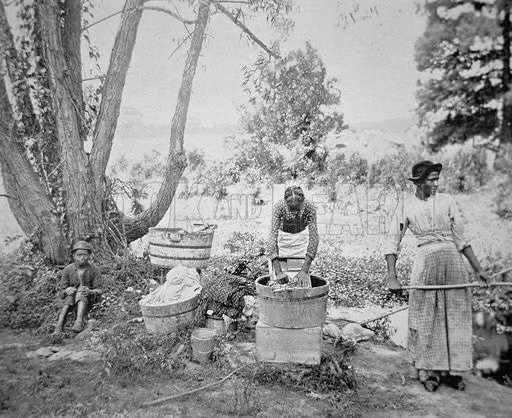
A comprehensive check of the property records in Little Falls over a 30-40 year period could reveal information on the houses and lots owned by Addison Phillips. This has not been researched. Easterbrook certainly knew of what he wrote in 1903 as he resided in Little Falls since the return of the regiment in the summer of 1863. Census and city directory records from 1870 to 1900 reveal six known locations for Addison, all in the same lower southwestern area of Little Falls. This area is where most of the African Americans lived since it was near their African Methodist Episcopal (AME) Zion church. In June 1870 Addison owned a single family home, recorded as #269, valued at $1,200. Thus he had done well since arriving in 1863. House numbers were not previously recorded and perhaps not assigned until circa 1880 when the Phillips family lived at 600 Furnace Street. In 1886 Addison was living at 28 Skinner Street. In 1897 he was recorded at 43 Skinner Street and in 1900 at 64 Skinner, renting with a White family. Addison’s 1904 obituary states that he was living on King Street in the same neighborhood as the homes mentioned above.
Not all Blacks who came to the 34th, whether from Virginia, Maryland, Washington City or elsewhere, were fortunate enough to remain with the regiment. Quoting from a 2019 book by Dennis D. Urban, The Making of a Civilian Soldier in the Civil War, which is based on a diary of William J. McLean of Company C, (In 1861) “the Fugitive Slave Law of 1850 was in effect throughout the United States. This controversial law required that fugitive slaves be returned to their masters no matter where in the country they were found.”
On August 8, Solomon Clark of Company I, wrote a letter home from Great Falls where his company was detailed. His letter, quoted in the above referenced book, stated, “some slave owners came and claimed some negroes we had here. One we had for cook, and our pickets brought in three others. They were given up by the Major.” The Major was 32-year-old Byron Laflin. The Phillips family may not have been in the camp on that date. Indeed, when they did come to the camp of the 34th, the Phillips family was fortunate to be permitted to remain with the regiment. This decision changed their lives forever!
After returning to Little Falls with the regiment in mid-1863, the “hard-working” Addison was able to build a solid middle class existence for his family. He worked his entire life as a gardener or laborer as described in the census. According to the June 23, 1870 Federal census, Addison owned a home valued at $1,200 ($27,800 in 2023) and personal property valued at $200. Per the same census page, Lucinda is recorded by a hash mark in the column box as “Unable to write.” There is no mark in the “Unable to read” box. Five years later, in the June 16, 1875 New York State census, Addison was listed as a “voter” with a home value of $1,500; a greater value than those of his surrounding White neighbors. Lucinda is now recorded with a hash mark in Column 20 which states “Over 21 and not able to read and write.” This question was also asked on the 1880 Federal census form. There are hash marks in Box 22, “Cannot Read”, and Box 23, “Cannot Write.” If accurate, hopefully this soon changed. The accuracy of this information may be suspect as the age of Addison is listed as 33 and the age of Lucinda as 37. These ages are clearly incorrect. The next recorded census is the 1892 New York State census form. The read/write questions were not asked on that form. By 1880 the Phillips were living at 600 Furnace Street and had eight children at home ranging in age from 3-years-old to 19-years-old. The older children likely contributed to the family income. Per the 1892 New York State census all the children in the home in 1880 were now out on their own and two children, Harrietta (sic), (15) and Ermma (10) were at home. According to her newspaper obituary, four years later, on June 26, 1896 Lucinda passed away at 13 Skinner Street. However, the New York State Death Index records her death as June 25. A year later the city directory recorded Addison living at 43 Skinner Street. It is presumed that Ermma was still living with Addison as she was 15 or 16-years-old. At the turn of the century in June 1900 Addison was renting with a White family at 64 Skinner Street. Around this time, Addison had a formal photographic portrait taken. He looked very prosperous wearing a vested suit with a white shirt and striped tie. This was to become his published obituary picture. Addison continued to work until the day he died, March 1, 1904 when he resided on King Street in Little Falls.
The Obituary of Addison Phillips Tells the Story:
The Saturday Globe, Saturday, March 5, 1904:
“Little Falls, March 4 – With the old soldiers who fought for their liberty are also passing the remnant of former slaves that accompanied our victorious troops north to enter on a new life of freedom and citizenship. Addison Phillips, a familiar figure about Little Falls, dropped dead from heart disease last Tuesday morning while shoveling snow.
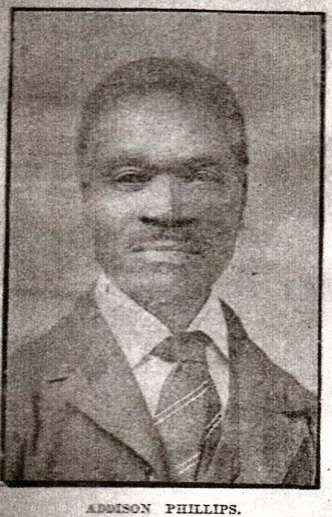
The burial site for Addison is not mentioned in the obituary. It may be in the Church Street Cemetery but he is not listed in the official cemetery records. The mentioned son was George and the three daughters were Lucy, Harriet, and Ermma.
The account of Quartermaster Easterbrook mentions one child while the obituary references two children crossing. Ancestry.com only references one child born in 1861. A single child crossing with the family is more likely correct.
A second shorter obituary in another Little Falls newspaper stated that Addison was “an industrious and willing worker” and that “of late had suffered some from heart trouble.”
Addison and Lucinda Phillips remained with the 34th NYSV until the regiment was mustered out on June 30, 1863. They returned with those members of the regiment from Little Falls to that small town west of Albany. They remained in Little Falls for the rest of their lives and raised all of their nine children there. Census records listed Addison as a gardener or a laborer. There is no known occupation for Lucinda but she obviously had her hands full raising the children. As recorded above from the regimental history of the 34th NYSV, Addison “did own several lots and houses there” in Little Falls. Judging by his prosperous looking obituary photograph, the 1903 statement is likely accurate.
There are nine children in the Ancestry.com records known to be born of Lucinda between 1861 and 1882. There are five female and four male children in the record. The search through Ancestry was exhaustive; however there may be other records in archives of local newspapers, state records, or other unexplored sources. The purpose here is to provide as much basic information as possible to the Phillips descendant’s family and to serve as a beginning point for additional research by other descendants of Addison and Lucinda.
Obituary for Lucinda Phillips (June 26, 1896 Little Falls Evening Times):
“Lucinda Phillips, wife of Addison Phillips, died at her home, 13 Skinner Street, yesterday of stomach trouble. She was 60 years of age and besides a husband is survived by one daughter, Carrie (sic). The funeral will be held from the home tomorrow afternoon at 2:30, the Rev. Mr. Leete officiating.”
The Sexton from the Church Street Cemetery which contained the “Colored Peoples Ground” as identified on the cemetery map, recorded the death information for Lucinda in his large ledger book. According to David Krutz, Civil War author and lifelong Little Falls resident, such information would be recorded within a day or two of the burial. A Sexton was an official position of the Town of Little Falls. This person was the official record keeper and caretaker of the cemetery. Lucinda died on Thursday, June 25, 1896 and her death is noted at entry #192 in the book. The single line entry, pictured below, shows Lucinda as being 60-years-old, married (M) and Colored (C). Farther along the same line, her father is recorded as Jacob Dickinson and her mother as Martha (no surname) and both noted as being from Virginia. At the time, lack of a surname for Martha in the record usually indicated that she was enslaved. No further record of Jacob and Martha together is found anywhere. This information is no doubt accurate as it came directly from the family, maybe from Addison, at the time of her death.


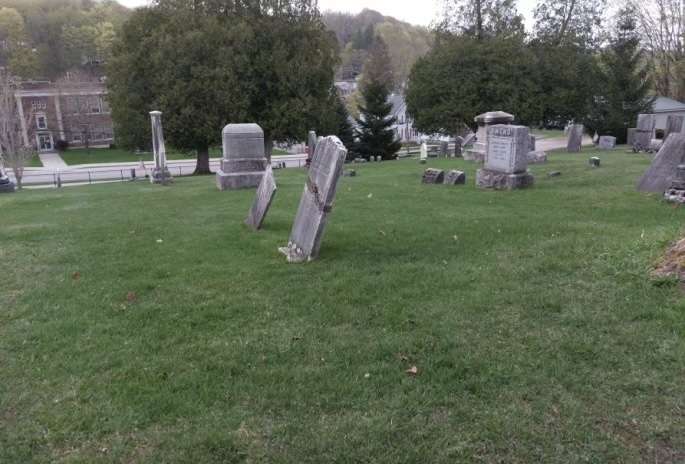
The appearance of the name Carrie as a surviving daughter is the first time that name as appeared in any record on Ancestry. She is not on the February 1892 NYS census. Was daughter Ermma known as Carrie? Ermma was 14-years-old at her mother’s death and surely still at home. If Carrie was born after 1892, there would have been more than a 10 year interval between the last child born to Lucinda; something which had not occurred earlier with any child’s birth. Also, the newspaper could have printed the name incorrectly and Carrie really was Ermma. For purposes of this article, Ermma and Carrie are considered to be the same person.
Additional evidence has been uncovered from the 1850 Federal Census which identifies a Jacob Dickinson as a 27-year-old “overseer” on a plantation in Charlotte County, Virginia. This could be the Jacob Dickinson who fathered Lucinda. It must be stressed that this information seems quite logical though it cannot be considered definitive without exact proof; proof which may be impossible to locate.
More detailed information about the children of Addison and Lucinda is contained in the complete Phillips family history manuscript written by Mr. Urban and on file in the LFHS. This history takes the family into the 21st century.
The current Phillips descendants had no knowledge of the escape from slavery of Addison and Lucinda until contacted by Mr. Urban as he researched the Phillips family after the publication of his book. Urban is grateful for the information supplied by David Krutz and other members of the LFHS.