


Story and Photographs By Joan Herrmann
Whereiwander… today it is not too far from home to a Beaver Meadow. Beavers (Castor canadensis) are fascinating rodents, and I am reminded of a memorable encounter with one when I was on a quest to see and photograph a moose at Helldiver Pond. This pond is located within the Moose River Recreational Area, and my husband and I had left home at four-thirty in the morning, as the moose was an early raiser and it was a long drive. As we and another couple waited quietly on the dock, I scanned the perimeter of the pond with my camera. We were all startled by the unexpected SLAP of a beaver’s tail, and at that very moment, I finally sighted the moose named Harold. I had been looking at him for several seconds but was so awed struck after looking and seeking a moose for more than thirty years that I couldn’t even utter a sound. The beaver’s tail slap broke the silence, and I pointed across the pond to the moose. Then we all got photos of Harold.
All rodents are similar in that they must continually chew or gnaw because their upper and lower incisor teeth never stop growing. Beavers are unique mammals that are monogamous, staying together throughout the years, and have only one mating partner; this is rather unusual for the majority of wild animals. The female beaver of the colony is the dominant member. The colony most often consists of two to occasionally three kits, which are born in the spring: the female, the male, and quite often yearlings from the previous year. The demands of building and maintaining the structure of the dam and lodge is accomplished with the assistance of all colony members.


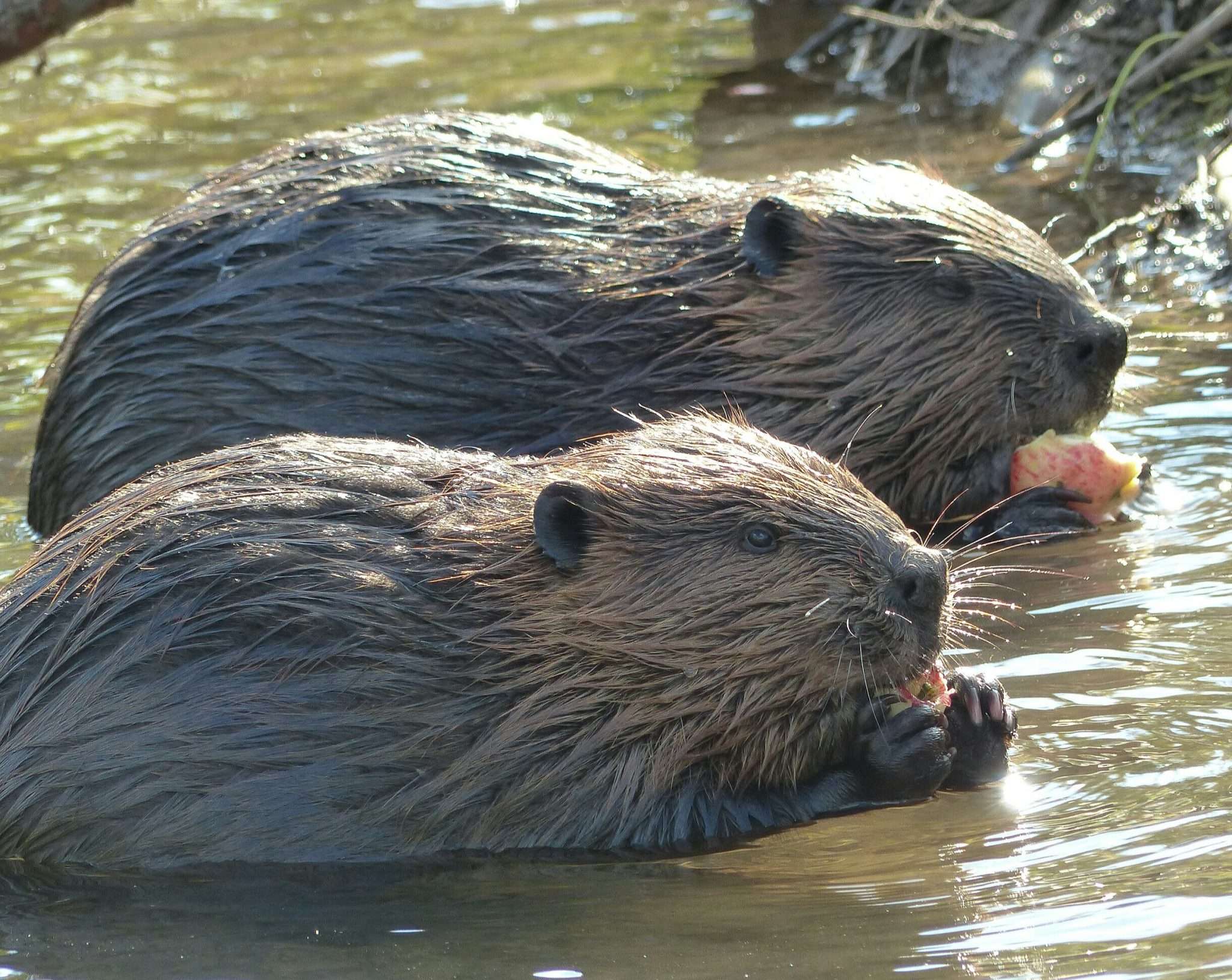
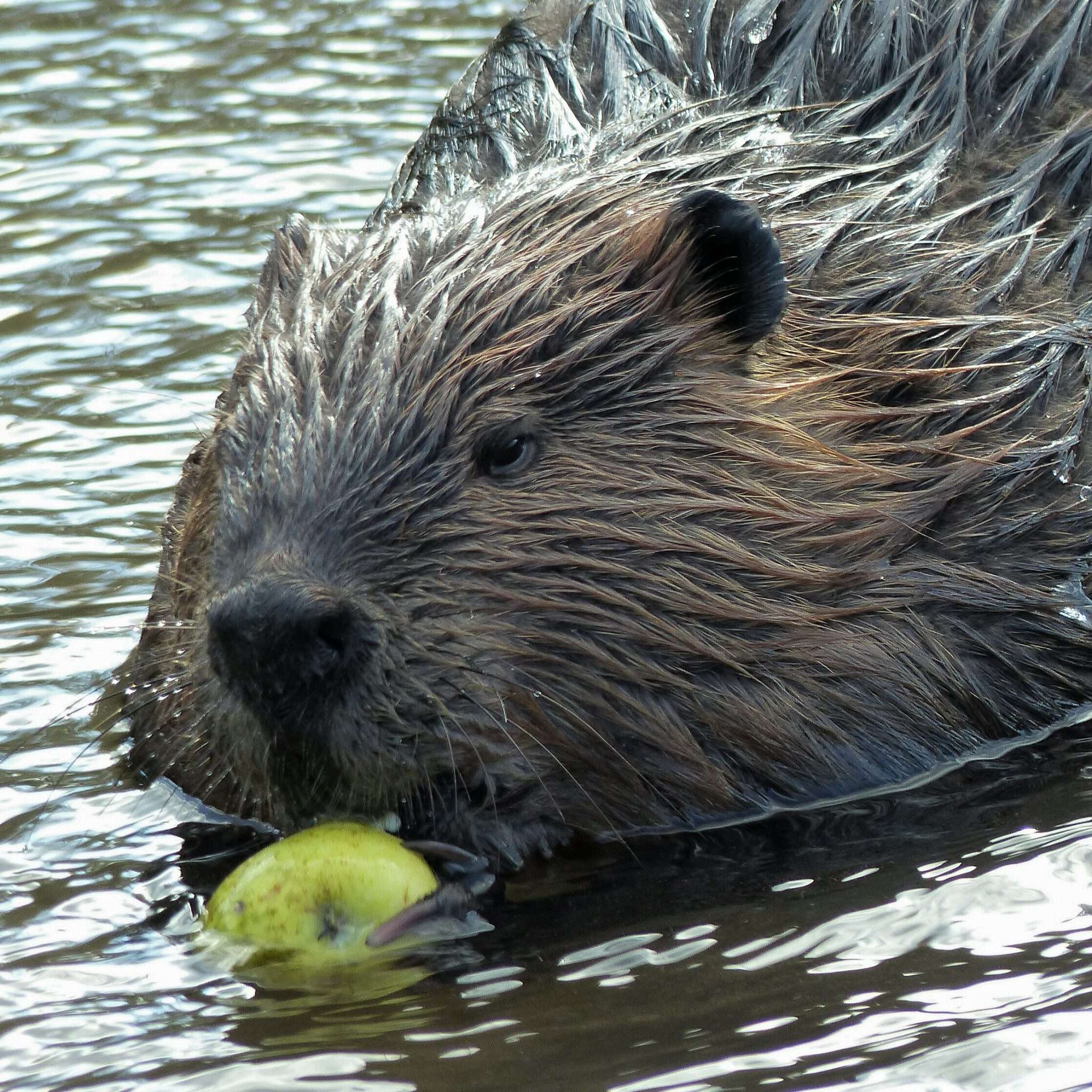
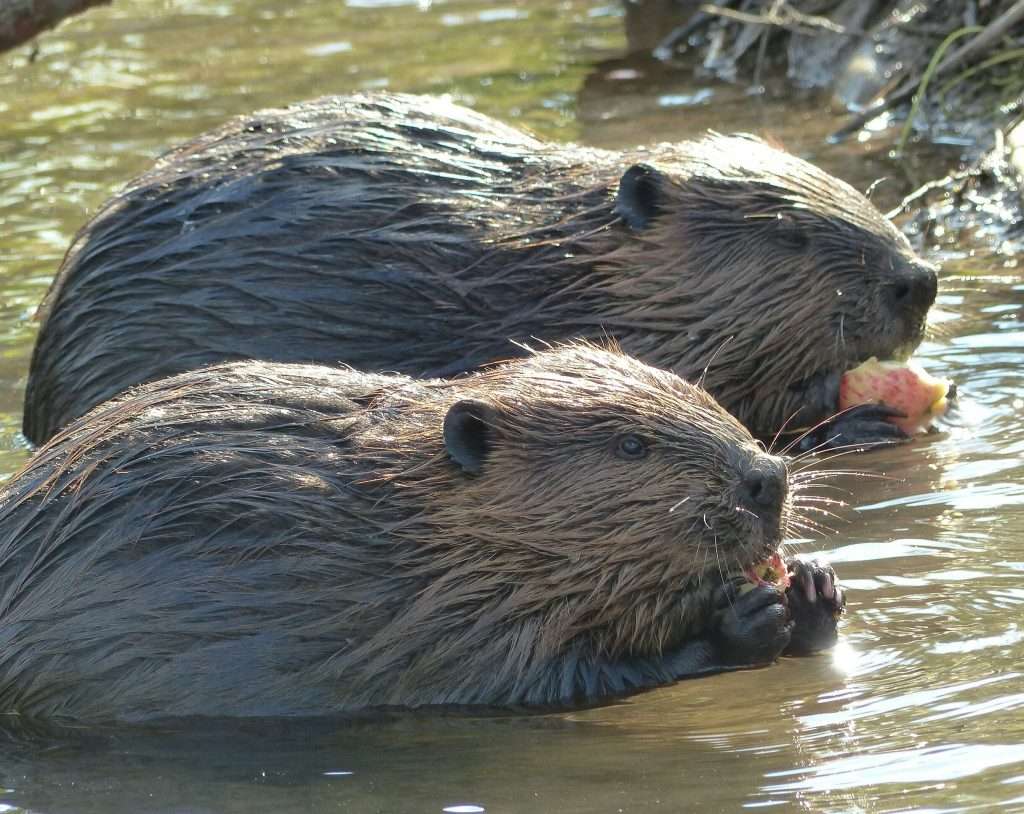
The beaver’s body is ideal for both underwater and land maneuvering. Beavers have very dense, soft, waterproof “under fur’ that traps air, insulates, and also keeps them buoyant. Their broad, scaly tail, in addition to sounding alarms, works as a rudder in the water and as a prop for balancing them on their hind legs when cutting down a tree or standing. In the summer heat, their tail works as a heat exchanger, allowing them to eliminate as much as twenty-five percent of their body heat. Their hind feet are webbed, helping them when they swim. They also have a split toe nail, which helps when they groom their fur by acting like a comb. The split toe nail, in addition, assists them when they apply waterproofing oil from their oil gland and also when they need to remove parasites and other debris from their fur. Their front feet are not webbed and are kept “balled up” against their chest when they swim. The front feet are able to carry mud and sticks and are also used to dig, handle food, and for grooming. Beavers have an excellent sense of smell and can easily identify its favorite food tree just by smelling it. A beaver’s top and bottom incisor teeth are orange in color and very large and outstanding. Both the beaver’s ears and its nose have seals that keep the water out while they are underwater. Their eyes are also unique as they have a transparent third eyelid that slides across each eye. This eyelid is called a nictitating membrane and can be found in many birds, too. Their loose upper lip closes behind it four incisors which allow them to chew underwater without letting fragments or water to enter its mouth. The beaver’s tear-shaped body permits them to have streamlined maneuverability in the water. While swimming, only the beaver’s head is above the water. These features also make a beaver less vulnerable to predators. A beaver is able to stay underwater for up to fifteen minutes and may cover a distance of up to a half mile within that time.
Beavers are strictly vegetarians, eating leaves, twigs, and trees in spring and summer. Among their favorite trees are Aspen, Birch, Maple, and Willow. Adult beavers weigh between forty-five and sixty pounds and are fully mature by two to two and a half years old. Their body length is about twenty-five to thirty inches, and their tail is most often nine to ten inches in length. In our area beavers will mate sometime in late January through the month of March. Their kits are born in April and sometimes as late as July. They only have one litter yearly, and the gestation time is one hundred to one hundred and ten days. The kits, usually two, are born fully furred, their eyes are open, and they weigh about a pound each. They are able to enter the water within a day after their birth. However, it takes about a month for the oil glands to function enough for them to waterproof their fur. While they are still nursing, they will also begin gnawing on wood. By the time they are seven to eight pounds, they can leave the lodge and begin exploring with the adults and their older siblings.
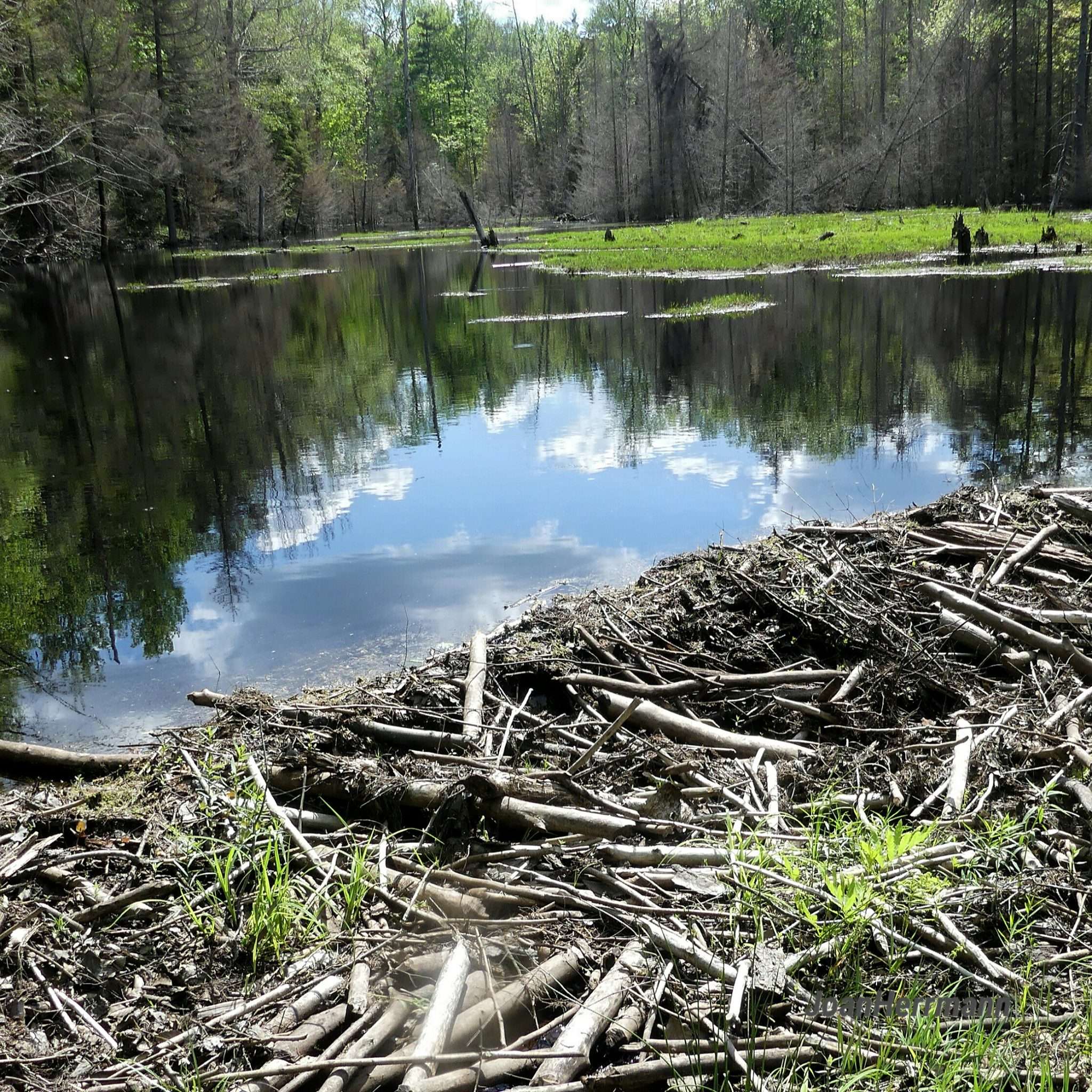
Beavers are engineers extraordinaire; they dam up streams that are too shallow to hide them from predators and to make their lodgers and route of travel safe as they move to and from feeding areas. Most active from dusk to dawn a beaver is able to take down a three inch diameter tree in less than ten minutes and a five inch tree in about a half hour. One beaver will fall the tree, and the rest of the family will help with the removal of twigs and branches. In climates like ours, where the water freezes, caching food is done in the fall. Tree branches of their favorite foods are secured in the mud below the water near the lodge entrance. The caches may be extremely large since a family of seven can consume about one ton of food over the winter.
I hope that you have found this column interesting and that perhaps you have a new insight regarding these amazing rodents. Hope to see you also… where you wander.

In 2007, she began working with the Black River Outdoor Educational Program (BROEP). In 2013 and 2014, she did a week-long summer program at BROEP with Mohawk Valley Community College (MVCC).
Using her love of nature and photography, she created a Flora/Fauna outdoor educational program teaching students (ages 6 to 14) the joys of nature and creative photography skills.
Joan’s love of nature has been a lifelong study of Birds, Wildflowers, Mosses, Ferns, Trees, Amphibians, Reptiles, Grasses, Insects, Spiders, Tracks, Scat, and Galls. She has assisted in cataloging all trails used by the hiking Coaches and photographed and identified seasonal Flora.
Since October 2016, she has written a bi-monthly nature column with Adirondack Express Newspaper. In October 2019, she began a bi-monthly column with the My Little Falls newspaper. You may reach her at jmhphoto8442@gmail.com.