


Story and Photographs By Joan Herrmann
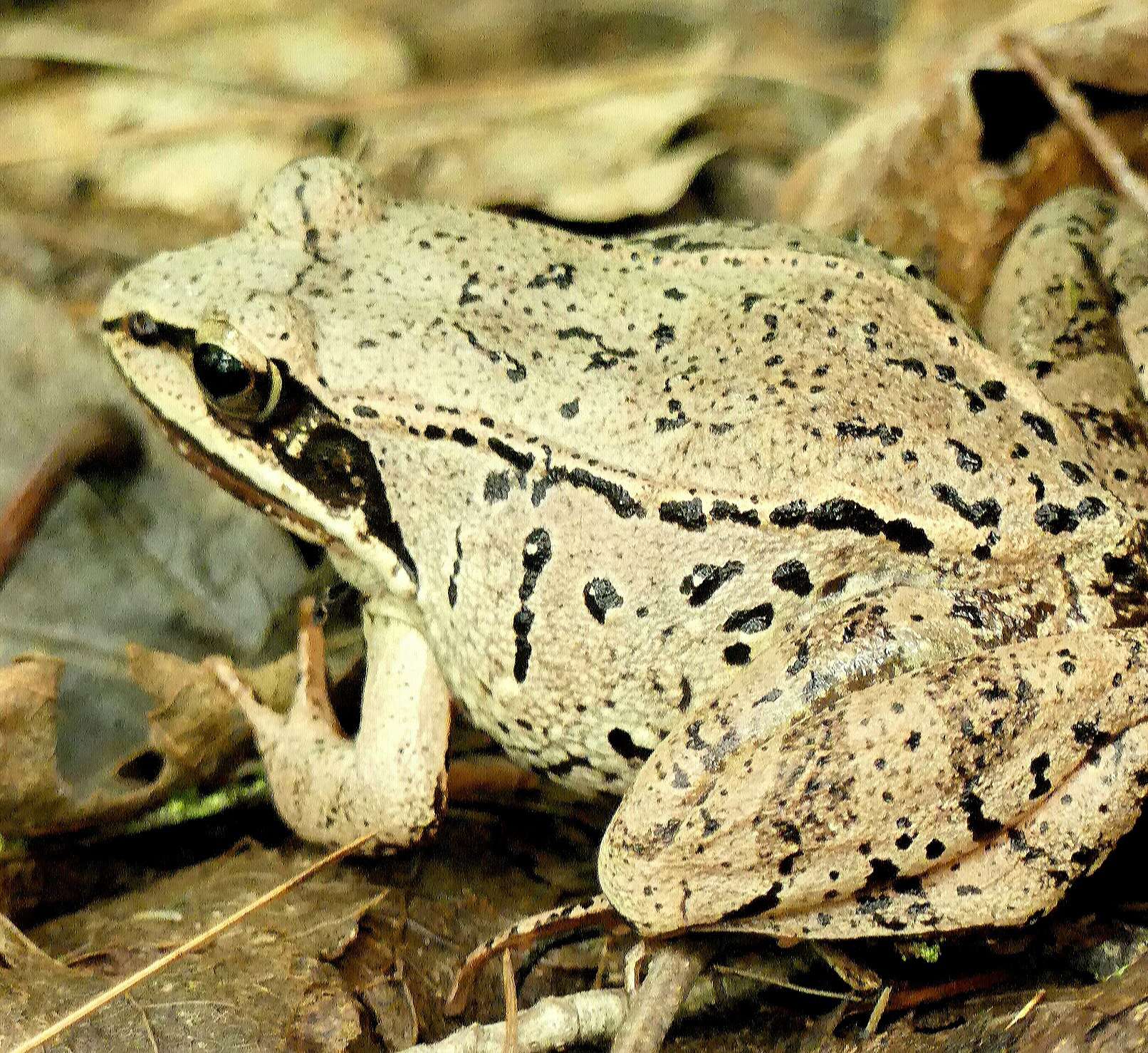
Whereiwander… today may just be outside sitting on the balcony and listening to the birds, feeling the sunshine on my face, seeing sprouts in all our gardens, and knowing that soon the smell of lilacs will enhance the gentle wind. Another sound which I am anxious to hear is the harmony of Wood Frogs (Rana sylvatica) and Spring Peepers (Pseudacris crucifer). These two amphibians bring so much joy to all of us who live near open water. For me, it occurs within the two small but delightful ponds. One pond is next to our driveway and the other is next to our neighbor’s driveway. When the delightful sounds can be heard, it means that there are probably numerous clusters of wood frog eggs that have already been laid. They are easy to observe on the ponds’ surface. The Spring Peepers are a bit more difficult to find, because the Peepers are like ventriloquists and are able to “throw their voice”.
Little by little the “Spring Birds” are returning and that is always an exciting time of the year for those that enjoy seeing and perhaps photographing these migrating beautiful birds. Most of the returning birds are already displaying their spring plumage and will be seeking to impress a mate. Also as the temperatures rise and the insects, which many birds feed upon, will also be emerging from their brumation (insects’ hibernation).
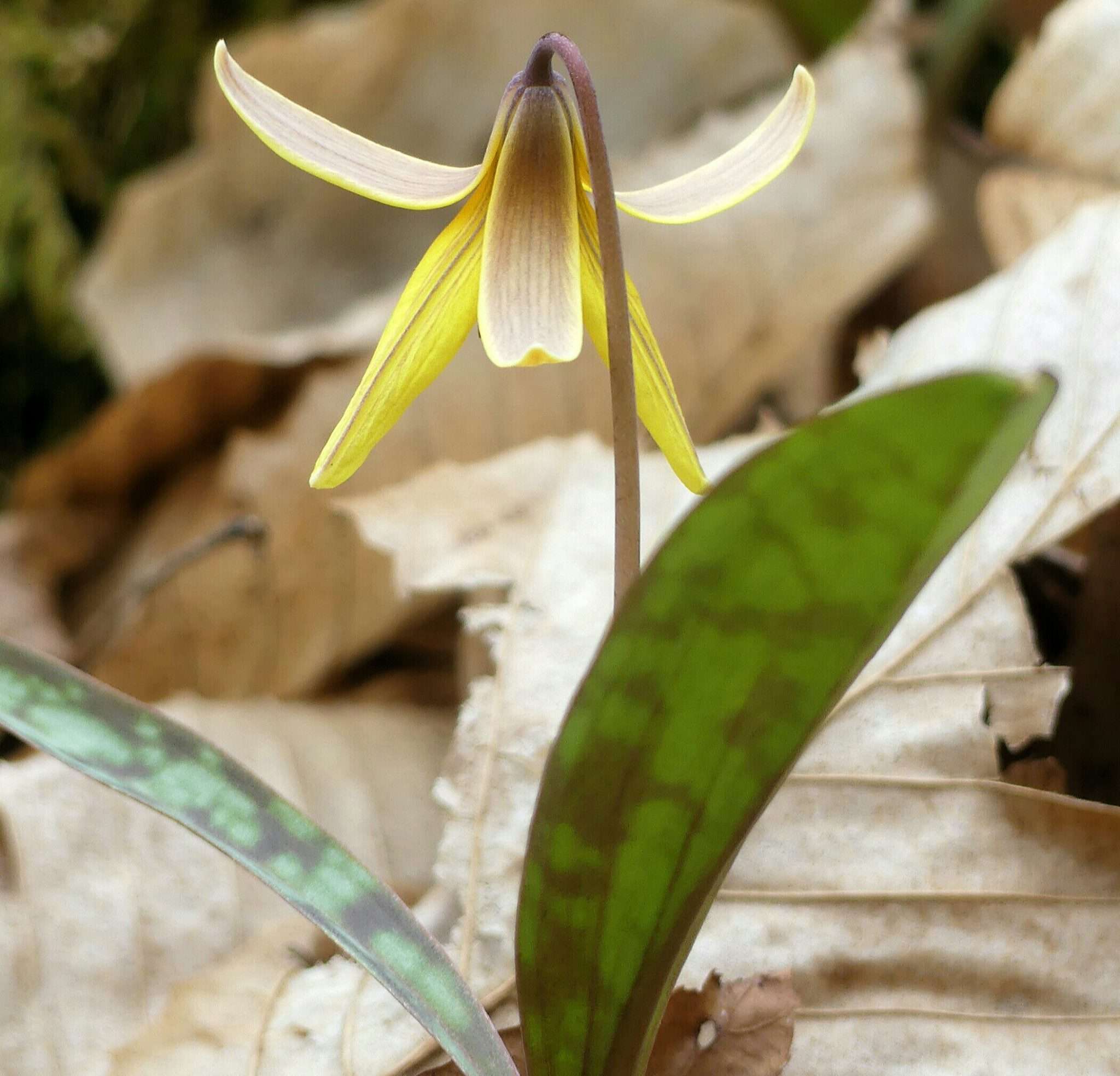
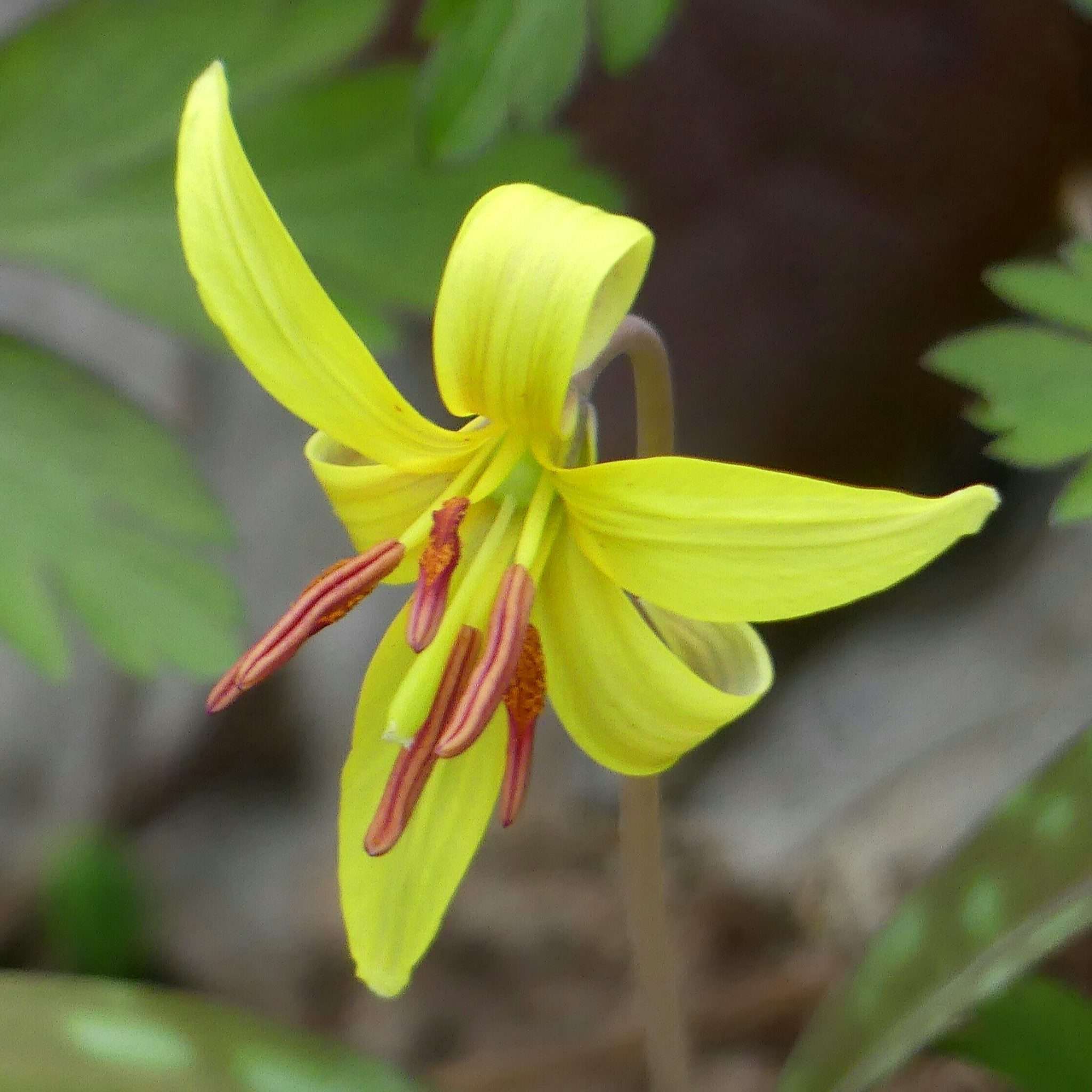
Another area that I wander to is bogs, wetlands, and even roadside ditches in search of ephemerals; they are perennial wildflowers which emerge quickly in spring before the canopy of leaves reduces the amount of sunlight. Their life cycle takes place in a matter of several weeks, at which time they develop stems, leaves, and flowers. They bloom quickly and will produce seeds; for some, their leaves wither, leaving only the underground parts, which consist of roots, bulbs, rhizomes, or corms.
Most wildflowers have numerous common names, for example, Erythronium americanum is known as Trout Lily, Adder’s Tongue, and also Dog’s Tooth Violet. It is called Trout Lily because it is in the lily family, it usually blooms close to trout fishing season, and its leaves are speckled like a trout. The name Adder’s Tongue is because of the protruding stamens that remind some people of a snake’s forked tongue. The name Dog’s tooth violet is because its corms (underground bulbo-tubers for storage of food) resemble a dog’s canine tooth. Trout lily is best viewed through the lens of a camera, or by kneeling or bending down to see it. A magnifying glass or scope will give you an even better inspection of the plant. Yes, you could pick it, but keep in mind that it takes seven years for the plant to produce a flower. The trout lily blossom is extremely important to Queen Bumblebees. Only the fertilized queen bumblebee will winter over; the rest of the colony dies. The trout lily nectar will nourish the emerging queen bumblebees. Most of a queen bumblebee’s lifetime is spent in hibernation, but this also protects her from getting diseases, starvation, and predators. In late fall, each fertilized queen bumblebee will excavate a small chamber for herself and stay in it throughout the winter. When she emerges in spring, she will immediately seek flowers, such as trout lilies. Trout lilies’ nectar is high in sugar and is a fuel source. After the queen’s eggs have hatched, she will seek trout lilies and other spring wildflowers for their pollen, which will provide protein and nutrients for the larvae’s growth and development.
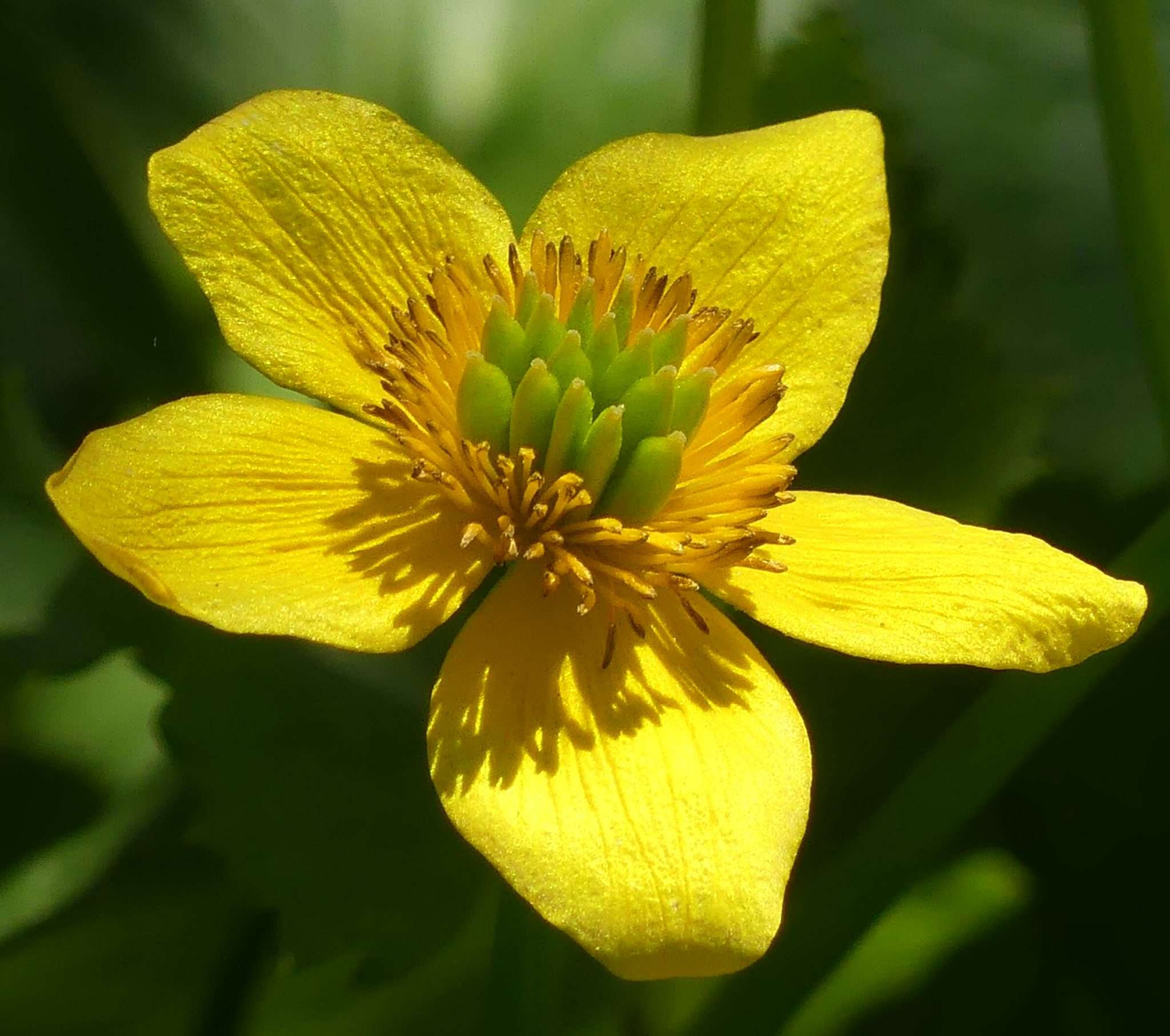
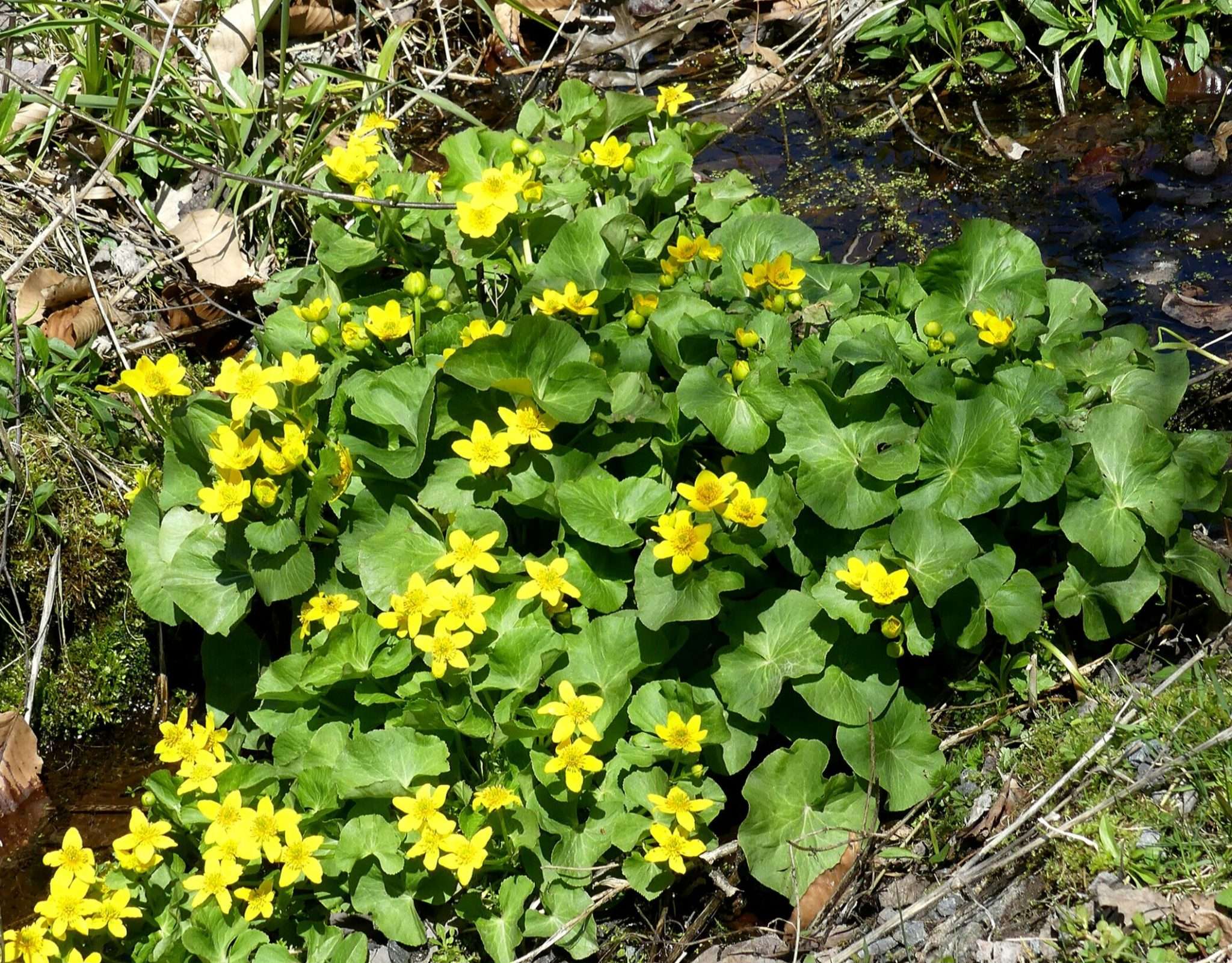
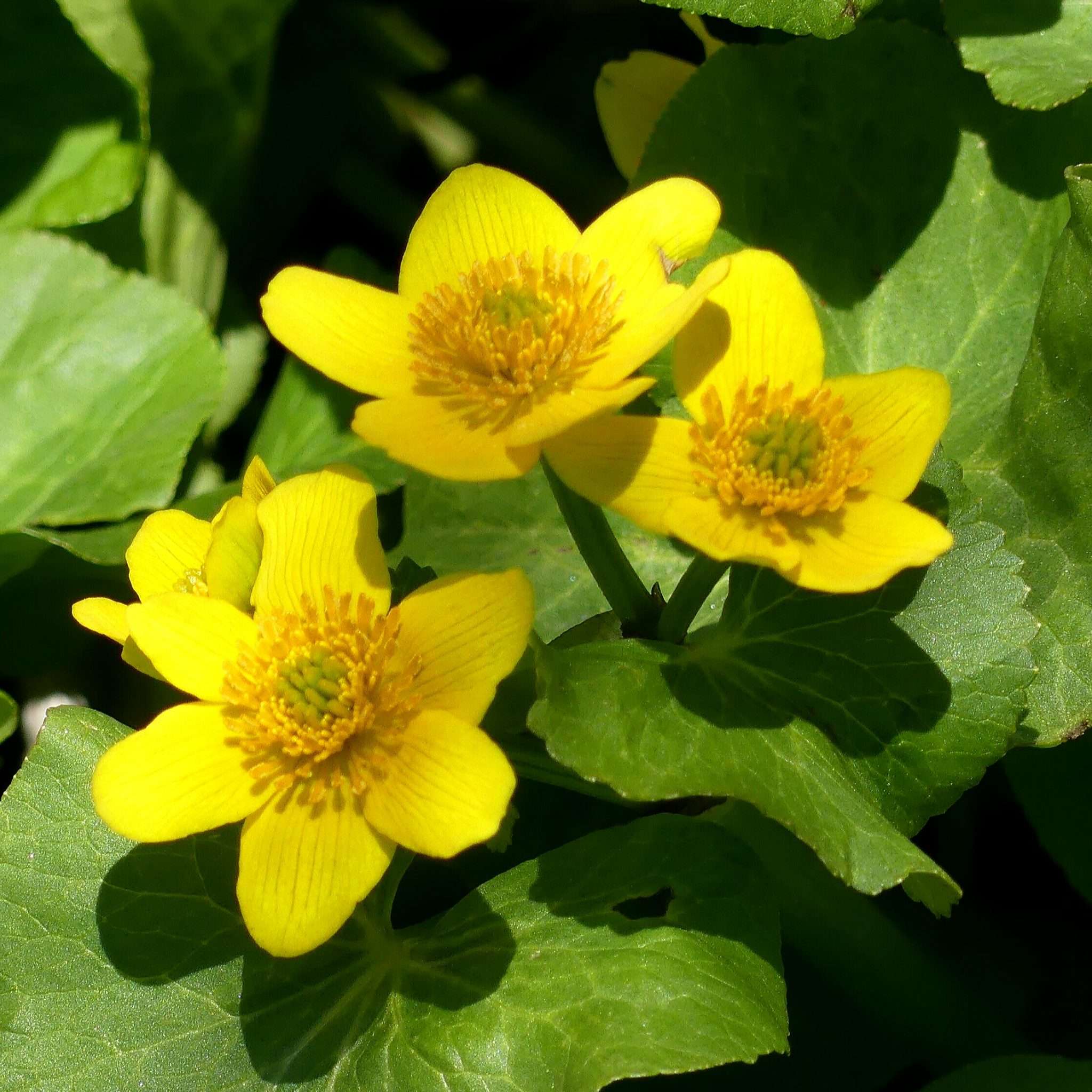
Bogs, wetlands, and even roadside ditches may be the sight of some truly lovely ephemerals known as Marsh Marigolds or Cowslips (Caltha palustris). It may be found in late April and throughout May, depending on weather conditions. Caltha is a Greek word meaning “cup” or “goblet”, and palustris is a Latin word for “marsh” or “swamp”. These beautiful, brilliant yellow blooms with dark green leaves like to have their “feet wet”. They are a favorite food of moose, unlike other animals such as deer and cows, which avoid them because they are poisonous to them. The leaves have been eaten by humans, but they must be boiled in water with several water changes and re-boiled before they are safe to consume. In some areas, the buds may have been picked and pickled as a substitute for capers. Some herbalists even use the plant to treat several medical conditions, which include warts and anemia. Even though marsh marigolds appear to be yellow in coloring to human eyes, insects that are sensitive to the ultraviolet (UV) wavelengths see them differently and are guided to the “dark flower center”.
Another of the early bloomers that are quite recognizable and appear as a small colony of tiny green umbrellas, growing in or near the woods, are known as Mayapples (Podophyllum peltatum). They have either one leaf or two, but only two-leaved plants produce a blossom. The beautiful white flower grows from the “crotch” of the two-leaved stem and has a “sickly sweet” odor which attracts bumblebees. It has no nectar, but its pollen is used by many insects. The fruit it produces is called an “apple,” and is actually toxic for humans; however, medicinally, it has been used as a harsh laxative. The Iroquois Indians used it as an insecticide against potato bugs and corn borers. Even though it is poisonous for human consumption, it is actually hard to find a ripe one since it is a favorite food of raccoons and other small mammals.
Hopefully you will have an opportunity to get out and seek some of these delightful plants and perhaps enjoy hearing the mating sounds of our vocal frogs and perhaps see a murmuration of returning black birds or a flock of robins. Get your hummingbird feeders cleaned and up by the first week of May.

In 2007, she began working with the Black River Outdoor Educational Program (BROEP). In 2013 and 2014, she did a week-long summer program at BROEP with Mohawk Valley Community College (MVCC).
Using her love of nature and photography, she created a Flora/Fauna outdoor educational program teaching students (ages 6 to 14) the joys of nature and creative photography skills.
Joan’s love of nature has been a lifelong study of Birds, Wildflowers, Mosses, Ferns, Trees, Amphibians, Reptiles, Grasses, Insects, Spiders, Tracks, Scat, and Galls. She has assisted in cataloging all trails used by the hiking Coaches and photographed and identified seasonal Flora.
Since October 2016, she has written a bi-monthly nature column with Adirondack Express Newspaper. In October 2019, she began a bi-monthly column with the My Little Falls newspaper. You may reach her at jmhphoto8442@gmail.com.