


Story and Photographs By Joan Herrmann
Whereiwander…. now that the snow has melted and the ponds are no longer covered with ice, is the time when I enjoy looking to see who has returned from deep winter sleeps or long journeys from warmer climates. Just a few minutes ago, as I glanced out the window, I saw a female Rose-breasted Grosbeak. The male is probably checking to see if this will be a good place to share with his mate and raise another new brood. It is a joy to see more species returning and looking to do the same as the Grosbeaks. We provide black oil sunflower seeds, peanut butter suet, and a heated bird bath. The meadow is filled with a multitude of insects, seeds, and fruits. Numerous species of trees surround our property, and two acres of wood and several flower gardens also provide food for the birds and fauna.
Our neighbor has two magnificent ponds that also provide food and nesting sites for the many species of birds and other critters. As of May, we will have lived here for thirty years. It has been exciting to have grandchildren visit and share these joys with them. We all have many treasured memories of all their visits. I also love looking for and finding the first Painted Turtle and the first Snapping Turtle of Spring. Herpetology, the study of amphibians (frogs, toads, salamanders, and newts) and reptiles (snakes, lizards, turtles), is derived from the Greek word “herpein”, meaning “to creep”. Each spring, our family would drive to our cottage on Conesus Lake, which is south of Rochester, New York. I could hardly wait to go on my first “nature hike” of the season. My quest was to find painted turtles, puddles of pollywogs (also known as tadpoles), tiny toads and slippery frogs. I was allowed to line up “my menageries of jars, boxes, and fishbowls on the wide front steps of the sun porch, until it was time to go back home. I would say a somewhat tearful goodbye to my “newfound friends” until school was out for the summer.
Even as an adult, I relish the first warm spring night when the spring peepers and wood frogs herald the new season with their “songs”. Amphibians such as bullfrogs, green frogs, and leopard frogs dig into the mud and hibernate at the bottom of ponds. The word amphibian means critters with two separate stages of life. They have an aquatic gill-breathing egg\larval stage and a terrestrial lung-breathing adult stage. Not only do they grow lungs, they also grow legs. Amphibians only live in pollution-free environments, and insects comprise the largest part of their diet. Habitats that are treated with repellents to kill mosquitoes and black flies actually destroy large portions of frogs and toads’ food sources. Frogs and toads provide natural insect management for us and become prey for larger mammals and birds, such as foxes, coyotes, raccoons, and great blue herons. I have found it interesting to learn that wood frogs are able to lay as many as two thousand eggs, green frogs three to five thousand eggs, bullfrogs lay up to eighty thousand eggs, and toads four to eight thousand eggs. Mammals, like us, maintain relatively constant body temperature by eating and metabolizing food for energy, which in turn produces heat. We are “warm-blooded” while amphibians and reptiles are “cold-blooded”. Amphibians and reptiles require sun and shade to regulate their body temperatures and keep their skin moist. They can also absorb heat from sun-warmed rocks, leaves, and lily pads.
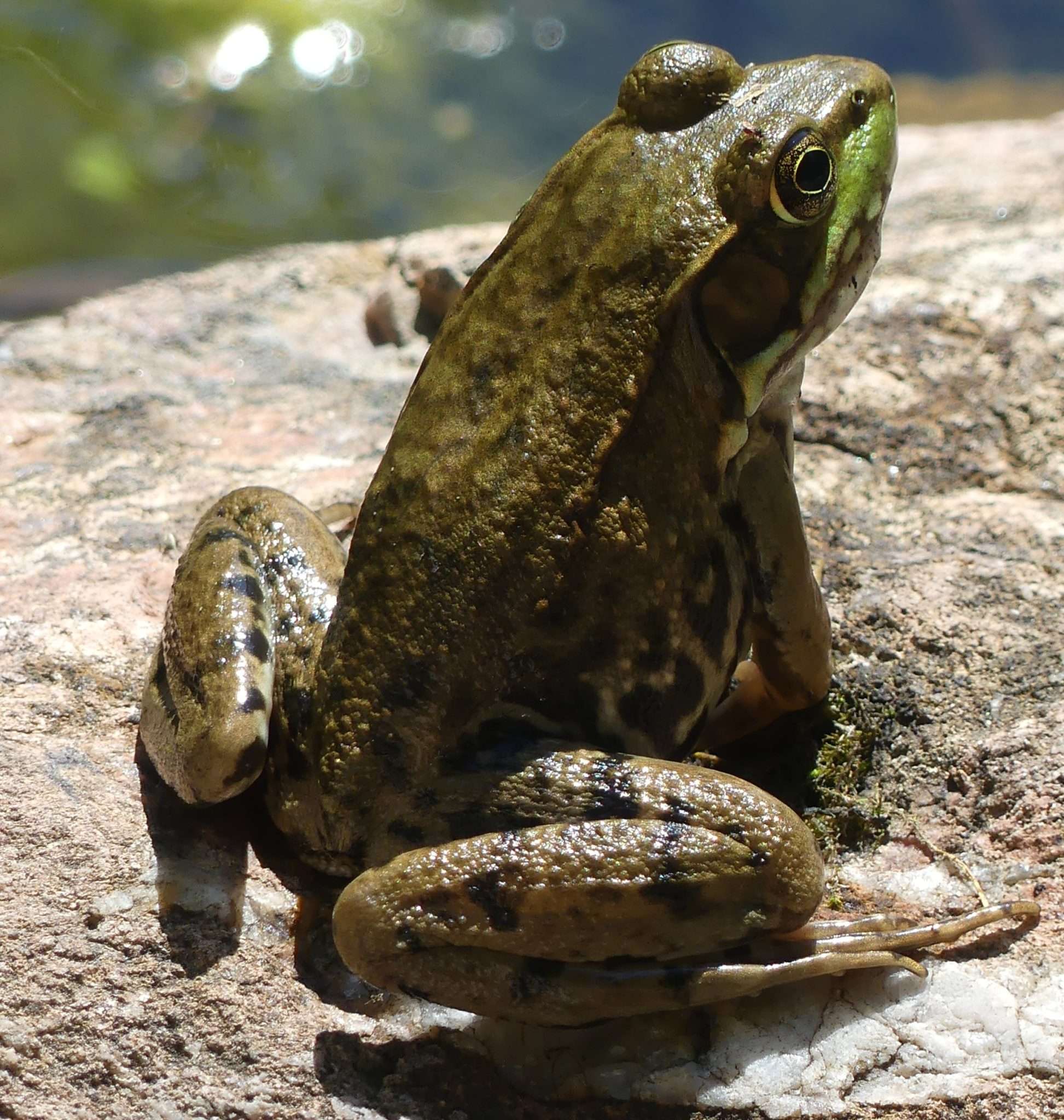
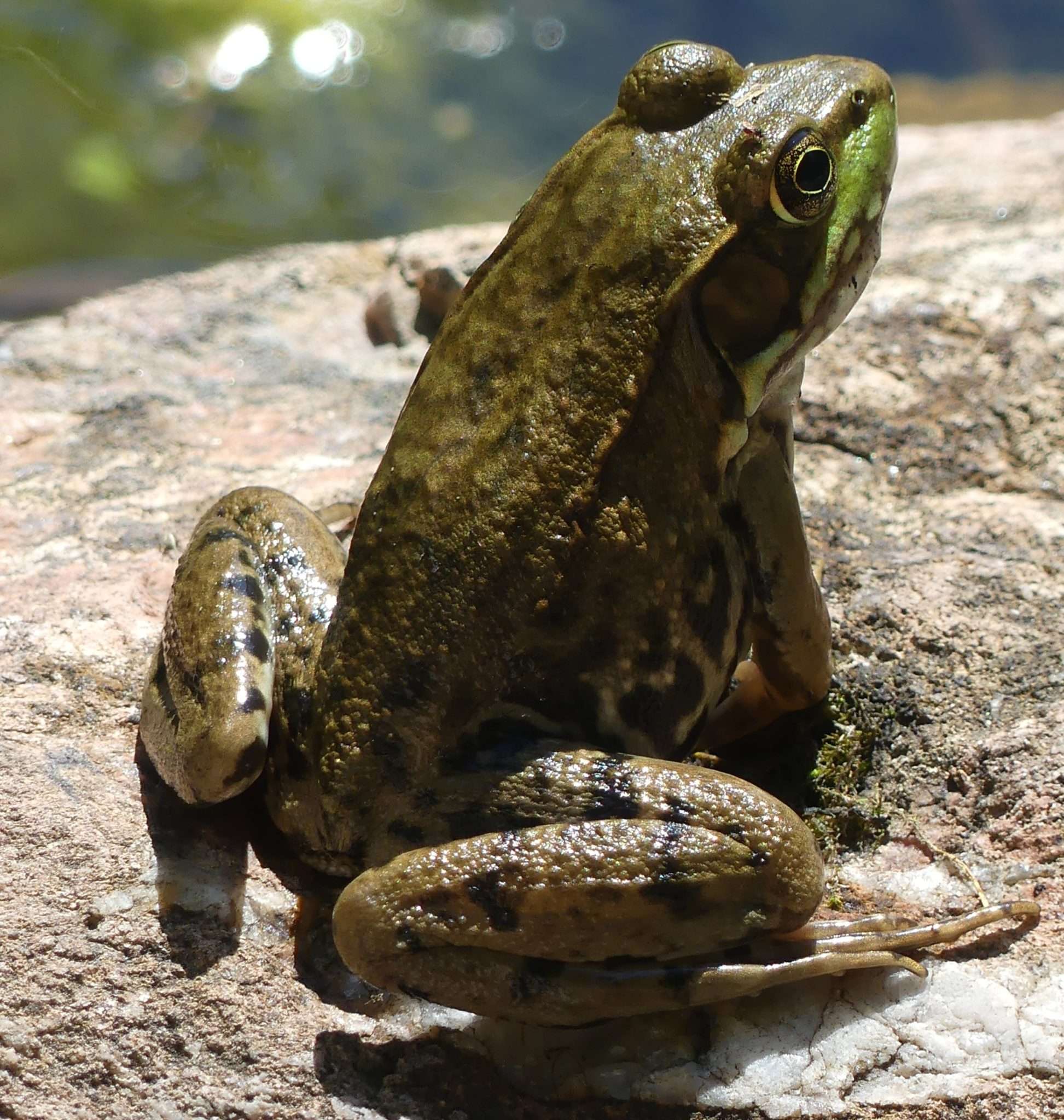
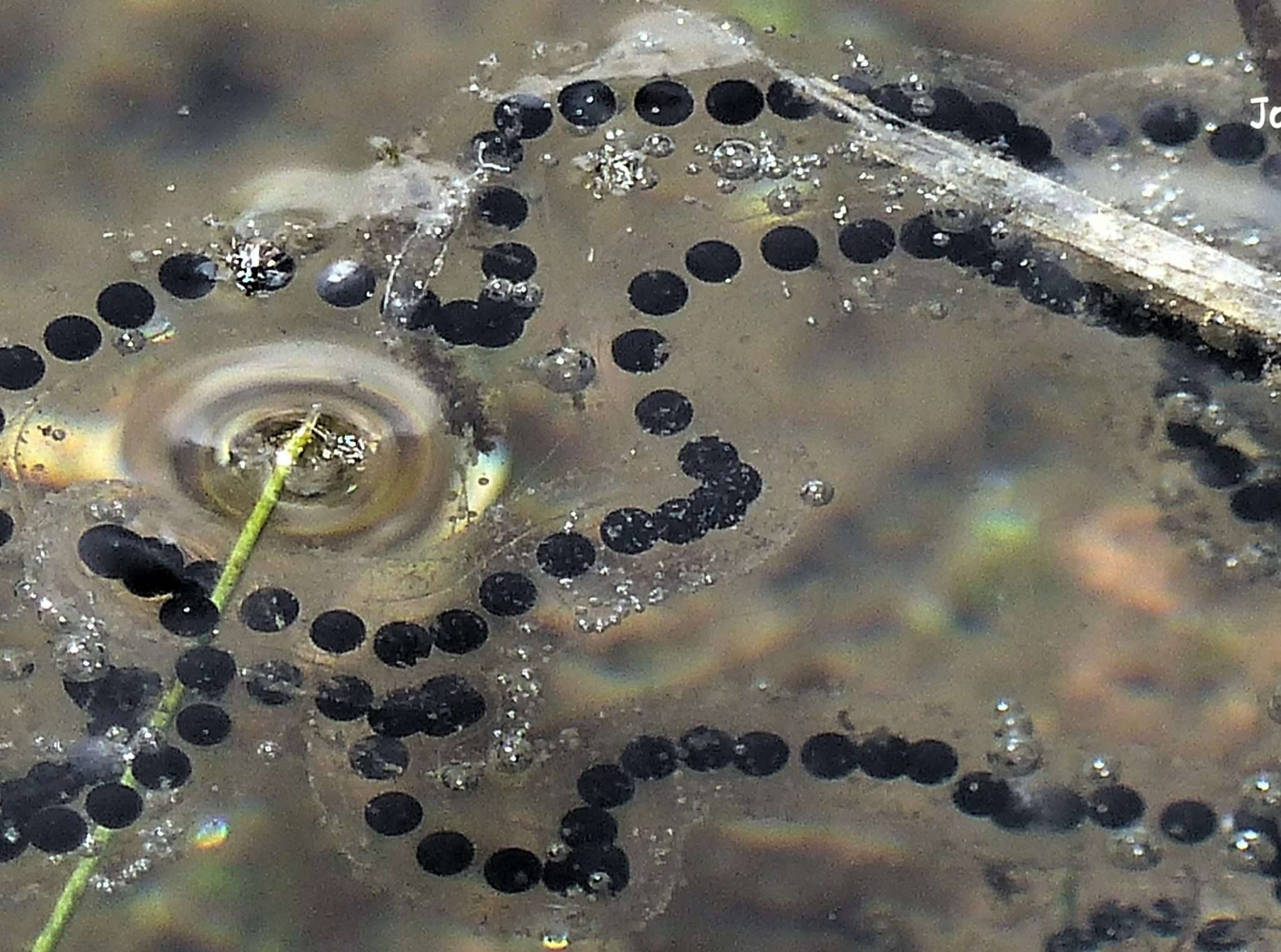
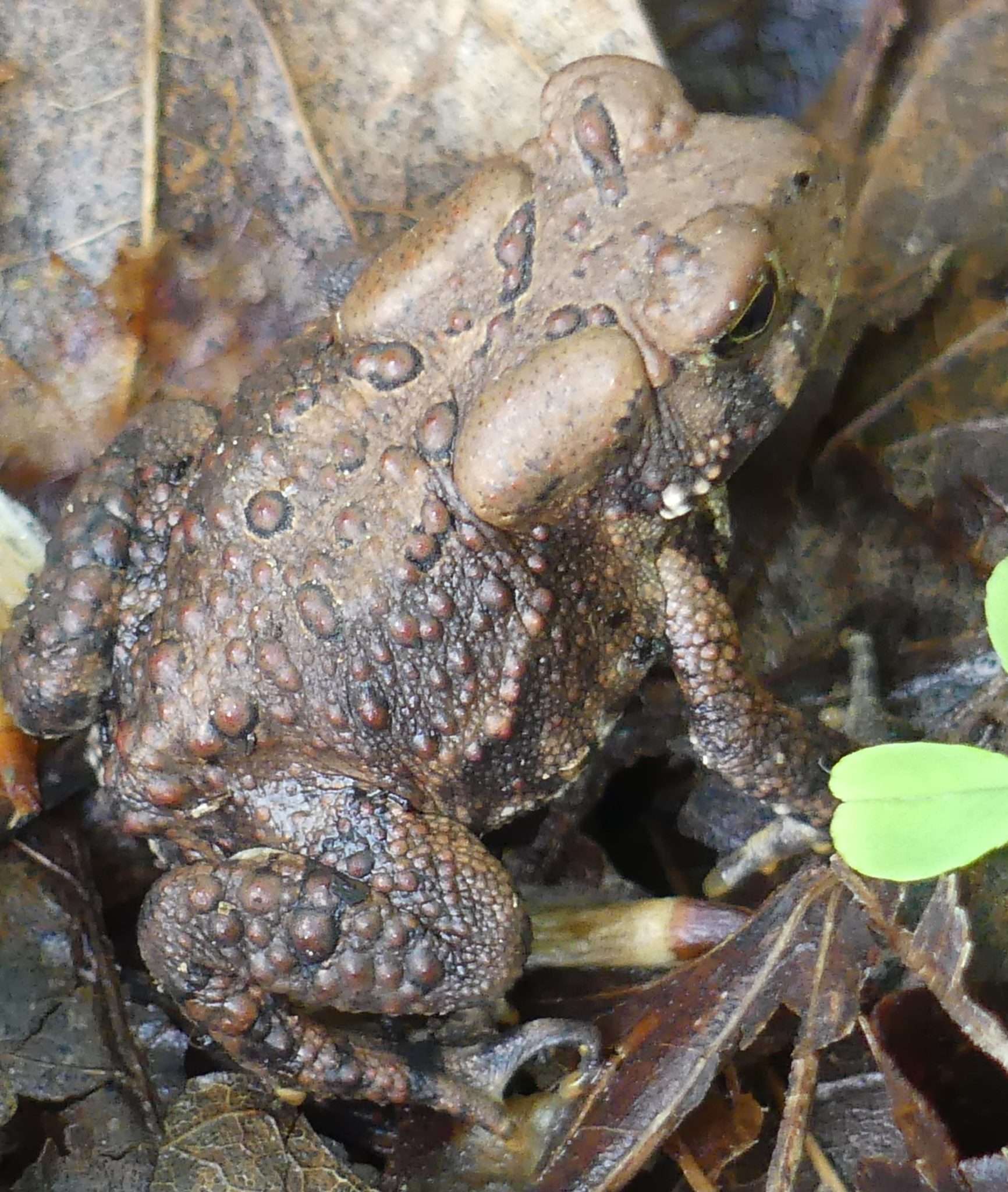
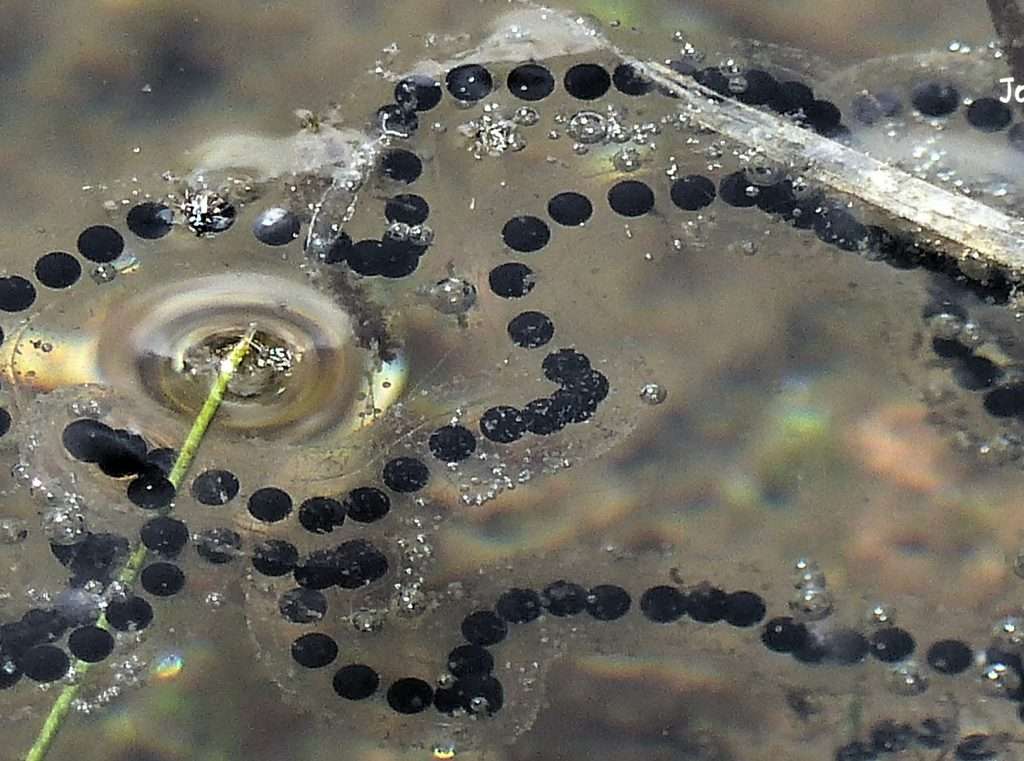
In the spring, frogs and toads lay their thousands of eggs. Frog eggs appear within large masses, and toad eggs in long strings. They hatched larvae are called pollywog or tadpoles; they have gills and can swim and try to avoid being eaten. They eat tiny plants and microscopic organisms. Within weeks, you can see the tails are now being absorbed into the body, and tiny legs are beginning to grow. The back legs grow first, then the front legs, but the biggest change is from gills to lungs. Their life span is about five to ten years, and at least half of that lifetime is spent hibernating. Toads are considered frogs, but there are many differences between the two in size, appearance, and habitat. Toads’ legs are not as powerful as frogs’, and they hop rather than jump. They sit still and wait for prey rather than chase it. Both have tongues with “sticky pads” that catch prey and bring it back to their mouths. I have learned that once the prey is in its mouth, the frog blinks its eyes, and its eyes drop into the mouth cavity and help to push the food down its throat. No, you won’t get warts from handling a toad. A toad has “two bumps” behind its eyes that are called parotid glands. These glands provide a defense against predators by secreting a harmful fluid that can cause vomiting if an animal takes the toad into its mouth. When picked up by a curious child or adult, the toad may urinate on your hand. It is not necessarily harmful, but you will probably return the toad quickly to the ground.
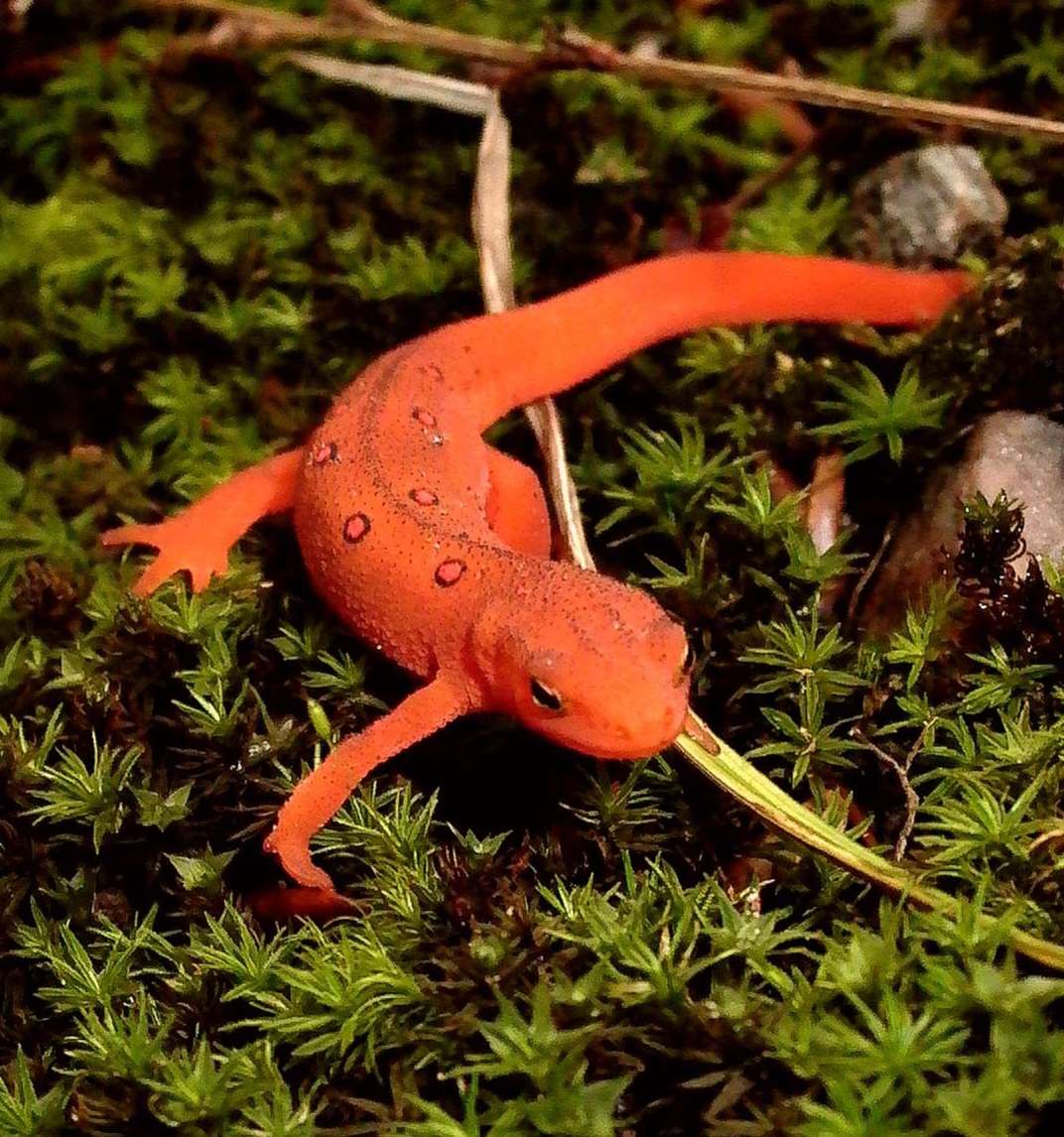
One more herptile that has always intrigued me is the Eastern Newt (Notophthalmus viridescens). It begins its life as an egg, which is laid in early spring waters. The female newt lays as many as three hundred plus eggs, and each one is laid singly and wrapped in vegetation. The eggs hatch within three to five weeks; the larvae have gills and will eat and grow for about three months. In late summer or early fall, the larvae reabsorb their gills and start to develop lungs. They leave the pond, and over the next few weeks, their skin will become tougher and change from its olive greenish color to a reddish orange with numerous red spots. For the next two to five years, it will live on land, during this terrestrial stage, it is known as a “red eft”. Efts are active both day and night, and are especially active during and after a rainstorm. Their red coloring serves as a warning to predators that they are toxic.

In 2007, she began working with the Black River Outdoor Educational Program (BROEP). In 2013 and 2014, she did a week-long summer program at BROEP with Mohawk Valley Community College (MVCC).
Using her love of nature and photography, she created a Flora/Fauna outdoor educational program teaching students (ages 6 to 14) the joys of nature and creative photography skills.
Joan’s love of nature has been a lifelong study of Birds, Wildflowers, Mosses, Ferns, Trees, Amphibians, Reptiles, Grasses, Insects, Spiders, Tracks, Scat, and Galls. She has assisted in cataloging all trails used by the hiking Coaches and photographed and identified seasonal Flora.
Since October 2016, she has written a bi-monthly nature column with Adirondack Express Newspaper. In October 2019, she began a bi-monthly column with the My Little Falls newspaper. You may reach her at jmhphoto8442@gmail.com.