

Story and Photographs By Joan Herrmann
Whereiwander… today is into the woods and a multitude of areas where I have been able to find mushrooms on past wanderings. Mid-August and throughout September are some of the best times to find the fascinating non-edible; but multicolored and uniquely shaped specimens. Although the common names of many of these fungi (fungus plural) sound quite peculiar, when you find them, you realize that they are appropriately named. Some of the ones which I am seeking today are Dead Man’s Fingers, Stinkhorns, Earthstars, Pigskin Poison Puffball, and the extremely tiny Fuzzy Foot and Shaggy Mane. These are not only fun to find but are interesting photographic subjects. While exploring, having a camera and or magnifying glass will enhance the details of each species for you.
Cooler weather and a few days of rain are perfect times to discover new mushrooms. They may be found growing on live trees, decaying logs, meadows, along roadsides, and trails. Look for them in the woods, near streams and brooks, and also in your lawn and gardens. Foraging for mushrooms (looking for edible fungi) is both exciting and rewarding, but looking for them without a qualified mycologist is probably reckless and could even be a fatal experience. Many interesting edible mushrooms may be purchased at local grocery stores or online. There may even be a local mycology club in your area, where the members participate in foraging for fungus. Mushrooms are a choice food for many wild critters, especially snails and slugs. Mice, chipmunks, squirrels, deer, and bears, in addition to numerous insects, depend on mushrooms as a food source.
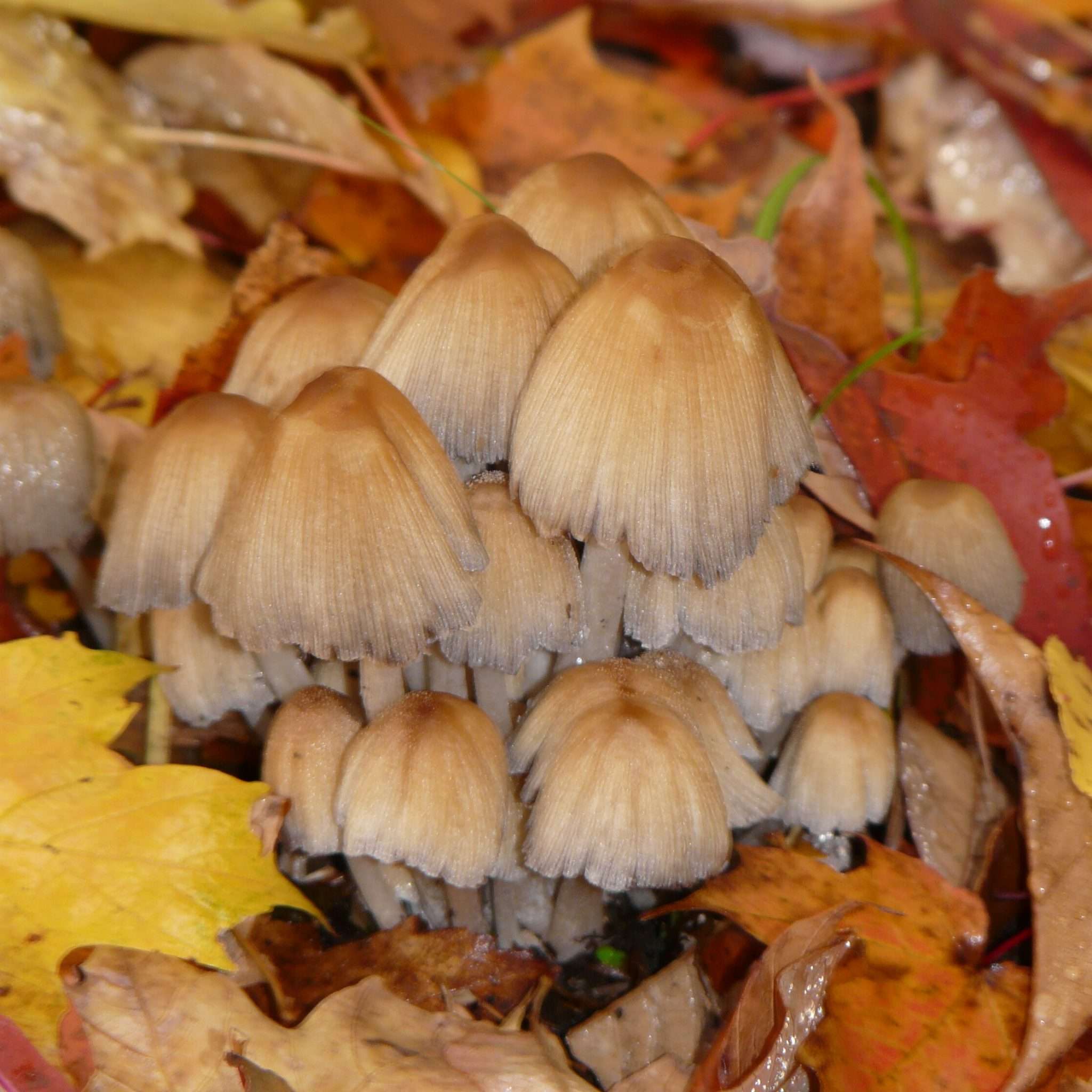




Some of the most photogenic fungi which you may encounter include jelly fungi, puffballs, polypores, coral fungi, tooth fungi, boletes, stinkhorns, and chanterelles. The portion of the mushroom which we see, whether it is a cap, ball, fan, club, or coral shape, is the fruiting body or reproductive part of a fungus. The rest of the fungus is underground and is the vegetative body which is made up of multiple fine filaments called hyphae. Mushrooms are considered members of the plant family, differing from most plants because they do not produce chlorophyll. They rely instead on organic material for nutrition. Their nutrition is accomplished in three different ways, which include saprophytes, parasites, and mycorrhizae. Saprophytes live on the dead organic matter of leaf litter, dung, and dead wood or the dead tissue of trees. Parasites assault living animals or plants, and Mycorrhizae have a symbiotic (mutually benefitting both) relationship with plants. The part of the mushroom which is seen above ground contains its reproductive parts or spores.
Polypores may be found on both living or dead trees and are probably the most often sought after by those who like to draw on them. It is known as Artist Fungus (Ganoderma applantatum). Another smaller polypore that resembles a horse’s hoof is sought by campers, known as Timber Polypore (Fomes formentarius). It is useful for starting a campfire. Hemlock Varnish Shelf Polypore (Ganoderma tsugae) looks like it has been shellacked and has a glossy appearance. One of my favorites is Resinous Polypore (Ischnoderma resinosum) because it looks like it has large drops of dew or rain on it. But don’t’ touch unless you want sticky fingers. It is neither rain nor dew.
Dead Man’s Fingers (Xylaria polymorha) is an unusual fungus that pushes up from the ground or may be found on decayed wood. It is club-shaped, and the “fingers” appear in a group of two or three black to grayish-colored digits. Coral fungi are very noticeable throughout the wood this time of year too. You may find a spindled-shaped Yellow Coral (Clavulinopsis fusiformis) or a Yellow-Tan Coral (Ramaria aboetoma). And there are also species that are purple, pink, and white. These fungi look like underwater sea treasures. Another favorite find and one of the prettiest fungi is definitely not edible and extremely poisonous. Its common name is Yellow Patches (Amanita flavoconia), and it prefers a habitat near Oak or Birch trees and may also be found under Hemlock trees. Another mushroom that can cause health issues is Alcohol Inky (Coprinus altramentarius). It prefers to grow in tall grass and wood debris or near buried wood. I learned it is edible, however if you eat it you should not drink any kind of alcohol within one to two days. If you do, within thirty minutes, you may experience flushing of your face and neck, tingling of your fingers and toes, headache, and nausea. These results are because the mushroom inactivates an enzyme that detoxifies alcohol in the body. I am also told that recovery is usually spontaneous within a few hours.
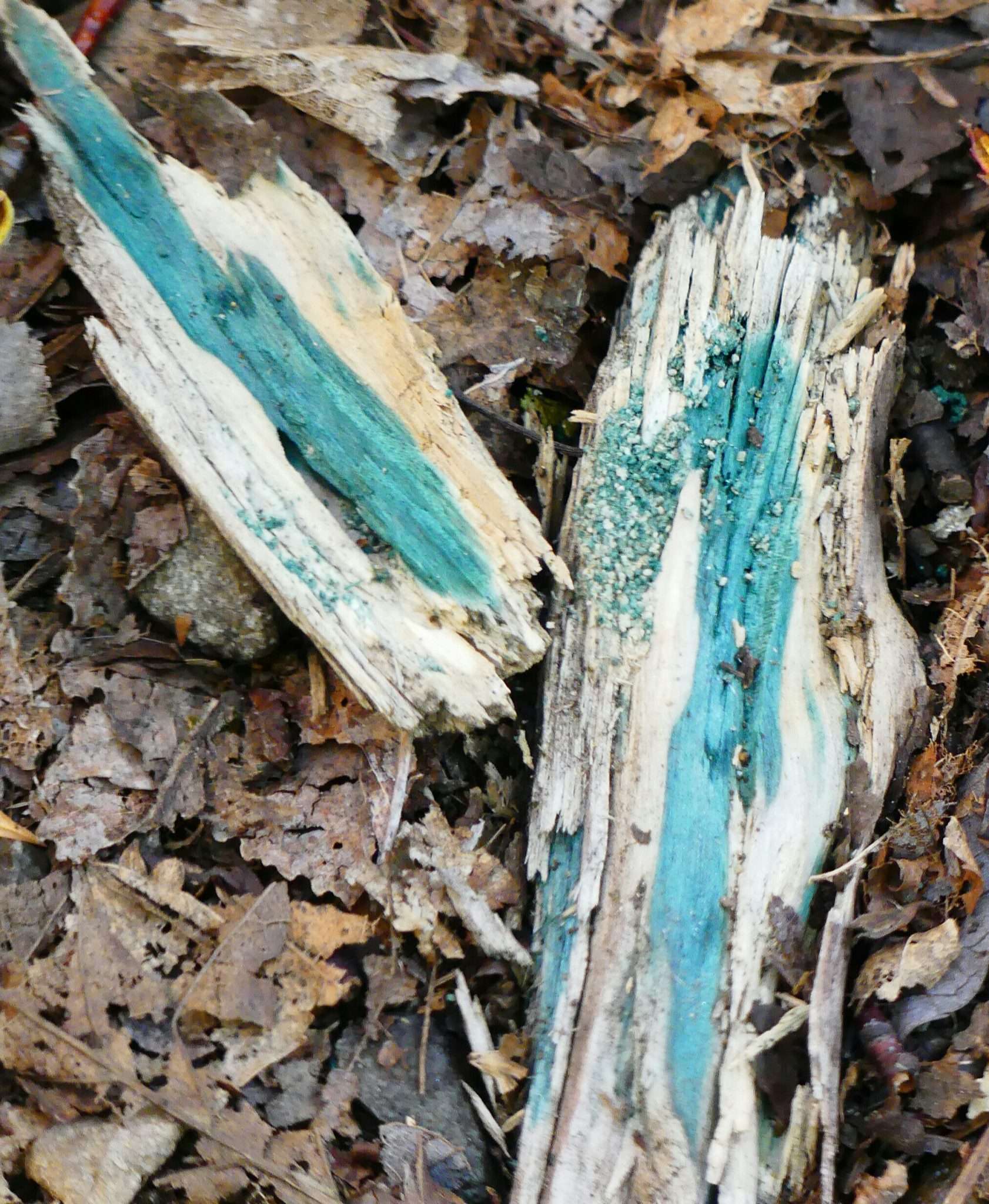
Another interesting yet difficult to find when it is fruiting (showing its tiny greenish-blue cup shape) but leaves behind a noticeable stain on decaying hardwood logs that is a curiosity. Its common name is Green Stain (Chlorociboria aeruginascens). The stain which it creates may appear that someone has used a greenish-blue marker on a piece of wood. Actually, each minute cup-shaped fruiting body of this fungus is probably smaller than your little fingernail. These cups may be found from June through November, and although the cups are difficult to find, the stain which it leaves on wood may be seen throughout the year.
Fungi are essential and exceedingly important in our lives, particularly when we become aware of the role they play in our ecosystem. The decaying of wood, in which fungi break down the lignin and cellulose, returning astonishing levels of carbon dioxide into the atmosphere, is truly amazing. Fungus plays a large part in getting us and keeping us healthy. Certain medicines, like antibiotics that are used in healing and anti-rejection drugs that are used in organ transplants, also rely on certain fungi.

In 2007 she began working with the Black River Outdoor Educational Program (BROEP). In 2013 and 2014, and did a week-long summer program at BROEP in conjunction with Mohawk Valley Community College (MVCC). Using her love of nature and photography, she created a Flora/Fauna outdoor educational program teaching students (ages 6 to 14) the joys of nature and creative photography skills.
Joan’s love of nature has been a lifelong study of Birds, Wildflowers, Mosses, Ferns, Trees, Amphibians, Reptiles, Grasses, Insects, Spiders, Tracks, Scat, and Galls. She has assisted in cataloging all trails used by the hiking Coaches and photographed and identified seasonal Flora.
Since October 2016, she has been writing a bi-monthly nature column with Adirondack Express Newspaper. In October 2019, she began a bi-monthly column with the My Little Falls newspaper. You may reach her at jmhphoto8442@gmail.com.