
By Ray Lenarcic
It’s been written about by the bards for centuries, made the stuff of movies (e.g. Love Is A Many Splendored Thing), the theme of more songs than I can count, and the subject of heated debates regarding its meaning-true love. Most, if not all of us, know what love is; a highly personal feeling, emotion, which you may not be able to define but definitely feel when it’s there. We love our parents, grandparents, children, wives/husbands and pets. “Loving” the Yankees, linguini with clam sauce or a favorite dessert don’t count; superficial loves all. Take the sincere feeling, multiply it several times over and you have true love-a feeling so powerful, deep and abiding that no one or thing can ever make it less than what it is-an eternal flame which can not be extinguished.
While there have been many examples of true love, and I’m sure readers have their own, I’d like to cite four; three historical and one local. First, Tristan and Isolde. Their story is based on a 12th-century legend. While there have been several variations, experts agree that theirs was a forbidden love affair between a Cornish (English) knight and Irish princess during the days of the famous King Arthur. Their relationship was beyond fascinating, highlighted by a love potion, death sentences, a miraculous escape and after overcoming incredible odds, a true love which burned brightly until their deaths. The legend had a lasting impact on western culture as exemplified by Wagner’s operatic adaptation.
Secondly, and perhaps the most classic example, Romeo and Juliet. William Shakespeare’s famous late 16th-century play featured the tragic romance between two archetypical young lovers from feuding families in Verona, Italy. They survived efforts to break them up until a series of “quirks of fate” resulted in their killing themselves. True love to the bitter end. Like Tristan and Isolde, Shakespeare’s masterpiece became a fixture in Western culture-the subject of films, musicals, and operas.
Thirdly, on a very personal level-Nellis Jones was a graduate of the Little Falls High School class of 1943. He was best friends with Joe Vespasiano, who recently passed away. They did everything together, including playing in the band, serving as class officers, working part-time at the American Store, and enlisting in the Army in World War II. Jonesy’s quote in the yearbook read-“The least we do, the less we need to.” And his last will and testament (another yearbook tradition)-“I leave with my Klock”-Helen Klock-the girl he married before leaving for active duty. On December 20, 1943, his ship was blown up in the English Channel. True love ended before it had hardly begun.
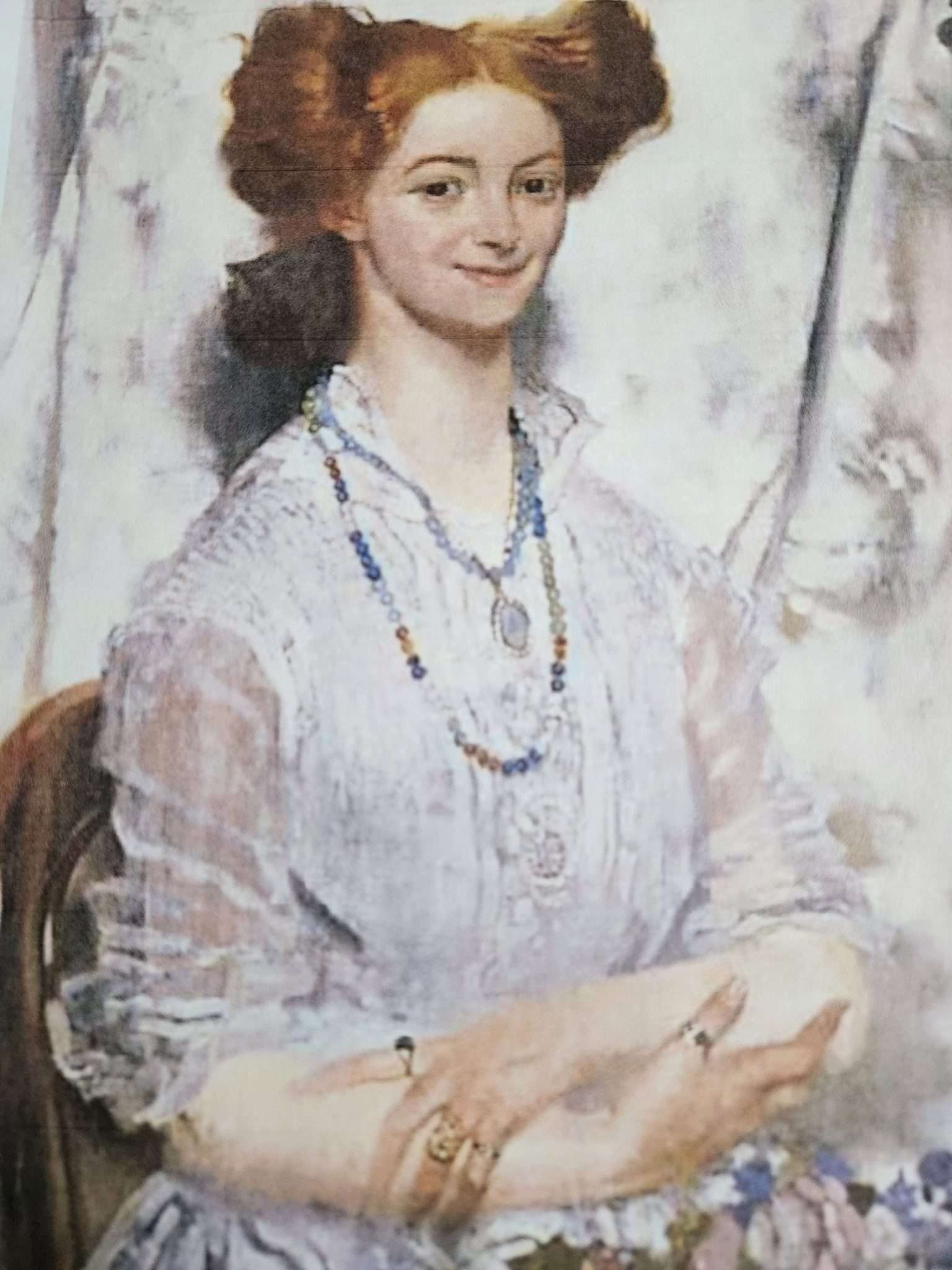
My last example of true love is the most endearing to me; Grace Gifford and Joseph Mary Plunkett. The latter was an Irish nationalist, poet and journalist among other things. He was renowned as a “Renaissance Man.” Despite the fact that he was dying from tuberculosis, he rose from his sick bed to participate in the Easter Uprising of 1916. Plunkett and a handful of revolutionaries, including writers Pearse and MacDonagh, were dedicated to the cause of removing the yoke of British oppression from the backs of the Irish people. They took over the GPO in Dublin in hopes of rallying the people to join the cause. Unfortunately, their ‘Rising was quickly quelled. Plunkett and several others were taken prisoner and incarcerated in the infamous Kilmainham Gaol.
At that time, Joe was engaged to Grace Gifford, a Dublin native, talented artist and Republican (anti-British) activist. The pair planned a double wedding with his sister and her fiancé on Easter Sunday, 1916, the same day as the Rising. When she learned that her lover was to be executed by a firing squad at dawn, Grace bought a ring and pleaded successfully with the military authorities to allow the wedding to take place hours before the execution. Too weak, he had to be carried to meet his final fate. ( Note: Check out Plunkett’s “I See His Blood Upon The Rose.”) Grace never remarried, dying in 1955 at the age of 67. She was buried close to her husband in Glasnevin Cemetery. True love.
In closing, it must be said that Josephy Mary Plunkett had two true loves at the same time, a rare occurrence to be sure. His second, the one which cost him his life, was Ireland. The extent of that love was best manifested in his final words to a priest the night before his death. “Father, I am happy. I am dying for the glory of God and the honor of Ireland.” Tristan and Isolde and Romeo and Juliet will always be remembered by word; Joseph and Grace by song. Written in 1985 by Frank and Sean O’Meara, “Grace” has been performed countless times. For a memorable moment, log on to YouTube and enter “Grace,” sung by eleven year-old-Caoimhe Mooney. The following lyrics from the song serve as a fitting characterization of Grace and Joe’s true love.
Oh Grace just hold me in your arms and let this moment linger.
They’ll take me out at dawn and I will die.
With all my love I place this wedding ring upon your finger.
There won’t be time to share our love for we must say goodbye.