
Story and Photographs By Joan Herrmann
Whereiwander… even though we still have more than a month before our seasonal change begins in September; many signs of the coming transitions are appearing now. The Red Maple (Acer rubrum) tree, also known as Swamp Maple or Scarlet Maple is now going through its seasonal change. Before it leaves fall this deciduous (a tree that loses it leaves) tree breaks down its nutrient-rich proteins and chlorophyll and stores them in its roots. As the breakdown begins the red maple trees green leaves, deepen to a dark red, and eventually will become a brilliant red.
As I mentioned in an earlier column the male Ruby-Throated Hummingbirds will depart for their winter habitat about a month before the females and fledglings. The migration for the males generally occurs within the last two weeks of August. They will repeat their spring journey and leave here to eventually fly nonstop over the Gulf of Mexico, a distance of five hundred miles, and then continue on to their winter habitats.
The call of the Canada Geese will be a sound that for some produces a touch of melancholy as summer departs. For others it brings a sense of relief from the intense heat of August will finally be diminishing. I believe for all it brings joy to see the foliage in its autumnal enchantment, the harvesting of fruits and root vegetables, and another new beginning.
In the meantime, many mammals and birds are preparing for the coming months and even for the next two seasons. Chipmunks and squirrels have been gathering and storing food. The buck deer have been growing antlers which are covered in velvet. The American Goldfinch (Spinus tristis) have now mated and are nesting or caring for nestlings. They don’t begin their courtship and mating until after the Bull Thistle (Cirsium vulgare) blooms. The male goldfinch will offer down from the thistle as it begins to produce seeds. The seeds of the thistle are similar to the seeds in the milkweed pods. The seeds of both plants travel via “parachutes” blown by the wind. It is the silky “parachutes” that soften the inside of the goldfinch’s nest and the thistle seed is eaten by the adult female and regurgitated to feed the nestlings.
The female goldfinch will lay a total of four to six eggs, one per day, but will not begin to incubate them until she is finished laying them all. This is known as “synchronous” hatching and all eggs will begin to hatch at the same time. Goldfinch as well as all passerines (perching birds) are “altricial” which means the hatchlings are incapable of leaving the nest, have no down, closed eyes, and are fed by the adults. Altricial eggs are smaller in size, therefore the yoke is small and there is less yoke to feed the developing embryo, the incubations time is much shorter, but the adults spend more time feeding and teaching their nestlings.


Raptors such as hawks and eagles lay their eggs “asynchronously”; laying one egg per day and begin incubation immediately. If they lay more than one egg the first one to hatch is the first one that was incubated. Raptors begin laying their eggs much earlier in the year; usually late winter or very early spring. Because the weather is much colder each egg as it is laid needs warmth to keep it from freezing. Raptors hatchlings are born “semialtricial” and are incapable of leaving the nest, they are covered with down and open eyes and are fed by both adults.
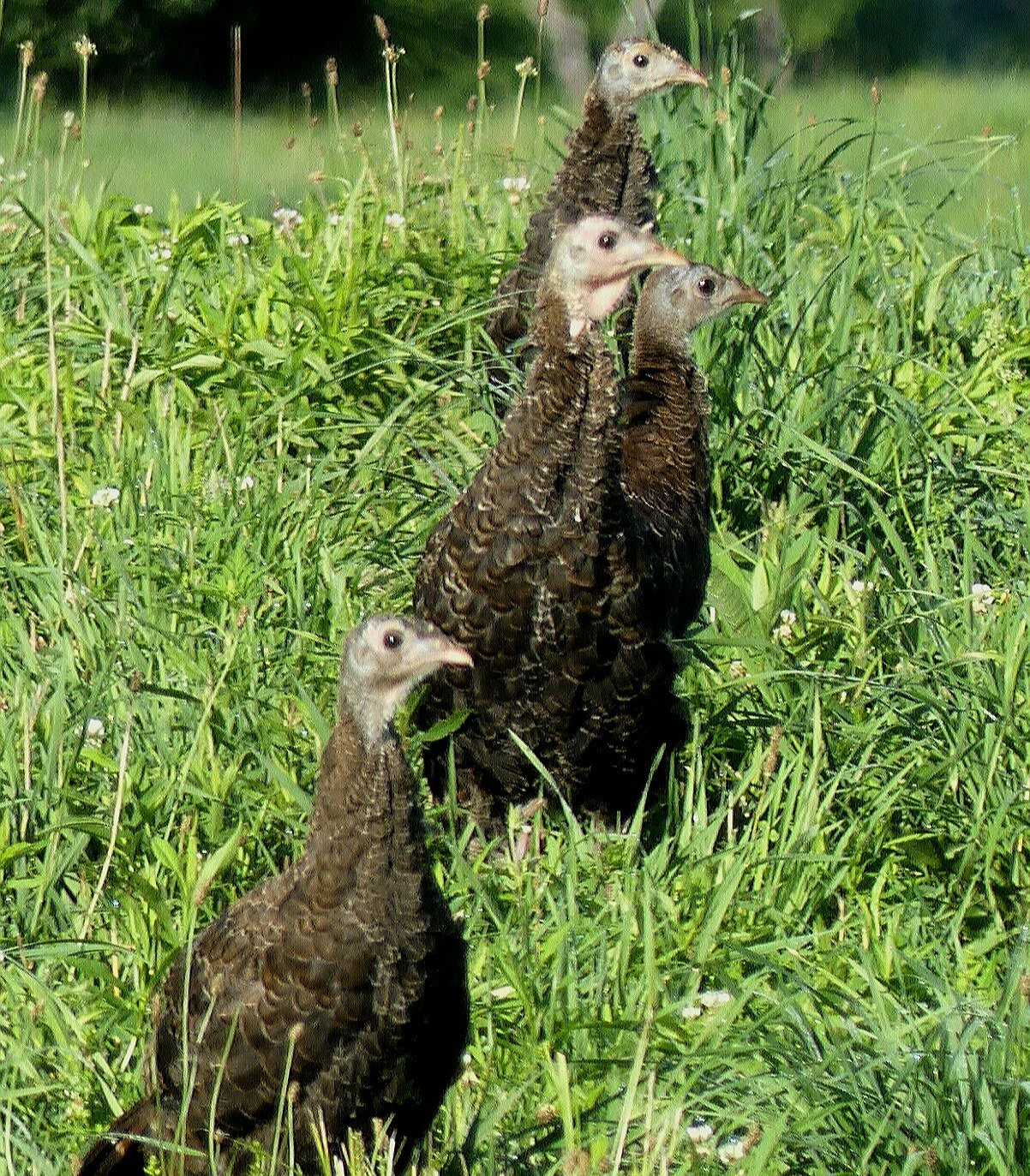
Altricial, semialtricial, precocial, and semiprecocial are the terms that ornithologists use to describe the degrees of development of hatchlings. The word altricial comes from the Latin word meaning “to nourish”. Precocial is from the Latin word “precocious” meaning that those hatchlings have the ability to achieve mobility very quickly. Some precocial hatchlings such as ducks can leave the nest and follow the adults to find their own food soon after hatching. Other hatchlings like turkey chicks leave the nest quickly and the female will show them what is edible. Wild turkeys give birth to six to twenty chicks. While the entire brood is still in the nest they are vulnerable to predation. Each species of birds are different in their needs, the availabilities of their food, and the need for protection from predators.
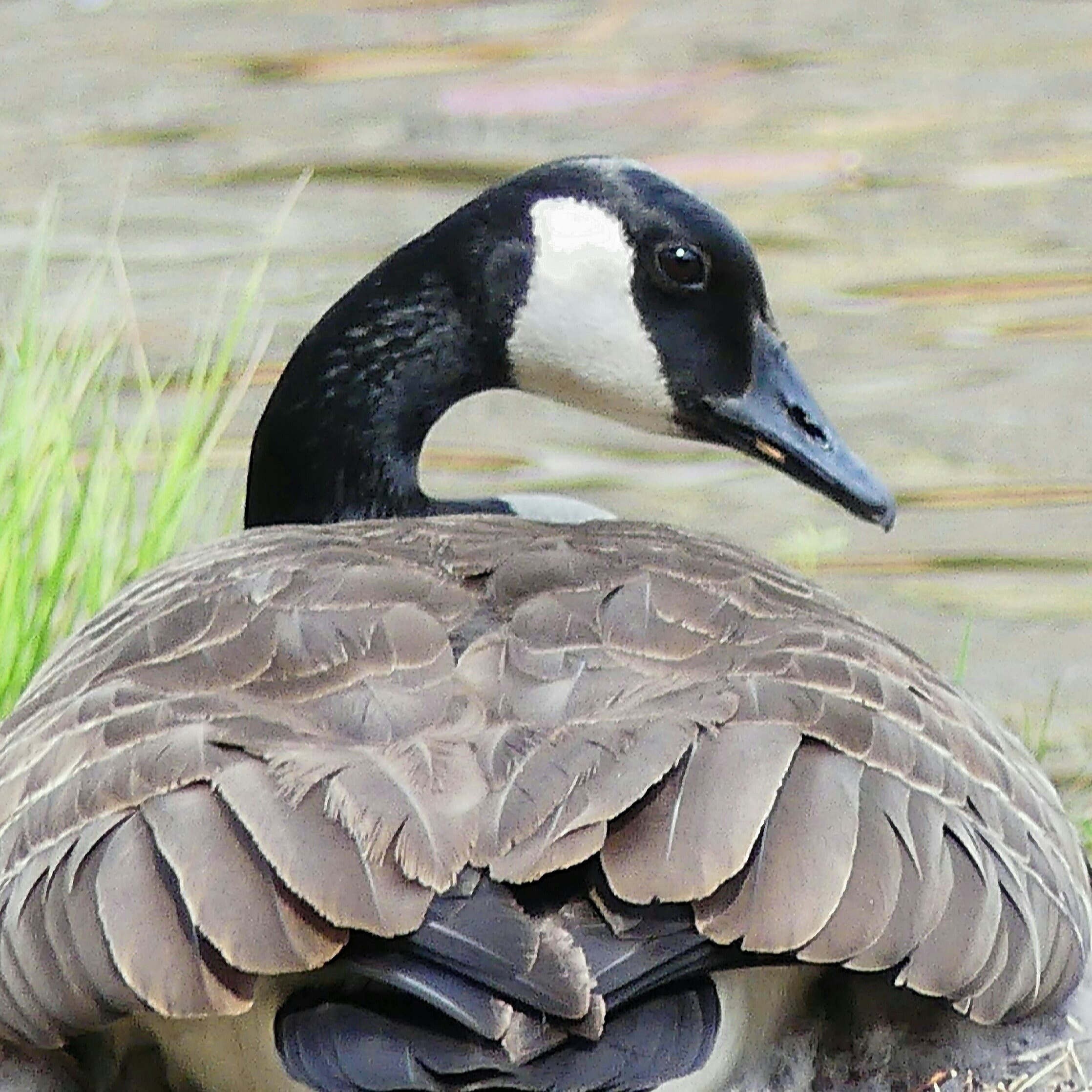
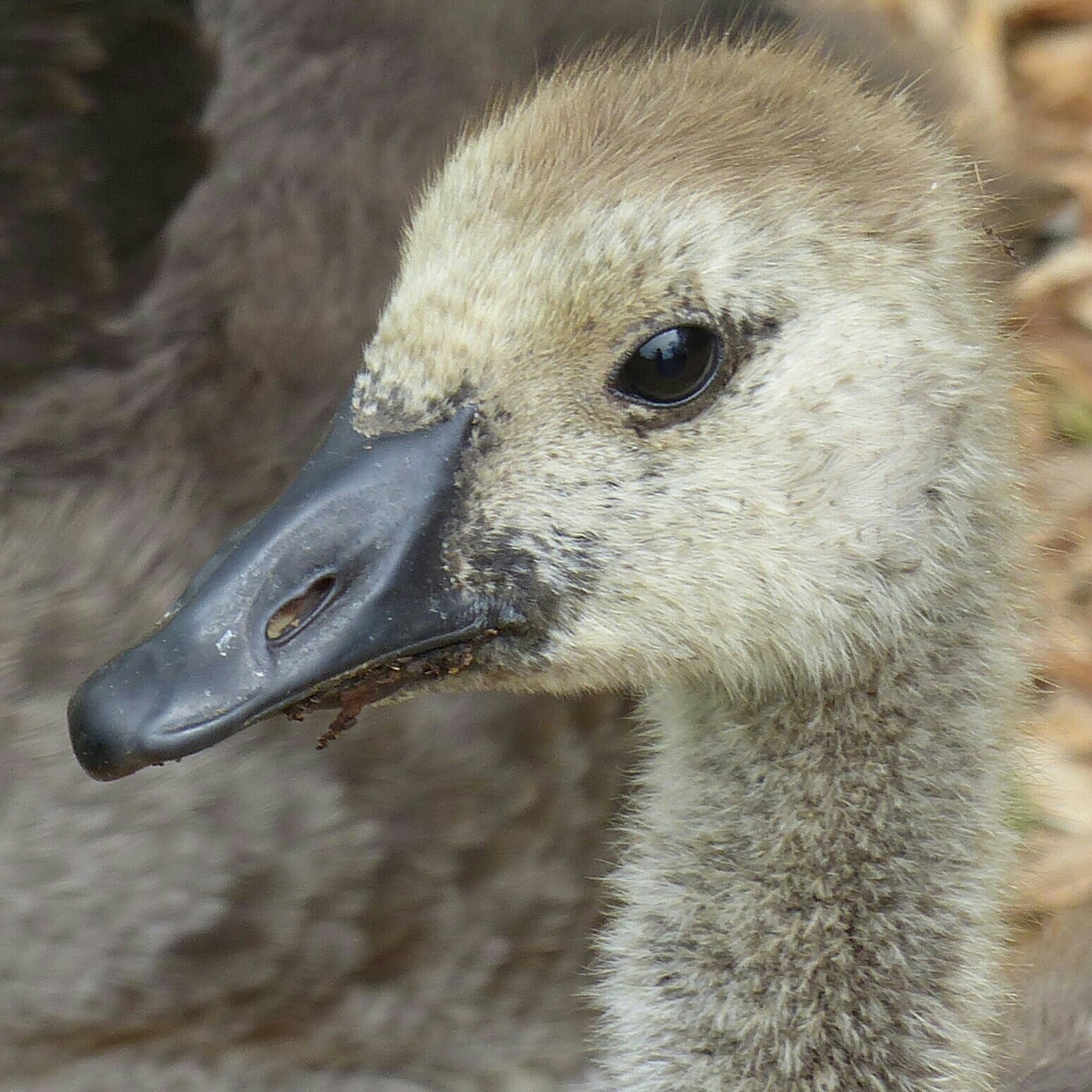
By mid-August, the Canada Goose (Branta canadensis) hatchling resembles the adult in plumage and size. Canada Geese are one of the few birds that stay together as a “family” after the breeding season. The parents mate for life and their offspring will migrate with their parents in the fall. They may join with other families of geese and migrate in a large group; as there is greater safety in numbers. The family will all return together in the spring but, the adults will then leave the “family” to begin their new nesting season. The one-year-old geese may then resume migrating to a new location, which may be as much as a hundred miles away from their birth site. The yearlings do not find a mate until they are at least two or three years old. They will spend the spring and summer together and perhaps may rejoin with the parents and new family for their fall migration.
Canada Goose or Canada Geese is the correct nomenclature, pluralizing the word goose but not the word Canada. Canada Geese go through an “annual molt” once a year. This means that the old worn feathers are replaced with new feathers. Most other birds have a “sequential molt”, meaning that their flight feathers are lost one at a time simultaneously from each wing; allowing them to still be able to fly during the process. The “annual molt” that geese experience occurs from early July through mid-August. They lose all the primary wing feathers at once. During this time is when they are unable to fly and they are very vulnerable to predation. Once the adult’s wing feathers have fully re-grown, that years’ goslings will have grown their contour feathers, and they will be ready to begin flying with their parents.
 As a Professional Nature Photographer, Naturalist, and Outdoor Educator, Joan Herrmann has been teaching and doing programs for Schools, Garden Clubs, Libraries, and Nature Centers, about 38 years. After moving from the Rochester area in 1995 she began her Photography business, Essence of Nature, and also became a co-owner of The Artworks in Old Forge, New York. As a docent at Munson, Williams, Proctor Arts Institute, in Utica, New York she has been educating children and adults, for nineteen years.
In 2007 she began working with the Black River Outdoor Educational Program (BROEP) and in 2013 and 2014 did a week-long summer program at BROEP in conjunction with Mohawk Valley Community College (MVCC). Using her love of both nature and photography she created a Flora/Fauna outdoor educational program teaching students (ages 6 to 14) the joys of nature and creative photography skills.
Joan’s love of nature has been a lifelong study of Birds, Wildflowers, Mosses, Ferns, Trees, Amphibians, Reptiles, Grasses, Insects, Spiders, Tracks, Scat, and Galls. She has assisted in the cataloging of all trails used by the hiking Coaches and photographed and identified seasonal Flora.
Since October 2016 she has been writing a bimonthly nature column with Adirondack Express Newspaper. In October of 2019, she began a bi-monthly column with My Little Falls Newspaper. You may reach her at jmhphoto8442@gmail.com