
Story and Photographs By Joan Herrmann
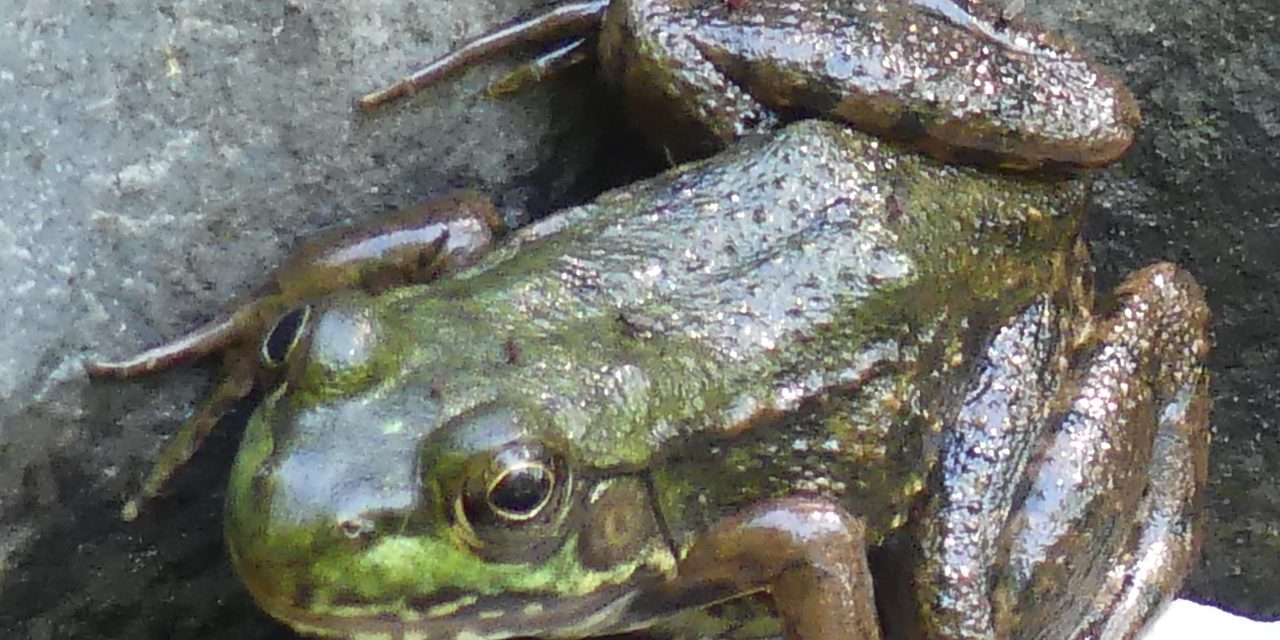
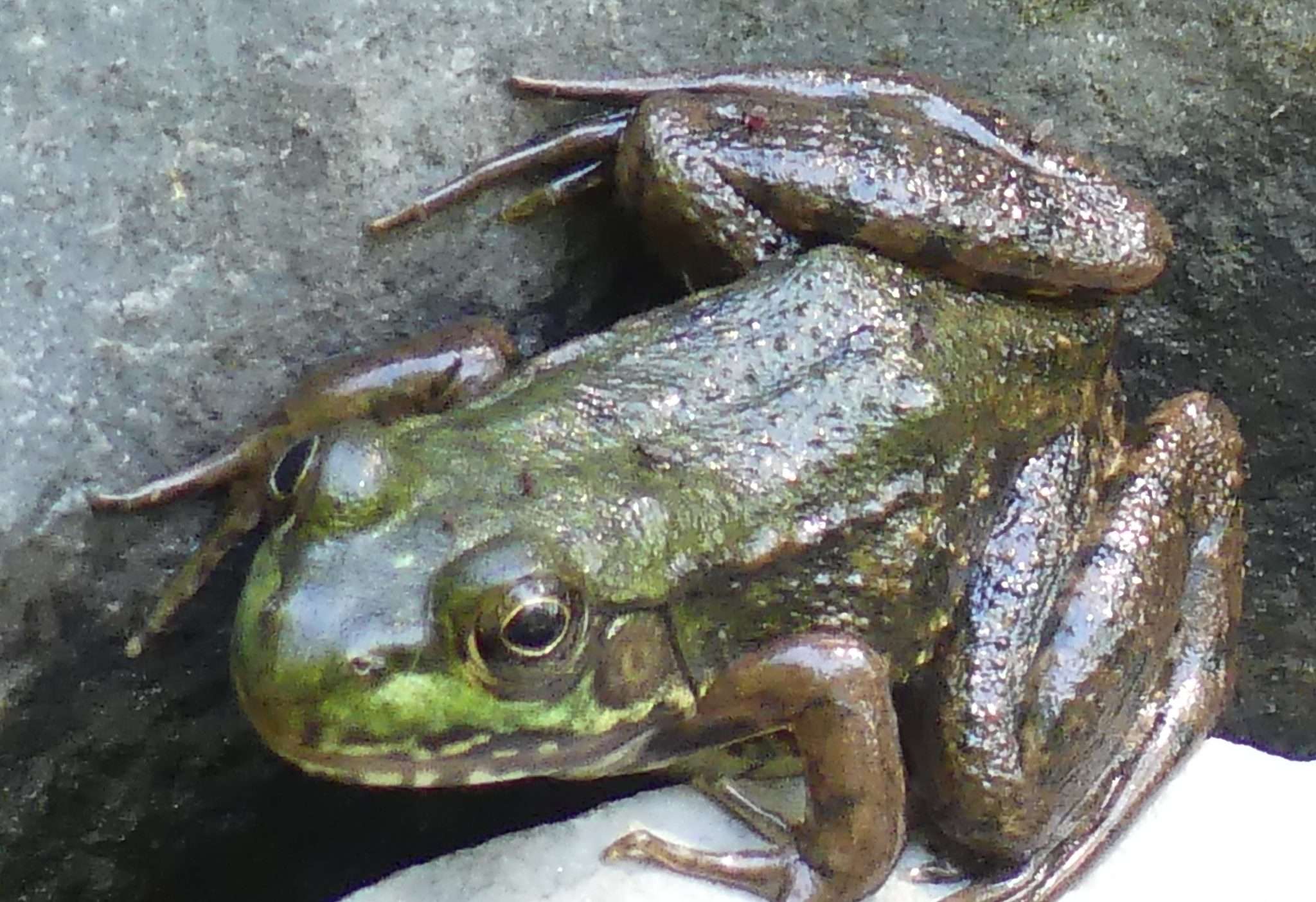
I have always been fascinated by the eyes of mammals and birds and insects. The eyes are one of the most important essentials in their daily lives. Some eyes will change color, some have unusual pupils, and some are much more than just to observe or scrutinize. For example, eye color can indicate its age, its sexual maturity or whether it is a male or a female. For instance, the eyes of herptiles, such as green frogs, can be identified by a comparison of their eyes to their ears. The eyes are on either side of its head and adjacent to the eye is a round indented circle, which is actually the frog’s ear. It is called a tympanum. If the tympanum appears to be about the same size or smaller than the frog’s eye, it is a female frog. If the tympanum is larger than the eye, then the frog is a male. I have heard some people using the term “blind as a bat” which, in addition to being judgmental, is also extremely incorrect. Bats have eyes and fairly good vision; however, they use their ears in the dark for echolocation, to locate prey in the dark. They are able to see at dusk and dawn, probably better than most humans.
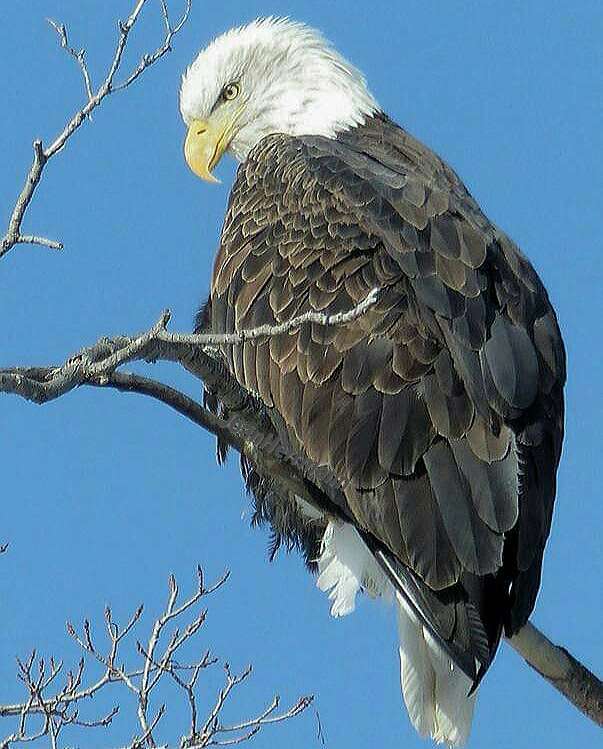
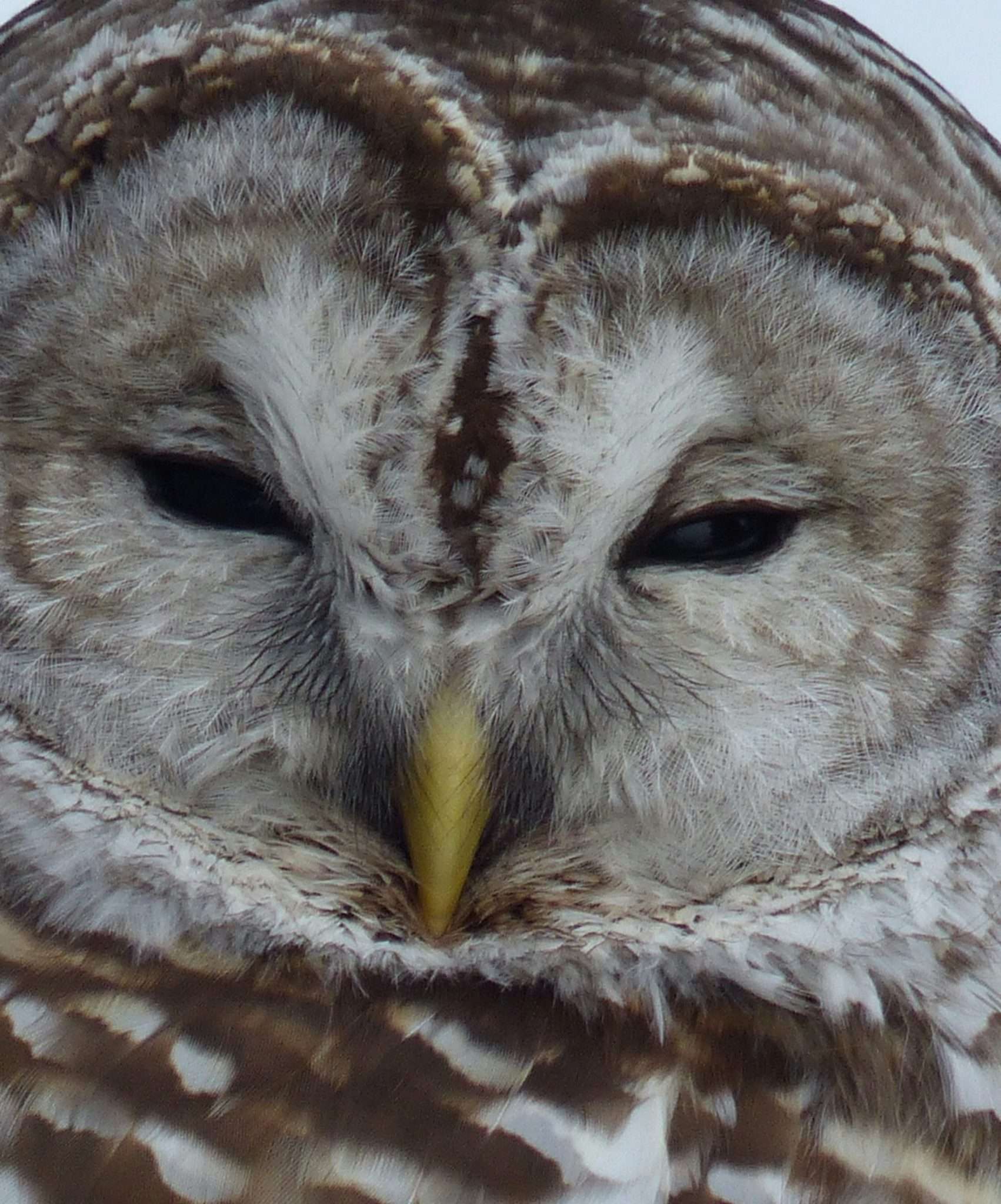
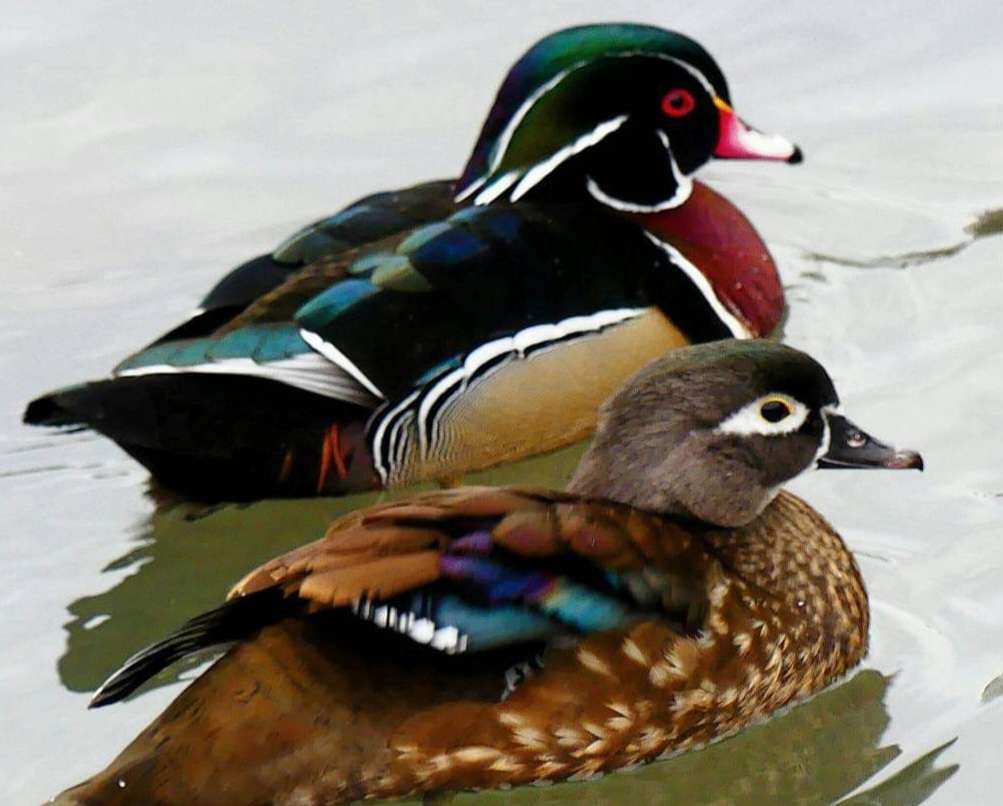
Bald Eagles may be sitting on nests this time of the year. Once the eggs have hatched, both the female and male will care for them. They will continue to bring food and care for them until they are able to care for themselves. As the immature eagles each grow, they will not resemble the adults until they mature at about age five. The adults have a dark brown torso and a white head and tail feathers. The immature are mostly dark brown with white mottling or streaking. They have a brown beak and brown eyes. The eyes will change from brown to yellow once they are fully mature, and their beak will also change to yellow. Many other birds, such as the Northern Harrier, also experience a change of eye coloring when reaching adulthood. Its eye coloring changes from brown to red and Red-tailed Hawks’ eyes change from yellow to a reddish brown. The American Crow’s eyes change from blue or bluish gray to brown. In addition to birds of prey, many other species of birds also experience eye color alterations; some of these birds are the Common Loon, Grebes, Ducks, Gulls, Woodpeckers, and Vireos. The Wood Duck male has a striking red eye, which is ringed with red while the female has a dark brown eye, ringed with yellow. European Starlings males and females are almost identical in coloring, but the females have a yellow ring around the edge of their iris. Most of the owls in the northeast have yellow eyes, but the Barred Owl is easily identified because of its dark brown eyes.
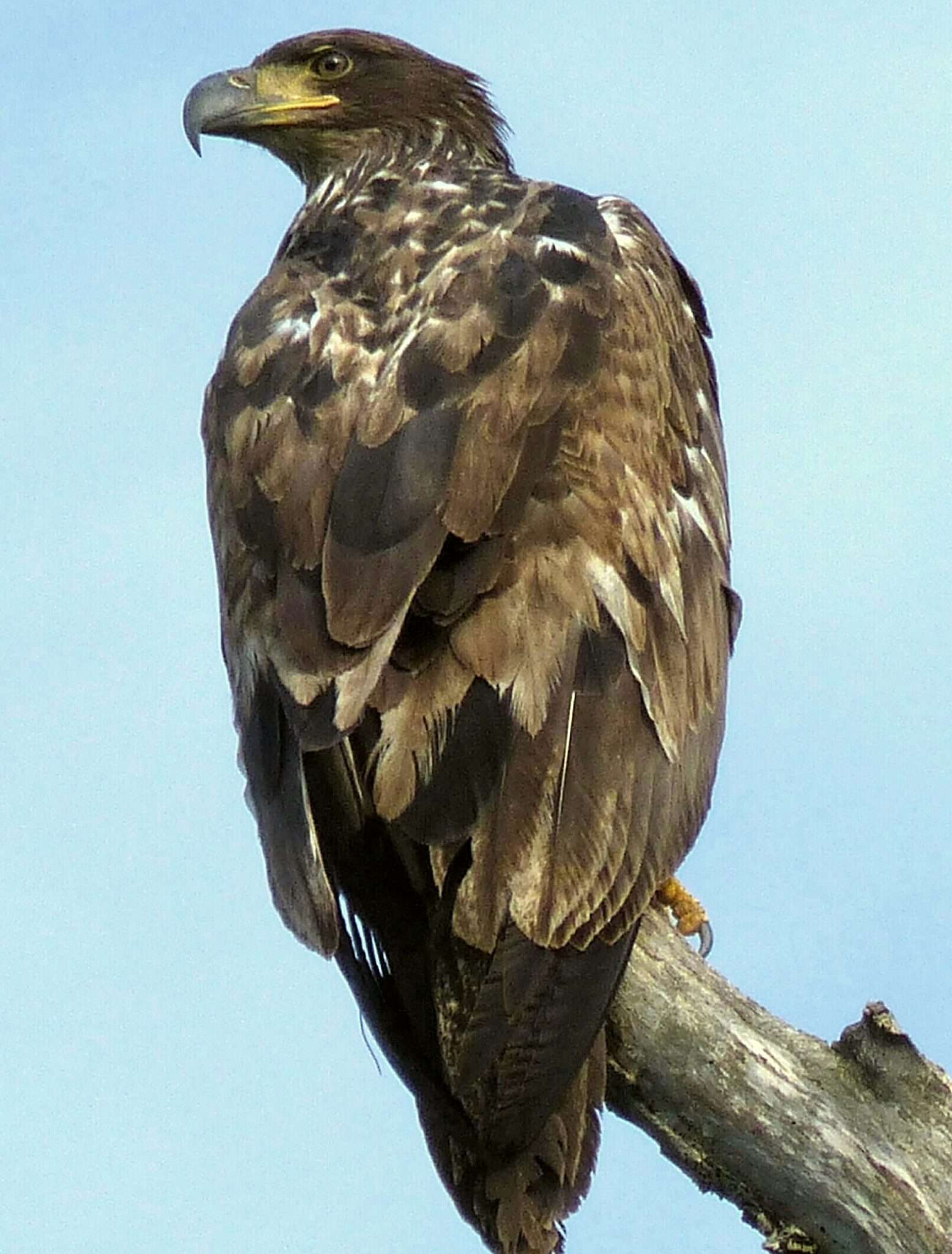
The expression “Eagle Eye” accurately portrays many birds, especially all the raptors (birds of prey). The Raptors must be able to see prey at great distances. They see prey at two to three times the distance that humans can as a result of their much larger eyes. For example, the human eye weighs less than one percent of our head weight, while an Eastern Screech Owl’s eye weight is about one-fourth of an ounce, which is about five percent of its entire body weight. The astonishing performance of a raptor’s eyes lies more in the number of rods and cones in the bird’s eye. Bird’s eyes function like a telescope. The structure of the eye has a fairly flattened lens, which is further from the retina, which provides a long focal length and produces a larger image. Researchers have learned that most birds, that are active during the day, have excellent color vision, which makes sense when we see their astounding colorful plumage.
Many mammals that are nocturnal have unique eyes. The Red Fox has eyes that are similar to those of our domestic house cats. Their eyes have vertical oval pupils and a green reflective layer, which enhances both night and day vision. Black bears have tiny eyes compared to their body size. They have adequate vision up close, but cannot see details further than thirty feet. What they lack in eyesight, they make up for in their amazing sense of smell. They can smell a steak cooking on your barbeque grill for a distance of more than a mile away.
The compound eye of a Dragonfly contains about thirty thousand lenses. With a slight turn of its head, it has the ability to see three hundred and sixty degrees above and below. They can see in dim light as well as ultraviolet and polarized lighting. Their brain works so quickly that they see movement as if in slow motion.
Predators have eyes in the front of their faces, like we do, but animals which are prey have eyes on either side of their head. Of all land-dwelling animals, horses have the largest eyes. Horses have an excellent range of binocular and monocular vision and can see everything except for what is directly in front of them, between their eyes, and a rider on their back is also a “blind spot”. Utilizing the monocular and binocular sight capabilities, they have a 300-degree vision. This allows them to know when a predator is sneaking up from behind them.
In our area, most spiders have eight eyes. The eyes are arranged in two rows. In most spiders, the size, shape, and function are similar in all eight eyes, but the eyesight differs slightly per species. The spiders that hunt for prey, as opposed to those that create webs and wait for prey, often have larger eyes and excellent vision. Wolf spiders and jumping spiders are two species that hunt. The wolf spider usually hunts at night, and the jumping spider hunts during the day. Wolf spiders and others that are primarily night hunters have a reflective layer, the tapetum, at the back of their eyes. Tapetum lucidum is a layer of tissue in the eye of many vertebrates. It lies directly behind the retina, and it reflects visible light (from moonlight and starlight) back through the retina, increasing the light available to the photoreceptors. It is the tapetum lucidum that contributes to superior night vision of nocturnal animals.
 Joan Herrmann has taught and done programs for Schools, Garden Clubs, Libraries, and Nature Centers for about 38 years as a Professional Nature Photographer, Naturalist, and Outdoor Educator. After moving from the Rochester area in 1995, she began her Photography business, Essence of Nature, and became a co-owner of The Artworks in Old Forge, New York. As a docent at Munson, Williams, Proctor Arts Institute in Utica, New York, she has been educating children and adults for nineteen years.
In 2007, she began working with the Black River Outdoor Educational Program (BROEP). In 2013 and 2014, she did a week-long summer program at BROEP with Mohawk Valley Community College (MVCC).
Using her love of nature and photography, she created a Flora/Fauna outdoor educational program teaching students (ages 6 to 14) the joys of nature and creative photography skills.
Joan’s love of nature has been a lifelong study of Birds, Wildflowers, Mosses, Ferns, Trees, Amphibians, Reptiles, Grasses, Insects, Spiders, Tracks, Scat, and Galls. She has assisted in cataloging all trails used by the hiking Coaches and photographed and identified seasonal Flora.
Since October 2016, she has written a bi-monthly nature column with Adirondack Express Newspaper. In October 2019, she began a bi-monthly column with the My Little Falls newspaper. You may reach her at jmhphoto8442@gmail.com.