
Story and Photographs By Joan Herrmann
Whereiwander… today is to the woods and wetlands, as both are courting some truly beautiful native plants. These particular plants are members of the Orchidaceous Family. Many people are amazed when they learn that we are blessed to have numerous species of these indigenous (native) orchids. We that reside in the northeast actually have more native orchids than the state of Hawaii. Hawaii has three native orchids, and while other orchids may be found growing there, they are an introduced species, not indigenous. New York State claims more than sixty native orchids. You may find orchids growing in the woods, bogs, moist meadows, fens, swamps, and even along the roadside. I have found orchids while hiking, kayaking, or canoeing, and even while weeding my own gardens.
One of the first to bloom each spring is the Pink Lady’s Slipper (Cypripedium acaule). It is generally found in a mixed deciduous or coniferous forest. It blooms about mid-May through early July. Its height is between four to twelve inches, and it has large ribbed basal (close to the ground) leaves. Its stem is sturdy and holds the pouch or slipper-shaped bloom. The color of the bloom is a rosy pink or even a deeper raspberry pink depending on the soil composition. I have found this plant growing in the Rome Sand Plains, at Ager Falls hiking trails in Lyons Falls, and at Beaver Lake Nature Center in Baldwinsville, in addition to many other local hiking trails. In addition to the common name Pink Lady’s Slipper orchid, this plant also is known as the Pink Moccasin flower and Camel’s Foot.
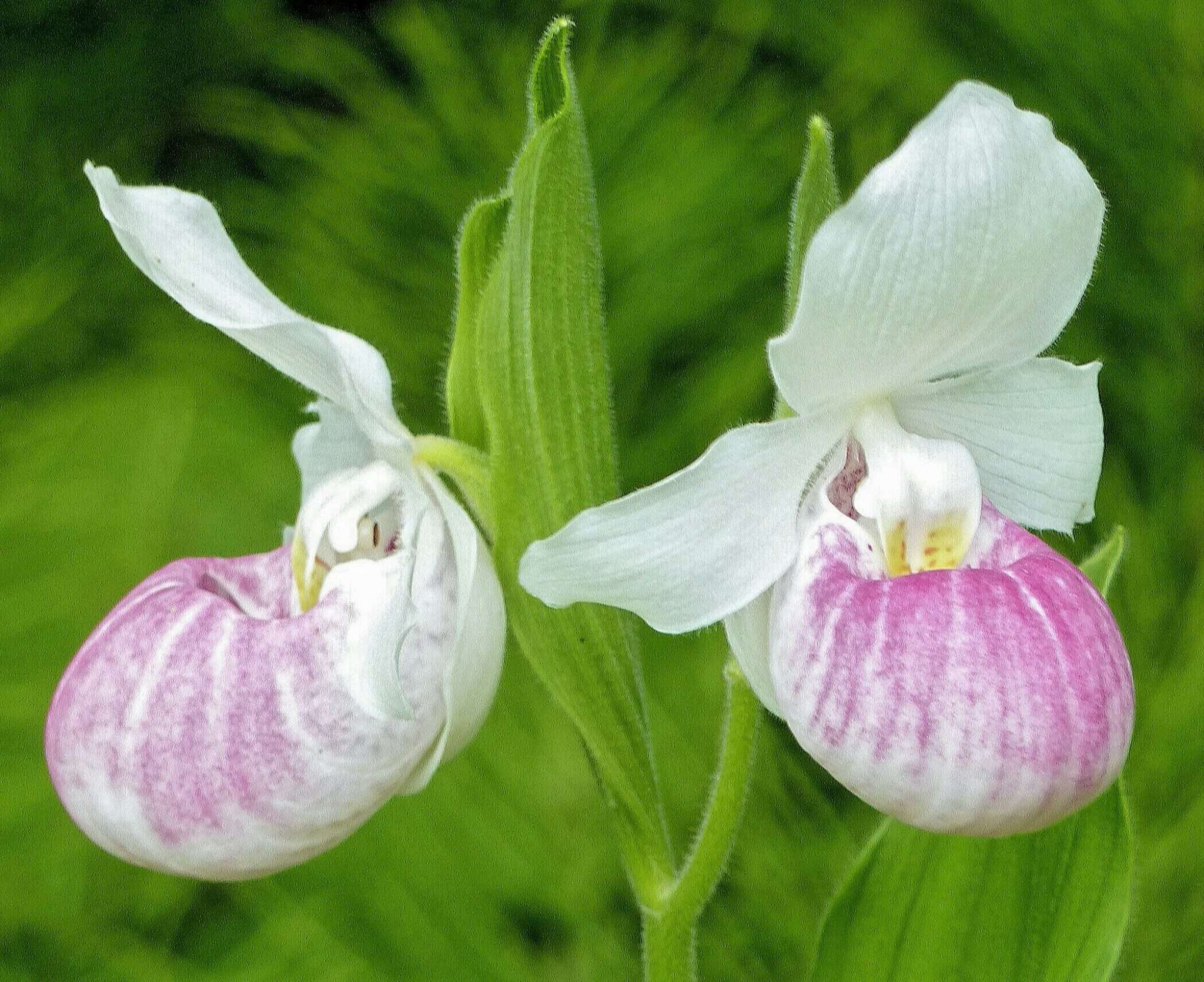
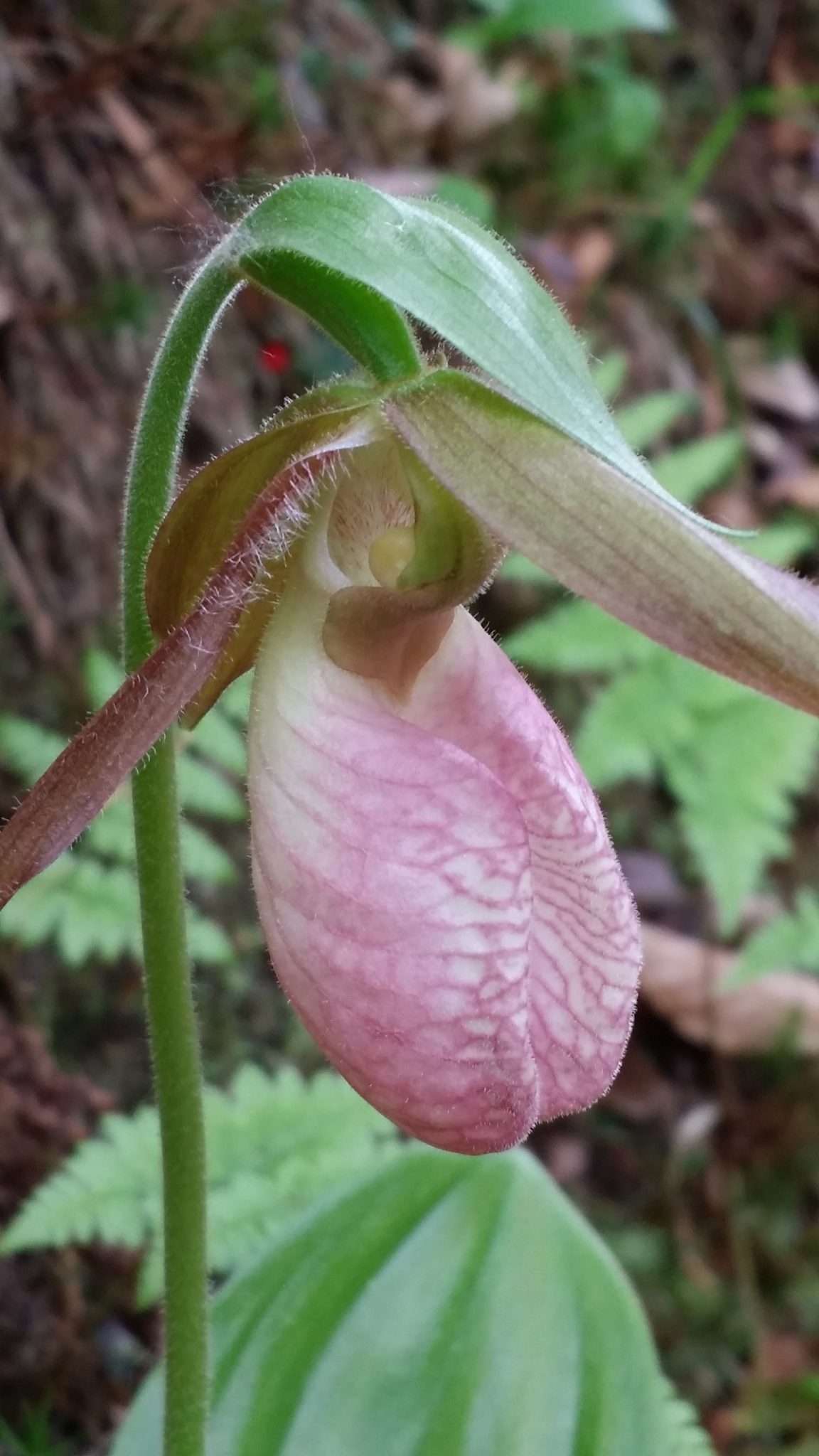
Our largest native Orchid prefers to have “her feet wet” and grows in a bog or other similar wetland. It is probably one of the most sought out for photographers and makes its entrance around Father’s Day in mid-June. Its common name is Showy Lady’s Slipper (Cypripedium reginae). This statuesque beauty may reach three feet in height. Its large pouch-shaped bloom is both white and rosy pink in color. In addition to being the largest of our native orchids, it also has a unique means of reproduction. The large pouch is actually an inflated lip known as the labellum, and it serves to attract pollinators. However, it is totally deceptive since the plant does not produce nectar. Once the pollinator is inside the labellum, it becomes trapped, and it can only free itself by passing by a comb-like structure of the stigma, which is the plant part that holds the pollen. In passing through it, it removes all the pollen which it has previously gathered, and in doing so, it then pollinates this flower. As the insect continues to escape, it will pass by this plant’s anther (part of this plant’s stamen that holds the pollen) and will pick up this plant’s pollen to cross-pollinate the next orchid it is lured towards.
A few more interesting facts about the showy lady’s slippers are that the plant can survive for more than twenty years and that each plant is capable of producing a capsule, once pollinated, of up to 60,000 seeds. These orchids are a protected New York State plant, but they also have their own protection in that the hairs on the stem contain a fatty acid that is toxic to many animals. Handling a showy lady slipper can also cause a rash in humans which is similar to the poison ivy rash. Lady slipper seeds may take five to seven years to fully mature into a flowering plant. The soils in which these plants grow are fairly acidic and must also contain a unique fungus known as Rhizoctonia. The Rhizoctonia and the lady slipper have a symbiotic relationship (each benefitting). The fungus digests the outer coat of the lady slipper seed but doesn’t harm the inner cells, so the seed can now germinate. This allows food for the fungus and the growth of the seed.
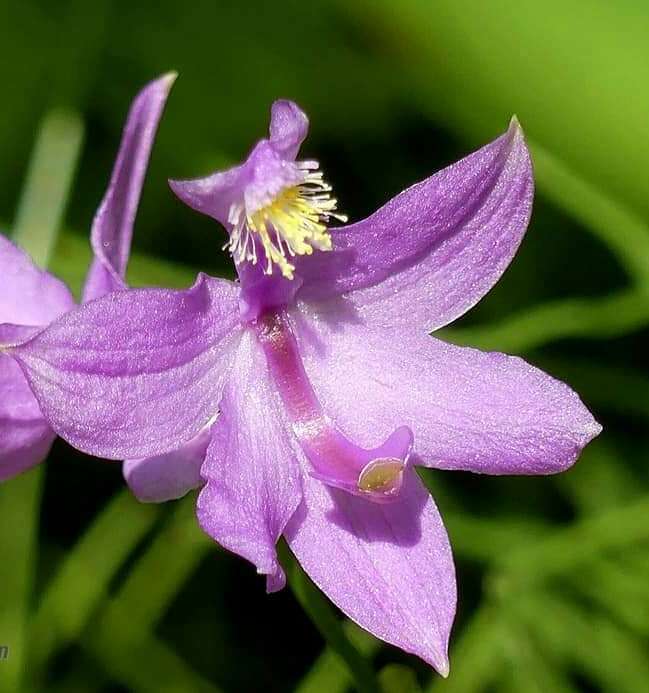
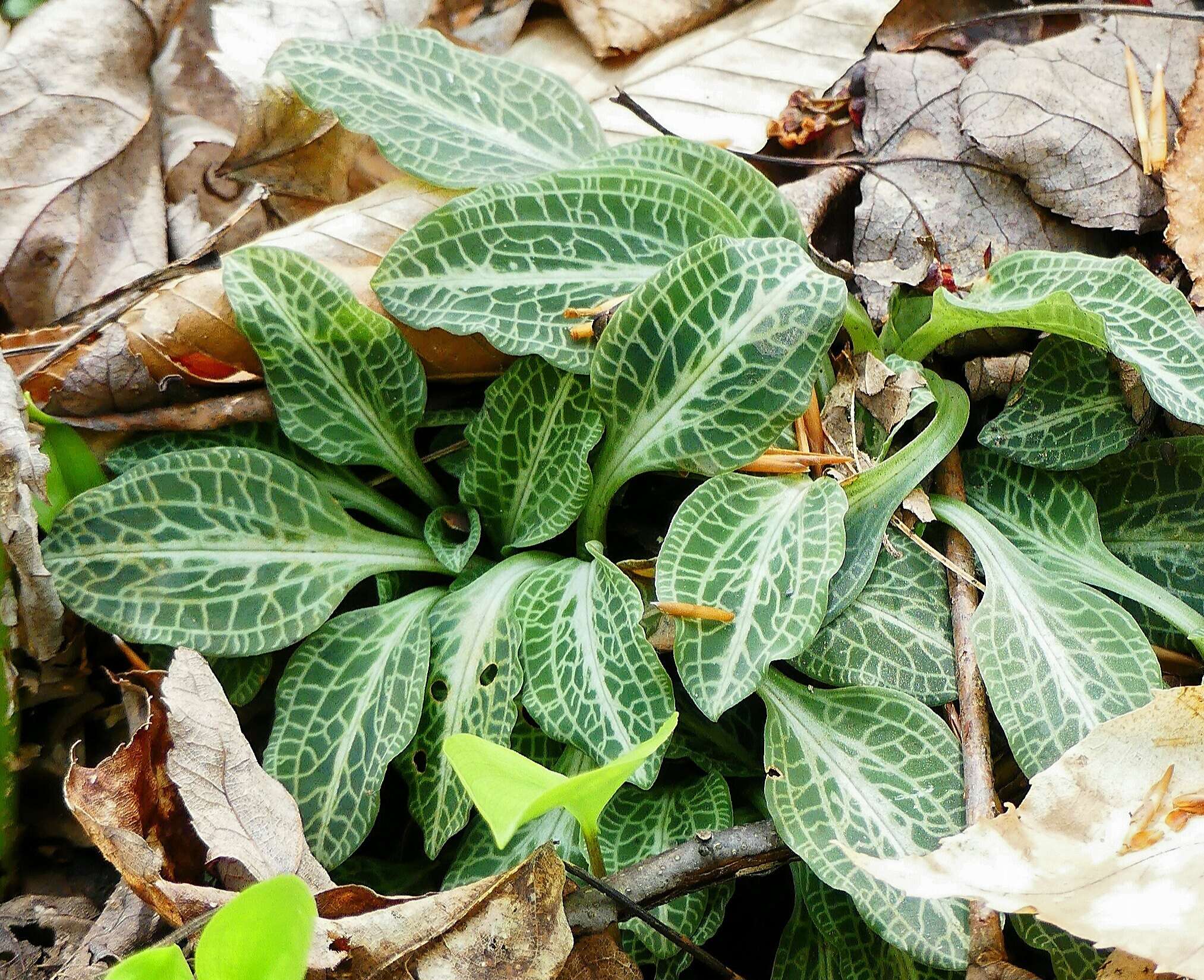
The local bog where I photograph the showy lady slipper orchids is home to many other orchid species throughout the summer months. These are much smaller but also truly lovely orchids. They include Grass Pinks (Calopogon tuberous), Rose Pogonias (Pogonia ophioglossoides), and Loesel’s Twayblade (Liparis loeselii). Another smaller orchid and one that prefers a woodland terrain grows closer to my home and has a rather strange common name. It is called Downy Rattlesnake (Goodyera pubescens), and its name came from the supposed snake skin appearance of its leaves, which have a downy or soft hairy appearance. It was also believed that the Native Americans used the plant to treat snake bites. However, Botanists have found that the plant doesn’t medicinally contain properties that would truly cure a venomous snake bite.
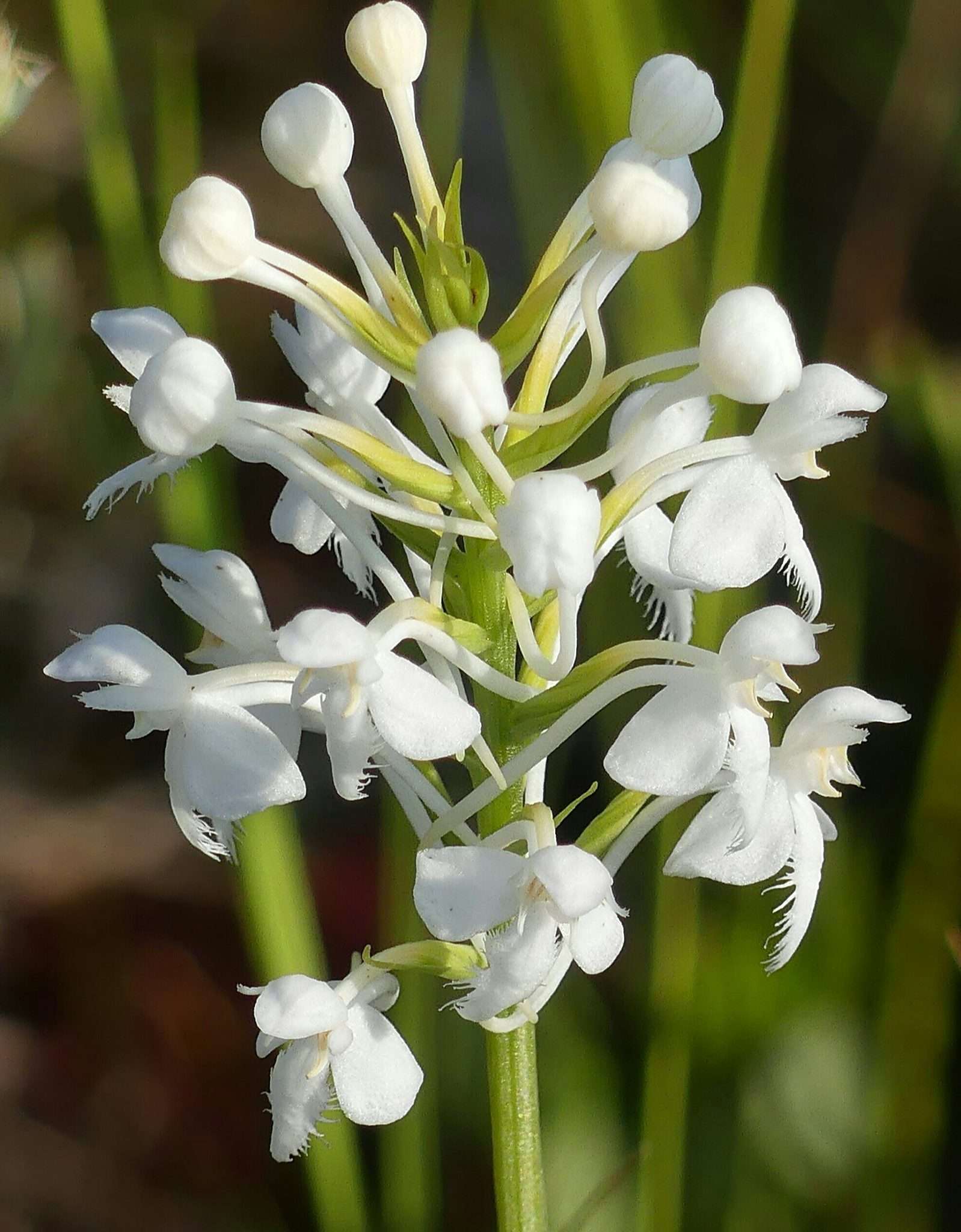
New York State also has a lovely large White Fringed Orchid (Platanthera blephariglottis). This one I have found in mid-August at Ferd’s Bog. If you have not had an opportunity to hike this bog, I highly recommend it. It is located off Uncas Road in Eagle Bay, New York. It is a short hike through the woods and then onto a boardwalk into the bog. There are numerous other wildflowers that you may encounter along the woodland trail, and in addition to the white fringed orchids, there are a plethora of bog plants to view and photograph too. Although it is not an orchid, I found a tiny bog plant known as Buckbean (Menyanthes trifoliate), which was blooming in about two inches of water in the bog. I counted more than forty of these tiny white plants. They are members of the Gentian Family and are described as having “fuzzy beards” on the petals. They may be found growing in April through July.
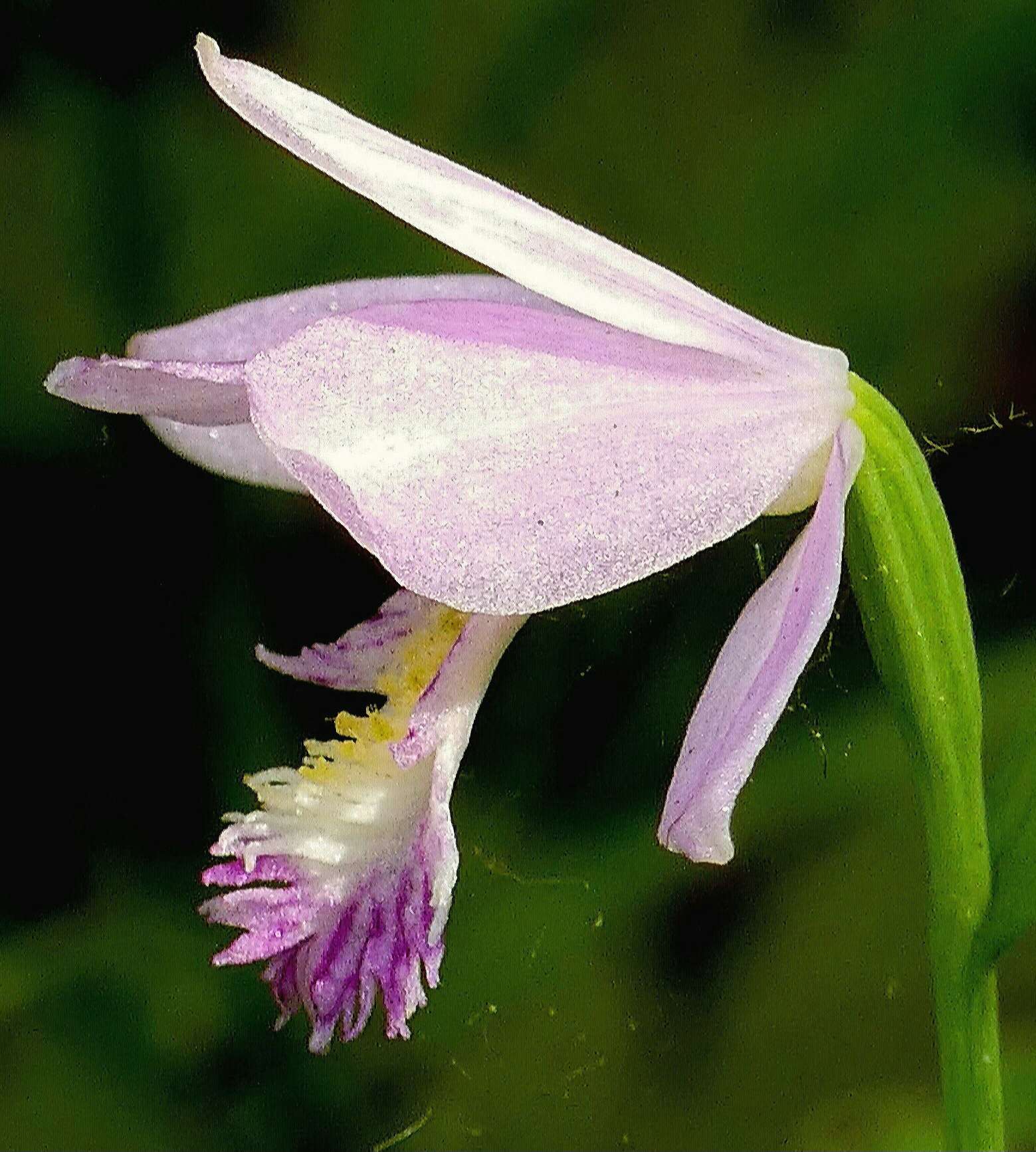
In addition to the white fringed orchid, we also have a beautiful Purple Fringed Orchid (Platanthera grandifloria). Its flowers are thought to resemble tiny butterflies; it is also known as the Butterfly Orchid. I first discovered one in a wetland area not far from home. If you wish to learn more about our beautiful and delightful New York State Orchids there are several excellent field guides available.
 As a Professional Nature Photographer, Naturalist, and Outdoor Educator, Joan Herrmann has been teaching and doing programs for Schools, Garden Clubs, Libraries, and Nature Centers, for about 38 years. After moving from the Rochester area in 1995, she began her Photography business, Essence of Nature, and became a co-owner of The Artworks in Old Forge, New York. As a docent at Munson, Williams, Proctor Arts Institute in Utica, New York, she has been educating children and adults for nineteen years.
In 2007 she began working with the Black River Outdoor Educational Program (BROEP). In 2013 and 2014, and did a week-long summer program at BROEP in conjunction with Mohawk Valley Community College (MVCC). Using her love of nature and photography, she created a Flora/Fauna outdoor educational program teaching students (ages 6 to 14) the joys of nature and creative photography skills.
Joan’s love of nature has been a lifelong study of Birds, Wildflowers, Mosses, Ferns, Trees, Amphibians, Reptiles, Grasses, Insects, Spiders, Tracks, Scat, and Galls. She has assisted in cataloging all trails used by the hiking Coaches and photographed and identified seasonal Flora.
Since October 2016, she has been writing a bi-monthly nature column with Adirondack Express Newspaper. In October 2019, she began a bi-monthly column with the My Little Falls newspaper. You may reach her at jmhphoto8442@gmail.com.