
Story and Photographs By Joan Herrmann
Whereiwander… today is into the living room. As I look out the windows, I am almost overwhelmed by the amount of snow that has accumulated this winter. Twice, we have had snowfalls that have left seven feet of snow on our upper and lower balconies. I was unable to get outside to refill our bird feeders and had to improvise a boot tray in the snow outside the living room door. I filled the tray with unshelled peanuts, whole-kernel corn, and black oil sunflower seeds. It didn’t take the wild birds long to discover their food, and many different species, from tiny Chickadees and the Really Big Bird, which I mentioned in my last column, the Raven, came for the corn.
It is only February, and there are at least the rest of this month and two or maybe three more months of possible snowfalls in our area. Our first winter when we moved from Rochester to “the Adirondacks” was a total surprise. We got our first snowfall in November and our last snowfall in May. The first week of May, the snow was gone, but on Mother’s Day of 1996, we received 18 inches of “new snow.” It had to be a big shock for all the hibernators, too. The bears had already yawned and left their winter abodes. Migratory birds, such as American Robins, had also returned, and the smaller critters, such as chipmunks, skunks, and woodchucks, were now out and about.
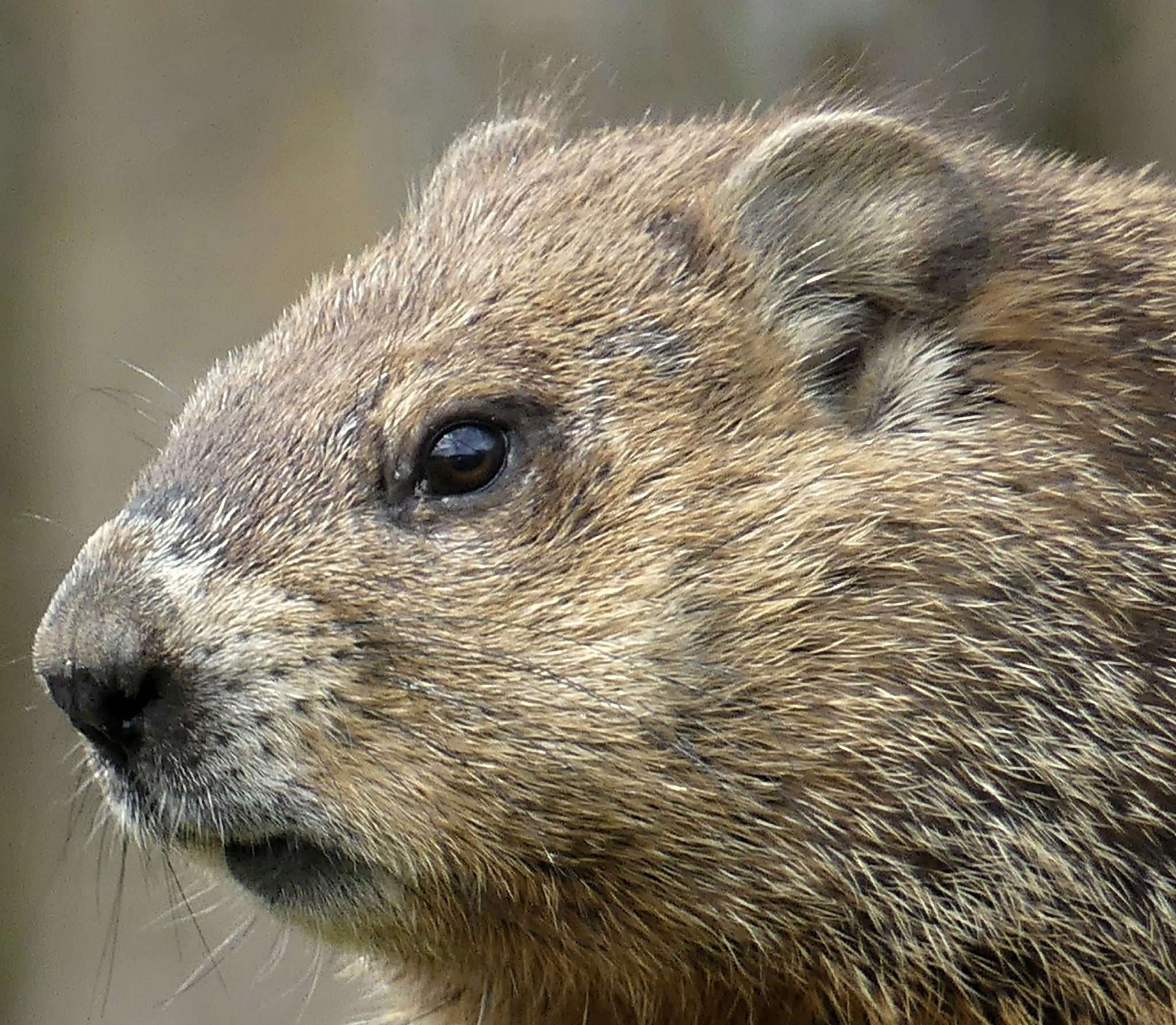
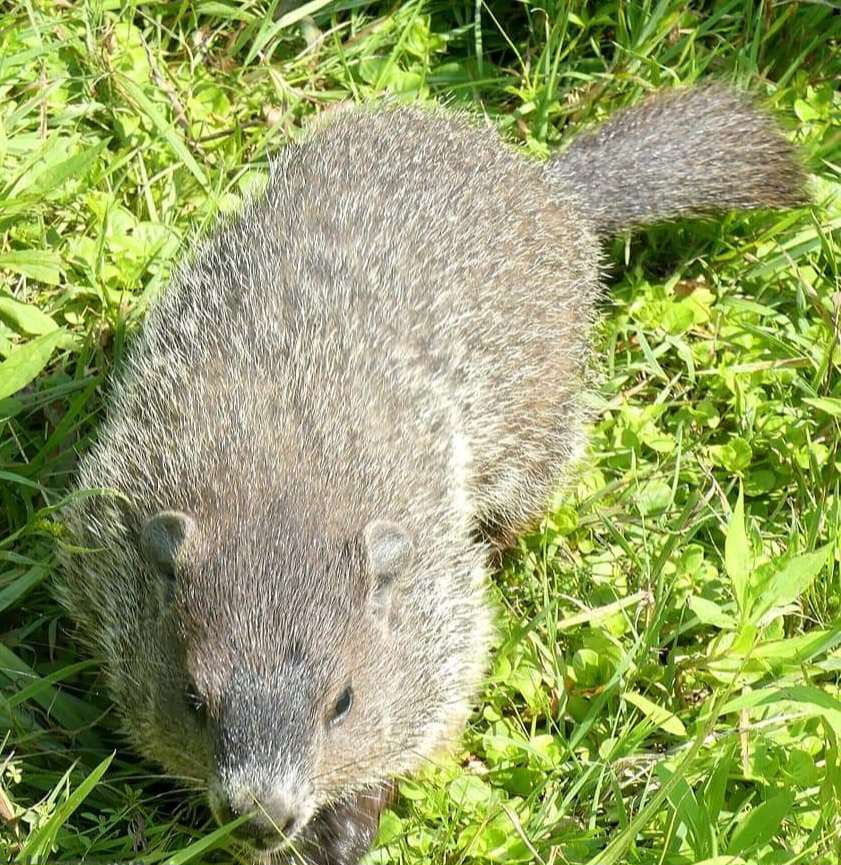
The woodchuck, also known as groundhog, is a true hibernator. It will dig an extensive tunnel that may be shared with other mammals, such as an opossum and even a skunk. Researchers found a woodchuck tunnel that was twenty-four feet in length and had two side galleries. They estimated that the amount of soil removed from the burrow totaled eight bushels and weighed about six hundred and forty pounds. Each burrow is dug below the frost line. A woodchuck is a true hibernator which means it will spend the entire hibernation time living off its stored body fat. In early June, the woodchuck’s metabolism slows down. The food intake doesn’t decrease, but its weight will increase in stored fat deposits. During hibernation, it will not eat, drink, or eliminate body wastes. Its body temperature drops from ninety-six degrees Fahrenheit to about forty-five degrees, and its heart rate will plunge from one hundred beats per minute to fifteen beats per minute. It may lose as much as twenty to forty percent of its body weight before emerging in the spring.
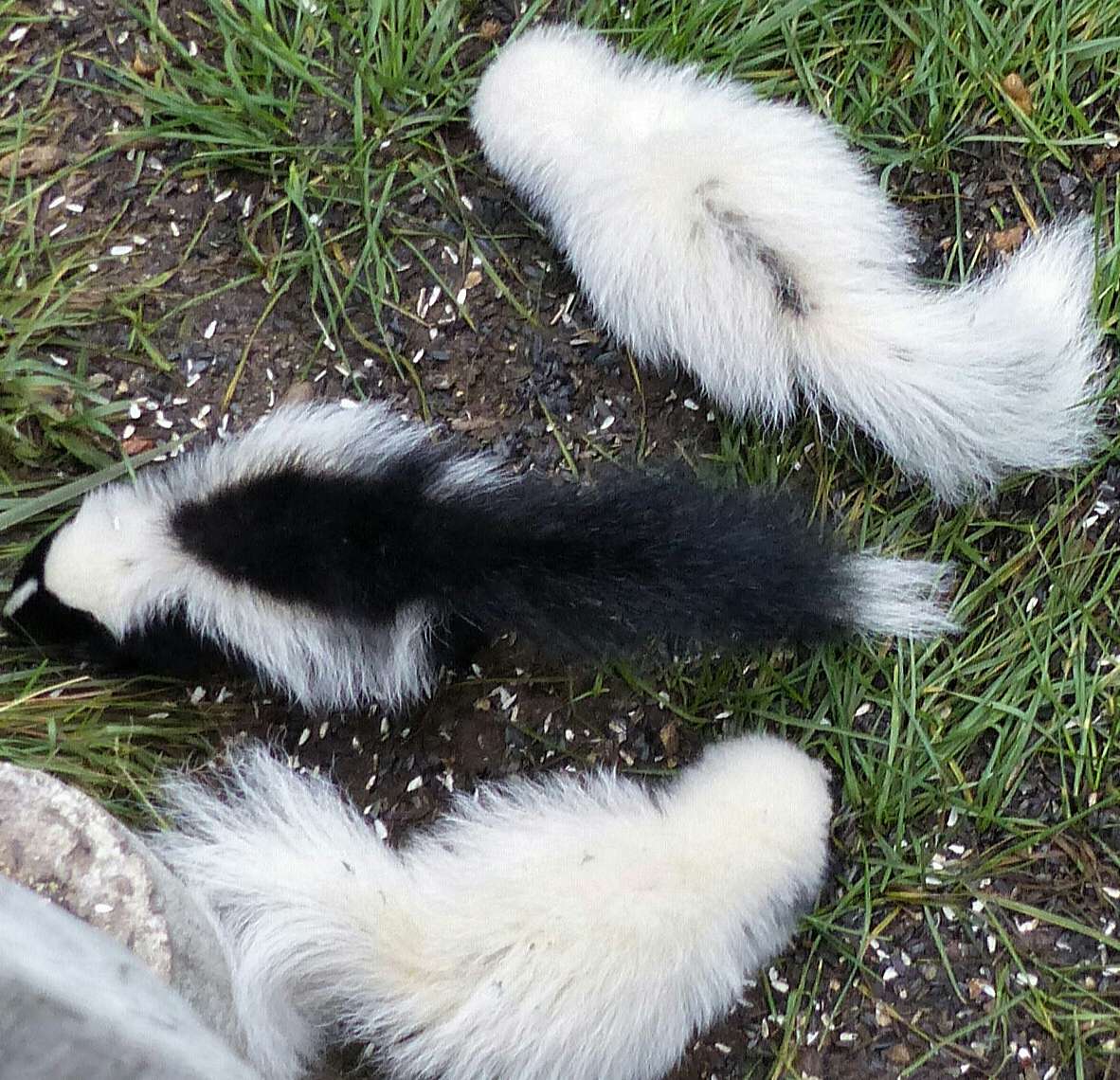
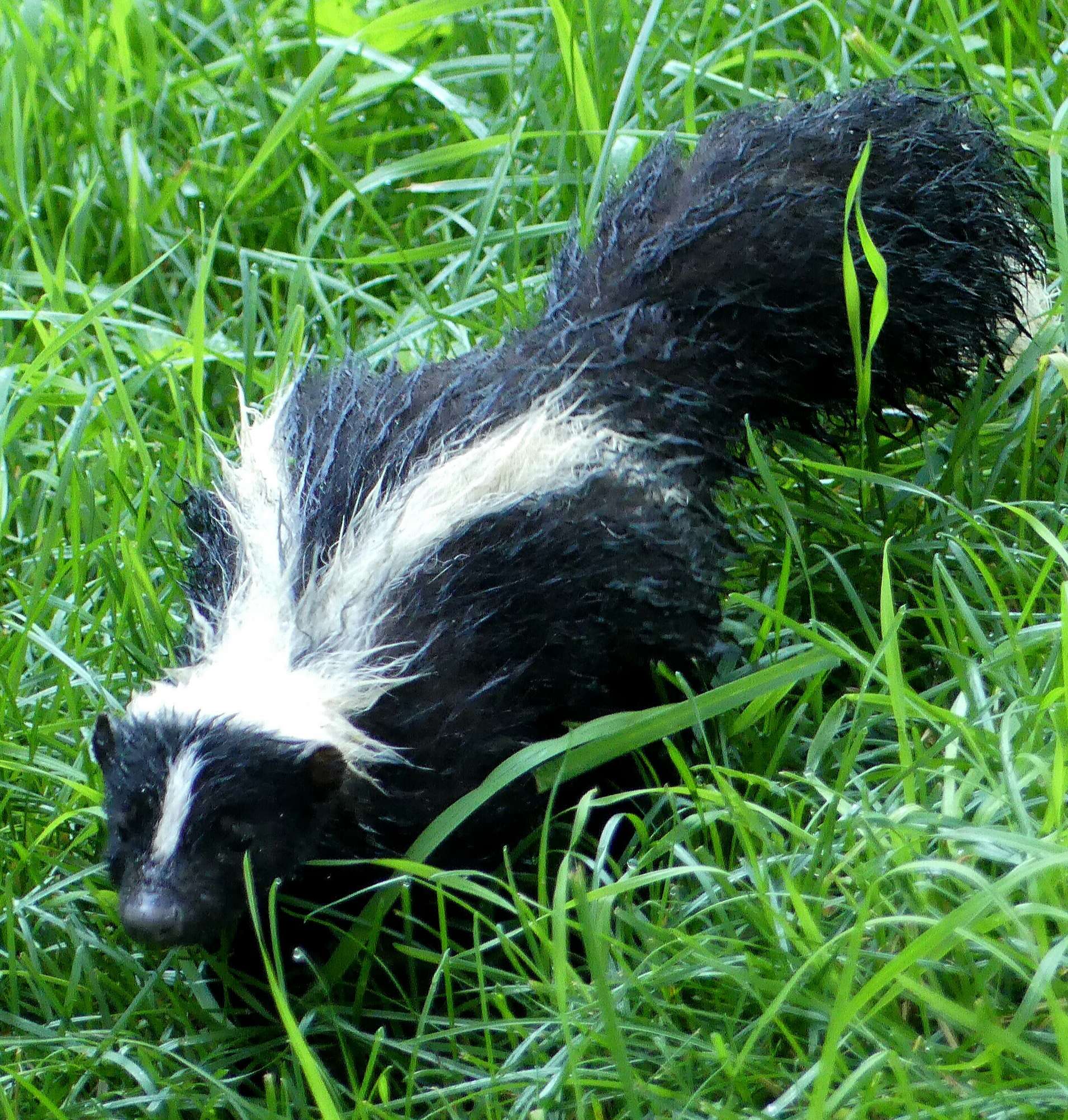
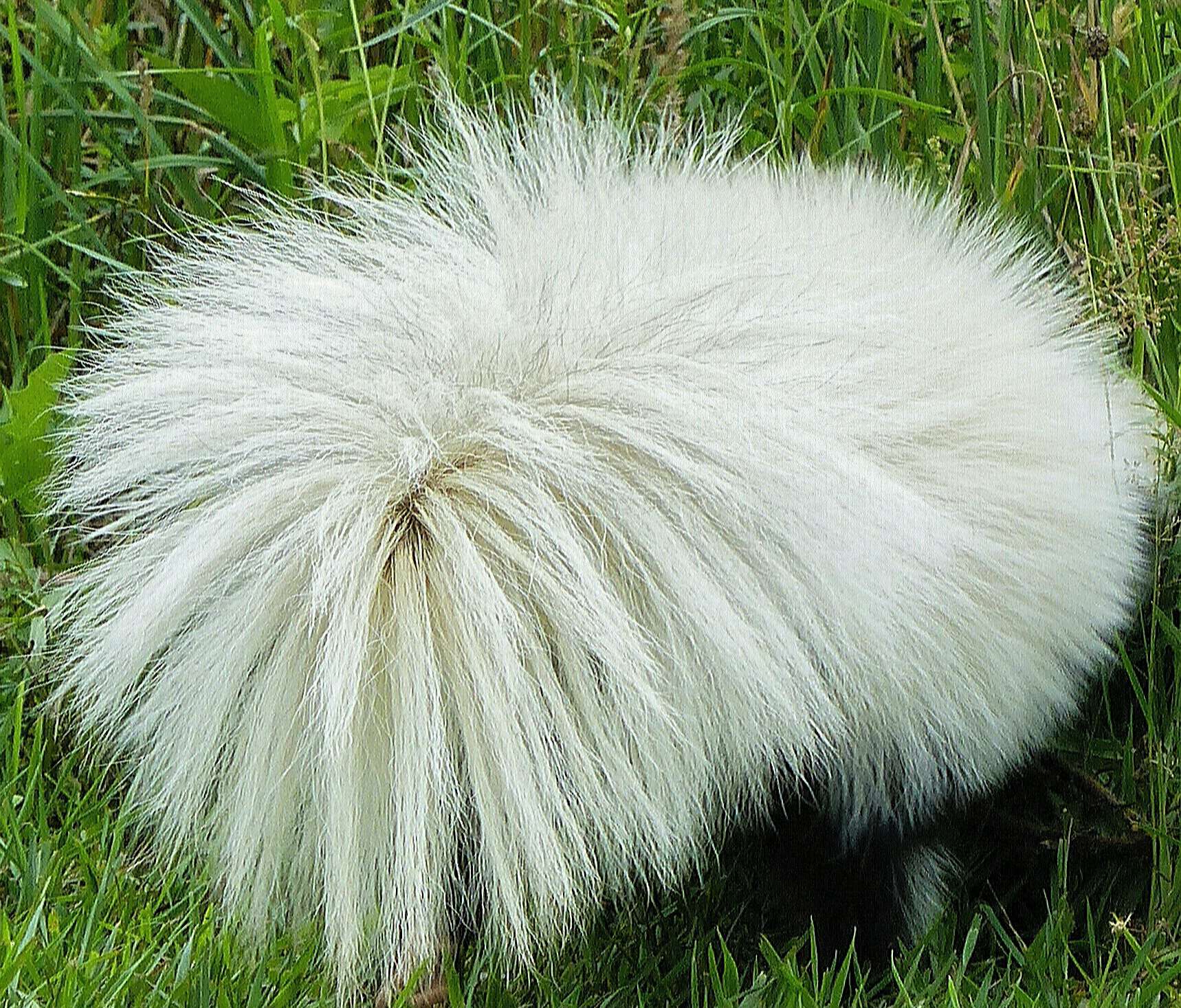
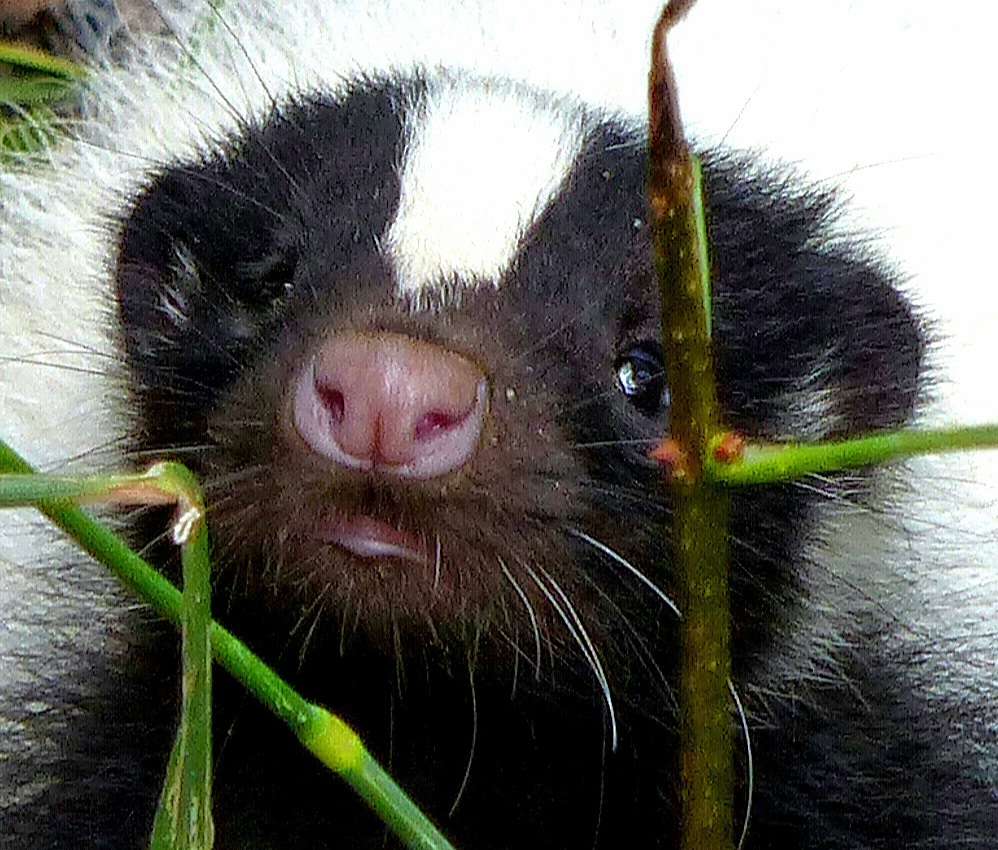
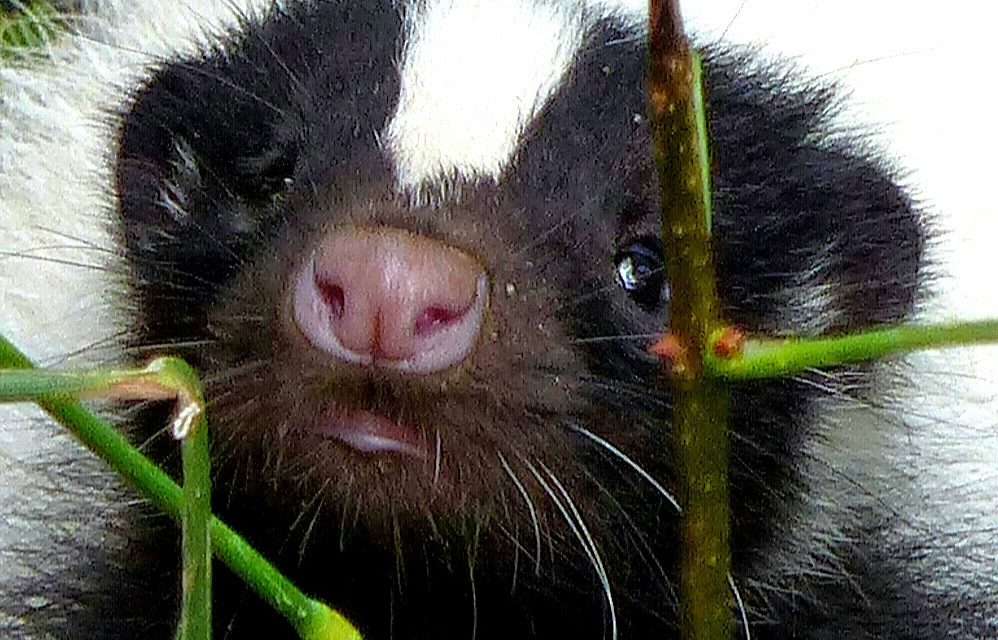
A Skunk is able to dig a den but, frequently, will opt to use an unused den of another mammal, such as sharing a den of a groundhog for the winter or using an abandoned den for giving birth and raising her kits. Skunks seldom get the endearing titles that otters or raccoons generally do; even their Latinized name, Mephitis mephitis, means noxious or foul-smelling odor. Striped skunks are familiar mammals with broad white stripes on either side of a wide black stripe that runs from its nose to its forehead. Skunks are polygamous, which means they mate with more than one of its species. They are omnivores eating whatever is in season. In the early spring, voles and in later spring and early summer, the large white grubs of both Japanese and June Beetles. A sign of skunks and grubs in your yard is two-inch holes in your lawn. In midsummer, insects such as grasshoppers, crickets, beetles, bird and turtle eggs, as well as berries in summer and apples and grapes in autumn. Late and early winter meals are once again voles and mice, shrews, and even small rabbits.
Skunks’ feet have bare soles, and they walk with their toes and metatarsals flat on the ground. The forefeet have five long curved claws, which enable them to dig, while the hind feet have much shorter and straighter claws. And, of course, for protection, they have two highly developed scent glands on either side of the anus. Each gland can hold a little more than one tablespoon of musk, this oily mixture of strong odorous musk when sprayed can be an effective defense. Spraying this fine mist is a last resort method for the skunk. It will try to run away first. It will also stomp its front feet, it may hiss or growl, but when it lifts its tail and while looking at you brings the rear of its body around towards its head, you better be more than fifteen feet away because the spray can travel at least that distance.
The male skunks are about ten percent larger than females. Adult skunks can weigh six to twelve pounds. The word skunk is a common name given by Native Americans; another name for skunks is polecat, which refers to a European animal that also scents its predators. Baby skunks are called kits. The adults usually mate sometime between February to mid-April. A single male may have a harem of several females. He will mate and defend her from other males for about thirty-five days. After a female has mated, she confines herself to a den. The kits will be born sometime between mid-May and early June. A female may give birth to five to ten kits. I learned that one female gave birth to 18 kits, I visualize that it was quite a sight to behold a female being followed with 18 kits following behind all running with their tails held high in the air.
The kits are born blind but will open their eyes within three weeks. They have sparse covering of fur and weigh a little more than an ounce. They will be weaned around six weeks. Their scent glands will still be underdeveloped but they quickly assume a defensive position when threatened, and at three months will be independent. A skunk’s life span is two to four years in the wild.
 Joan Herrmann has taught and done programs for Schools, Garden Clubs, Libraries, and Nature Centers for about 38 years as a Professional Nature Photographer, Naturalist, and Outdoor Educator. After moving from the Rochester area in 1995, she began her Photography business, Essence of Nature, and became a co-owner of The Artworks in Old Forge, New York. As a docent at Munson, Williams, Proctor Arts Institute in Utica, New York, she has been educating children and adults for nineteen years.
In 2007, she began working with the Black River Outdoor Educational Program (BROEP). In 2013 and 2014, she did a week-long summer program at BROEP with Mohawk Valley Community College (MVCC).
Using her love of nature and photography, she created a Flora/Fauna outdoor educational program teaching students (ages 6 to 14) the joys of nature and creative photography skills.
Joan’s love of nature has been a lifelong study of Birds, Wildflowers, Mosses, Ferns, Trees, Amphibians, Reptiles, Grasses, Insects, Spiders, Tracks, Scat, and Galls. She has assisted in cataloging all trails used by the hiking Coaches and photographed and identified seasonal Flora.
Since October 2016, she has written a bi-monthly nature column with Adirondack Express Newspaper. In October 2019, she began a bi-monthly column with the My Little Falls newspaper. You may reach her at jmhphoto8442@gmail.com.
Soo informative Joan!!! Never knew it only takes 1 tablespoon to create such a fowl odor!!
Great article Joan! I always thought
My voles were digging those little holes in my yard… now what to do?